The global labor market has reached a point of no return. By February 2026, the traditional 9-to-5 structure isn’t just “evolving”—it is being systematically dismantled by Agentic AI Workforces. For decades, businesses relied on human departments for execution; today, a single founder can deploy a fleet of autonomous agents that handle everything from coding to customer acquisition in real-time.
While the mainstream media frames this as a “job apocalypse,” the KOLAACE™ perspective reveals the opposite: 2026 is the year of the Sovereign Entrepreneur. The ability to orchestrate silicon-based labor is the new “gold rush.” In this pillar guide, we analyze the structural shift toward agentic systems and provide the blueprint for building a 7-figure “Solo-Corporation.”
What is an Agentic Workforce? (The 2026 Definition)
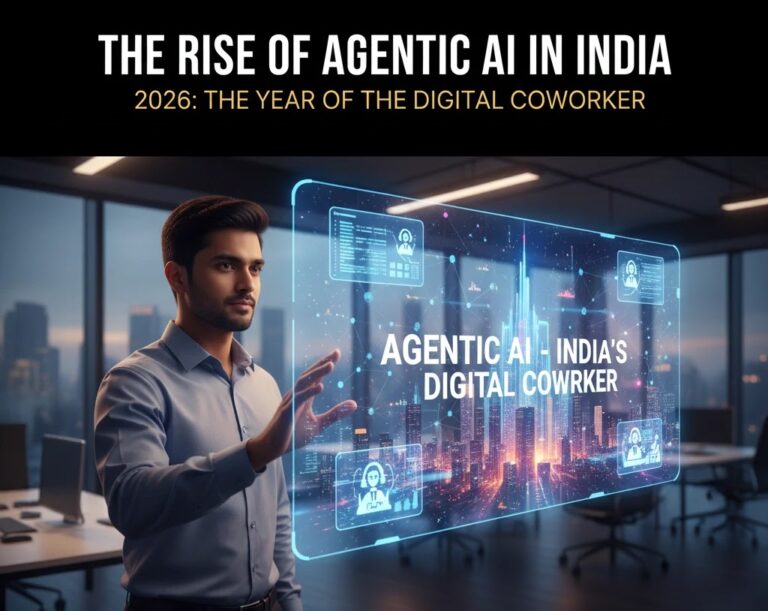
In 2024, AI was a tool you used (ChatGPT, Midjourney). In 2026, AI is a teammate that acts. An Agentic Workforce consists of multiple specialized AI agents that collaborate, reason, and execute multi-step business processes without human prompts. Unlike traditional automation, these agents have “Outcome Ownership.”
The Shift from Chatbots to Autonomous Agents
The difference lies in latency and initiative. A 2024 chatbot waited for you to ask a question. A 2026 Agentic Workflow monitors your business metrics, identifies a drop in conversion, designs a new A/B test, and deploys the code autonomously while you sleep. This is the foundation of AI-powered asset management.
KOLAACE™ Market Insight: The Automation Explosion
The global AI market is projected to hit nearly $376 billion in 2026. This growth isn’t coming from new search engines; it’s coming from Agentic Infrastructure. Large enterprises have already transitioned 42% of their operations to autonomous systems.
Global Agentic AI Market Growth (Billions USD)
*Data shows the massive capital shift toward autonomous agent infrastructure.*
The Zero-Employee Empire: How to Build One
To rank as a top-tier authority in the 2026 economy, you must move away from “Freelancing” and toward “System Architecture.” Following the Digital Sovereignty framework, here is how you build an agentic empire:
1. The “Sales Agent” (Lead Generation)
Instead of manual outreach, deploy agents that analyze LinkedIn sentiment, financial reports, and job postings to identify “high-intent” clients. They don’t just find leads; they write and send hyper-personalized proposals that look 100% human.
2. The “Dev Agent” (Product Building)
2026 is the era of AI-native code. Your Dev Agents monitor your SaaS for bugs, refactor legacy code for speed, and automatically deploy security patches using quantum-resistant encryption standards.
3. The “Content Agent” (Marketing)
Content is no longer about quantity; it’s about “Intelligence Signals.” Your agents analyze Google Discover trends, generate pillar posts, and adapt the visual style to maximize “Time on Page” metrics.
Human vs. Agentic Workforce: The 2026 Comparison
For entrepreneurs, the choice is clear. Silicon labor offers infinite scalability with zero management overhead.
| Feature | Traditional Workforce | Agentic AI Workforce |
|---|---|---|
| Operational Cost | High (Salaries, Benefits) | Low (API/Compute Fees) |
| Availability | 40 Hours / Week | 168 Hours / Week |
| Scalability | Slow (Months to Hire) | Instant (Spin up Nodes) |
| Error Rate | Variable (Human Fatigue) | Near-Zero (Rule-Based) |
Conclusion: Adaptation or Extinction?
We are currently seeing a massive “re-skilling” mandate from global governments. However, you don’t need a government program to survive. By embracing agentic workflows today, you are positioning yourself as a “System Architect” rather than a “Manual Laborer.”
The 9-to-5 era is dead, but the era of the Agent-First Enterprise has just begun. Ensure your infrastructure is ready by checking out our guide on sustainable AI nodes.