If your career feels stagnant despite working harder than ever, you are not alone. In 2026, many professionals are facing a hidden problem. Effort is increasing, but results are not. Promotions are slower, freelance income is unstable, and job security feels uncertain. This is not a motivation issue. It is a strategy problem.
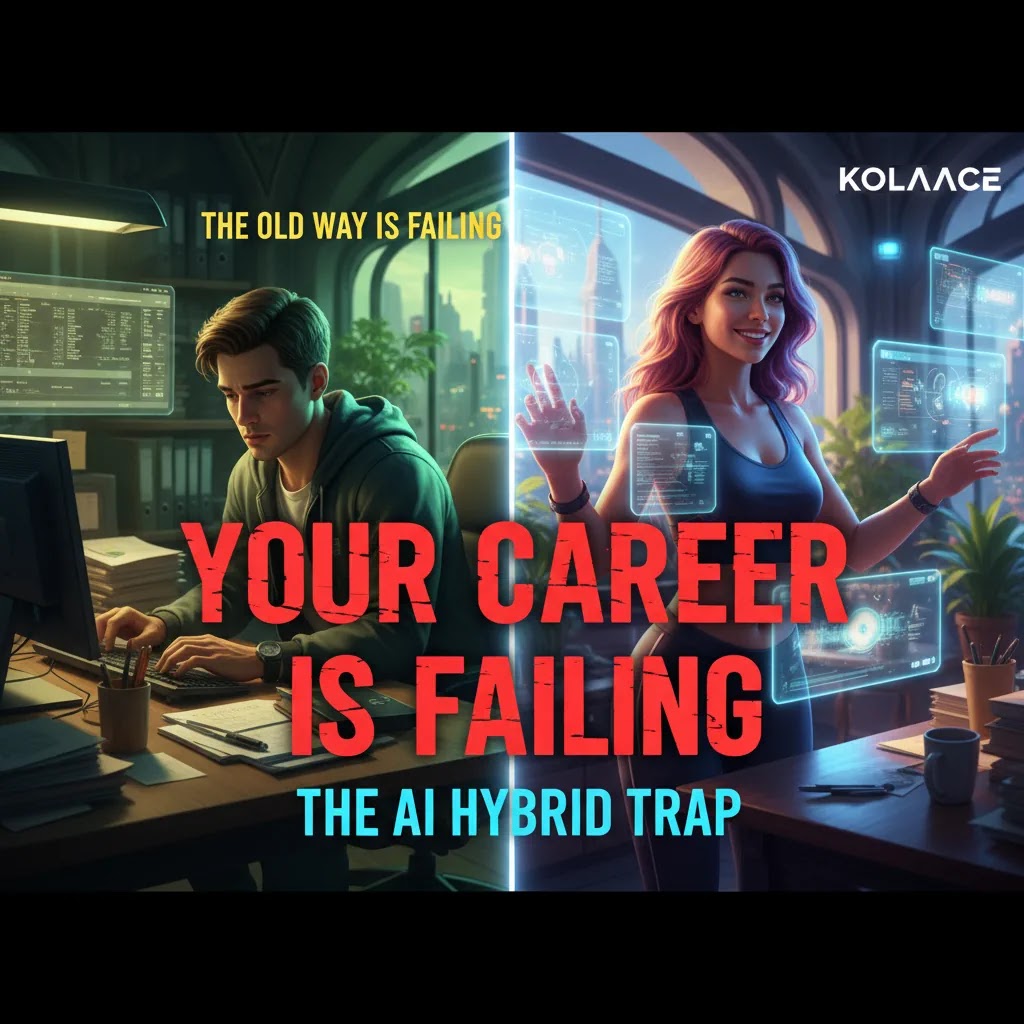
The shift toward AI-powered work has created what we call the AI Hybrid Trap. Many people are using AI tools, but only at a surface level. They are faster, but not more valuable. Meanwhile, a smaller group is redesigning how work gets done entirely. That gap is where careers are being won or lost.
1. What is the AI Hybrid Trap and Why It Matters
The AI Hybrid Trap happens when professionals use AI as a helper instead of a system multiplier. For example, using AI to write emails faster is helpful. But designing a system where emails, follow ups, and lead tracking happen automatically is transformational.
In real work environments, this difference is massive. A marketing executive who writes content with AI still trades time for money. But one who builds an automated content engine creates ongoing output with minimal effort.
This explains why many skilled professionals feel stuck while others grow quickly with similar tools.
Productivity Comparison
| Approach | Work Style | Outcome |
|---|---|---|
| Basic AI User | Uses AI for tasks | Faster output, same income ceiling |
| Hybrid Professional | Builds AI-driven systems | Scalable income and higher leverage |
| Manual Worker | No AI usage | Declining demand |
2. Step by Step: How to Escape the AI Hybrid Trap
Step 1: Identify Repetitive Work
Start by tracking your daily tasks for one week. Look for patterns like emails, reports, data entry, or content creation. These are automation opportunities.
Step 2: Replace Tasks with Workflows
Instead of doing tasks manually, connect tools into workflows. For example:
- Lead capture forms connected to CRM
- Automated email follow ups
- Content pipelines that generate and schedule posts
Step 3: Add Human Decision Layers
AI can execute, but humans must guide. Review outputs, refine strategies, and make final decisions. This is where your value increases.
Step 4: Measure Output, Not Effort
Track results like revenue, leads, or time saved. Stop measuring productivity by hours worked.
3. Real World Use Cases
Freelancers
A solo freelancer can manage multiple clients by automating onboarding, communication, and delivery workflows. This turns a one person service into a scalable business.
Small Businesses
Retail shops and service providers can automate marketing, customer support, and inventory alerts. This reduces operational stress and improves consistency.
Corporate Professionals
Managers who implement AI workflows across teams can improve output without increasing headcount. This directly impacts promotions and leadership roles.
4. Pros and Cons of the Hybrid Model
Advantages
- Higher productivity with less manual effort
- Scalable income opportunities
- Stronger job security through adaptability
- Ability to manage multiple projects simultaneously
Limitations
- Initial learning curve for tools and systems
- Requires mindset shift from worker to strategist
- Over-reliance on automation can reduce quality if unchecked
5. Who Should Use This Strategy
Best Fit
- Freelancers and consultants
- Startup founders
- Mid-level professionals aiming for leadership roles
- Anyone facing time constraints but wanting higher income
Not Ideal For
- Those unwilling to learn new tools
- Roles that are purely manual with no digital component
6. Best Practices for Long Term Success
- Start small, automate one workflow at a time
- Focus on outcomes, not tools
- Continuously test and improve systems
- Maintain human oversight for quality control
- Build a personal knowledge base of workflows
Career Growth Potential by Work Model
Smart professionals are not working more in 2026. They are building systems that work for them. That is the real shift behind the hybrid workforce.
7. Final Takeaway
The problem is not your effort or your skills. The problem is how those skills are applied in a changing system. The AI Hybrid Trap affects people who upgrade tools but not strategy.
If you shift from task execution to system design, your career changes direction. You move from being replaceable to becoming essential. That is the real opportunity in 2026.
Career Strategy FAQ
Is learning AI tools enough to stay relevant?
+
How long does it take to become a hybrid professional?
+
Can non-technical people adopt this approach?
+
What is the biggest mistake beginners make?
+
Adapting early gives you a strong advantage. The professionals who understand this shift now will define the next decade of work.