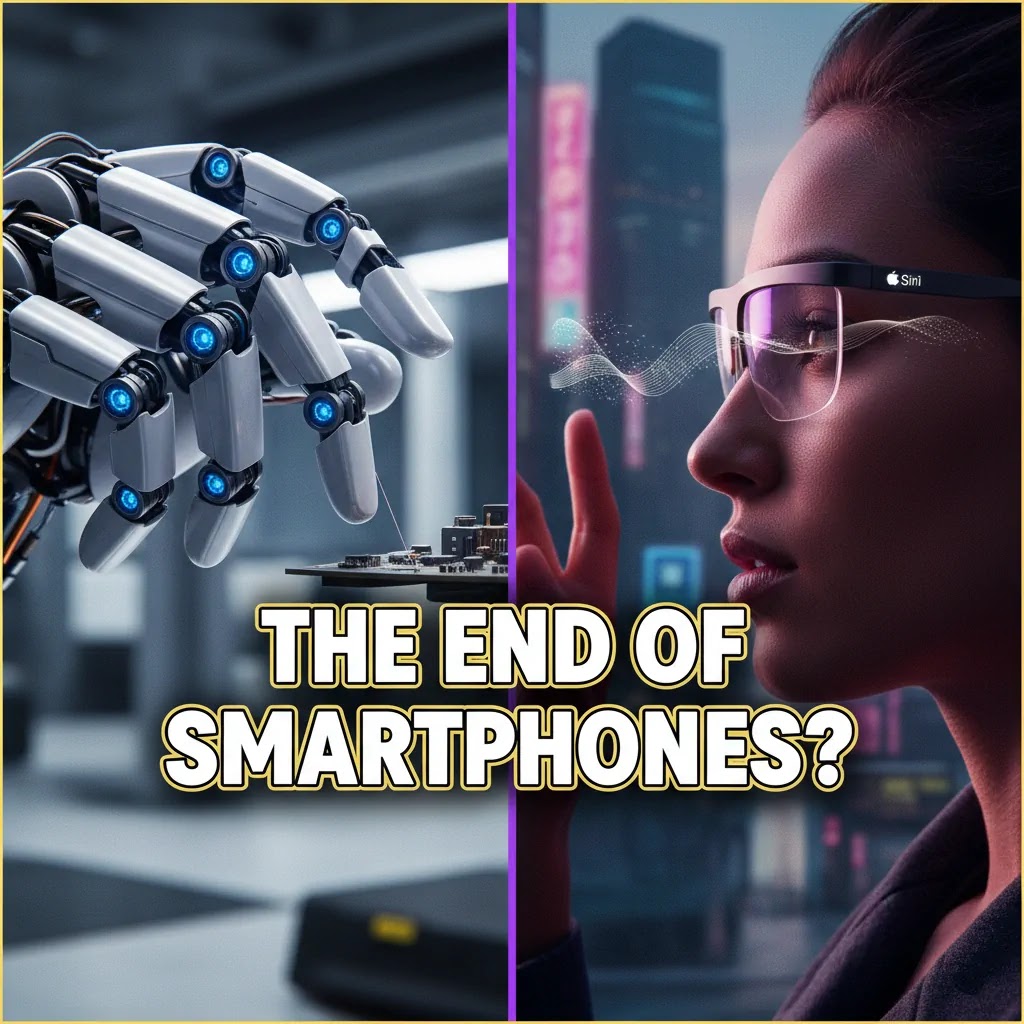
Most people still think their phone is the center of their digital life. But quietly, that assumption is breaking. Devices are no longer waiting for commands. They are starting to act, decide, and execute tasks on their own.
This is the beginning of what industry insiders are calling the Agentic Hardware Shift. Instead of opening apps, typing queries, and switching screens, users are moving toward systems that handle outcomes directly. Whether it is a robot assembling products, glasses guiding your day, or software agents booking your travel, the interface is slowly disappearing.
For founders, creators, and small business owners, this is not just a tech trend. It changes how work gets done, how services are delivered, and how value is created in the next decade.
What is Agentic Hardware and Why It Matters
Agentic hardware refers to devices powered by AI agents that can take actions independently. Instead of reacting to user input, these systems observe, learn, and execute tasks with minimal supervision.
Think of the difference between:
- Opening a food delivery app and placing an order manually
- Or having an AI system that understands your routine and orders dinner automatically at the right time
This shift is powered by cheaper AI compute and more efficient models, often referred to as the Pax Silica ecosystem. It reduces the cost of intelligence, making always-on agents viable at scale.
I. Tesla Optimus Gen 3: From Demo to Real Work
The biggest misconception about humanoid robots is that they are still experimental. That is no longer true. Tesla’s Optimus Gen 3 is already being used in controlled factory environments.
What makes this version important is not just the hardware upgrade. It is the combination of dexterity and learning capability.
Key Capabilities That Change the Game
- Human-like hand precision: With 50 actuators, the robot can perform tasks like wiring, sorting, and assembly
- Learning from observation: Instead of coding every movement, the system learns by watching human workers
- Continuous operation: No fatigue, no downtime, consistent output
Real Business Use Case
In a manufacturing setup, repetitive tasks like cable assembly or packaging can reduce human productivity due to fatigue. Early internal deployments suggest that replacing these tasks with robots can cut operational costs significantly while improving consistency.
Limitations You Should Know
- High initial deployment cost
- Still limited in unpredictable environments
- Requires structured workflows to perform efficiently
II. Apple’s Ambient Intelligence Strategy
While Tesla is solving physical work, Apple is focused on cognitive assistance. The next phase of wearable computing is not about screens. It is about presence.
Leaks around Apple’s AI glasses suggest a major shift. Instead of displaying information visually, these devices rely on audio and contextual awareness.
How This Changes Daily Life
- Navigation without looking at a screen
- Real-time reminders based on location and activity
- Instant contextual answers without typing queries
In practice, this feels less like using a device and more like having an assistant that is always aware of your environment.
Projected Wearable Adoption (2025-2027)
Adoption is shifting toward devices that reduce screen dependency.
Where It Can Fail
- Privacy concerns due to always-on cameras
- Dependence on accurate voice recognition
- User discomfort with invisible interfaces
III. Foldables Are Not Dead. They Are Evolving
While many predicted the decline of smartphones, the reality is more nuanced. Devices like foldables are adapting to support agent-based workflows.
The reason is simple. AI still needs space for visibility when required. Complex workflows like editing, analytics, or multitasking benefit from larger displays.
Why Foldables Still Matter
- Better multitasking for AI-assisted workflows
- Larger canvas for productivity tools
- Bridge between traditional apps and agent systems
| Product | Key Agentic Feature | Market Status |
|---|---|---|
| Tesla Optimus Gen 3 | Advanced robotic dexterity | Internal deployment |
| Rabbit R2 | Task automation engine | Shipping |
| Samsung Z Fold 8 | Agent-optimized multitasking | Upcoming release |
Who Should Pay Attention to This Shift
This transition will not impact everyone equally. Some groups will benefit earlier than others.
High Impact Users
- Small business owners automating operations
- Content creators using AI for workflows
- Manufacturers optimizing production
Who Can Wait
- Casual users with basic needs
- Businesses without repetitive workflows
Best Practices for Adopting Agentic Systems
- Start with one workflow, do not automate everything at once
- Measure ROI clearly before scaling
- Focus on repetitive and predictable tasks first
- Ensure data privacy and control
From experience, businesses that try to automate everything in one go often fail. The smarter approach is incremental adoption with measurable outcomes.
Conclusion: The Interface is Disappearing
The biggest change is not hardware. It is interaction. Screens, apps, and manual inputs are slowly becoming optional.
We are moving toward a world where outcomes matter more than interfaces. Devices that can act, decide, and complete tasks will define the next decade of technology.
For anyone building a business, creating content, or managing operations, understanding this shift early can provide a serious advantage.
Frequently Asked Questions