Most businesses assume global trade rules are stable. But 2026 proved how quickly policy, law, and capital flows can shift. One court decision in the United States changed tariff structures overnight, disrupted supply chains, and redirected hundreds of billions of dollars into new sectors.
The United States Supreme Court ruling on February 21, 2026 did more than block a tariff strategy. It reset how governments can use emergency powers in trade policy. Within hours, a new tariff framework replaced the old one, forcing exporters, manufacturers, and investors to adapt instantly.
For anyone involved in global trade, manufacturing, or investing, understanding this shift is not optional. It directly affects pricing, margins, sourcing decisions, and long term strategy.
The Tariff Rebellion Explained in Simple Terms
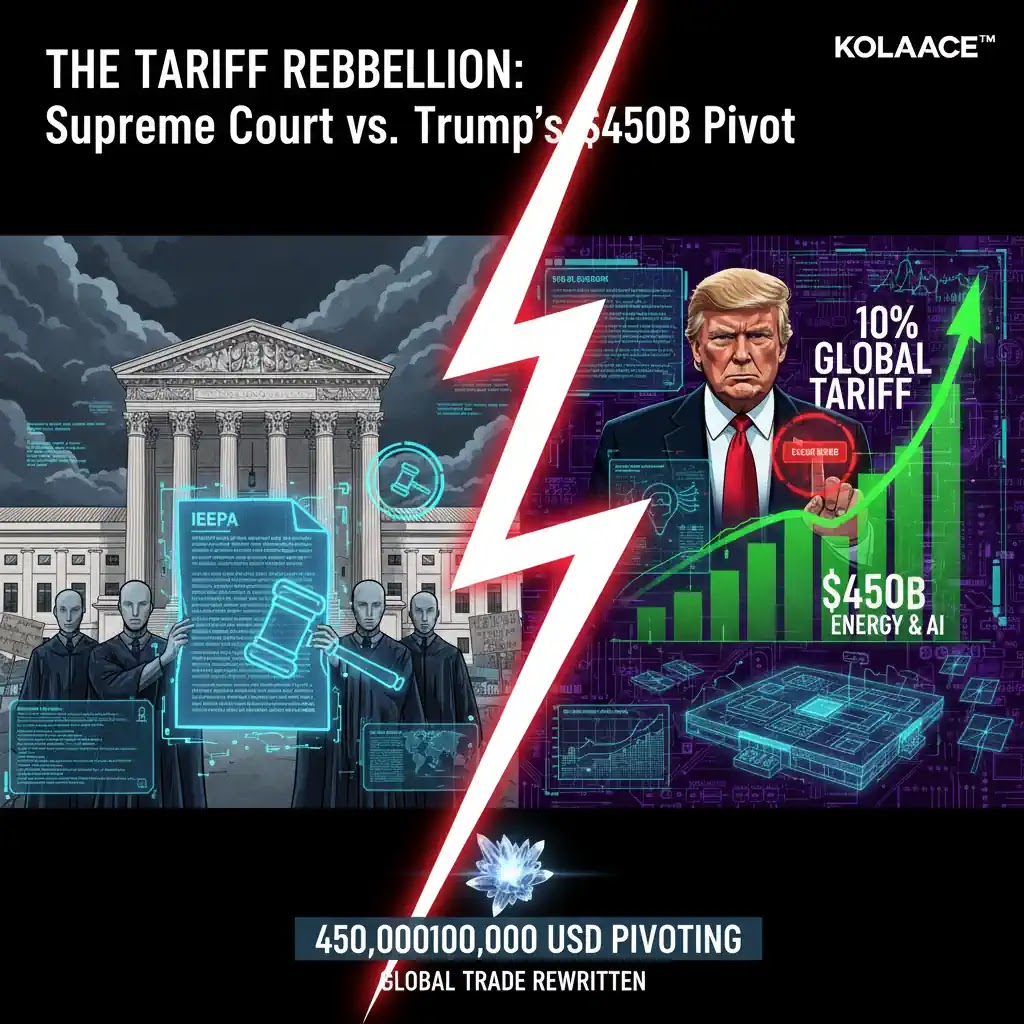
The core issue was legal authority. The US President used the International Emergency Economic Powers Act to impose broad global tariffs. The Supreme Court ruled that this law cannot be used as a long term trade policy tool.
This matters because it reinforces a key principle. Trade policy must go through legislative oversight, not just executive action. For global markets, this reduces unpredictability but also introduces a different kind of control.
What Changed Immediately
- Emergency tariffs invalidated: Existing broad tariffs lost legal backing.
- New 10 percent tariff introduced: A uniform structure under Section 122 replaced the earlier system.
- Policy uncertainty reduced: Markets now expect more structured trade decisions.
From a practical standpoint, this shift favors businesses that can adapt quickly to structured, predictable systems rather than volatile policy swings.
Step by Step: How This Impacts Businesses and Exporters
Step 1: Recalculate Export Pricing
If you export to the US, your cost structure has changed. A uniform 10 percent tariff is easier to plan for, but it still affects competitiveness.
Step 2: Reassess Supply Chains
Companies are shifting sourcing toward countries with stable trade relationships. India is emerging as a preferred partner due to policy alignment with new tech alliances.
Step 3: Track Refund Opportunities
Businesses affected by earlier tariffs are filing claims. This process may take time, but it represents significant recoverable capital.
Step 4: Shift Focus to High Growth Sectors
Capital is moving away from traditional retail and into energy, semiconductors, and AI infrastructure. This is where future margins are expected.
The $450 Billion Shift: Where the Money Is Going
One of the most important outcomes of this event is capital movement. Investors are not waiting for long term clarity. They are reallocating funds immediately.
Energy security and AI infrastructure are attracting massive inflows. This is driven by geopolitical tensions, supply chain restructuring, and the need for technological independence.
Energy Sector Capital Inflow: Post-Ruling Projection (Billions USD)
Capital is rapidly shifting toward energy and AI driven sectors after policy stabilization.
In India, semiconductor projects and energy infrastructure are already seeing accelerated investment. This is not theoretical. It is visible in land acquisition, factory setup, and hiring trends.
Real World Use Cases and Scenarios
Small Export Business
A textile exporter in Surat can now plan pricing more confidently. Instead of sudden tariff spikes, a predictable 10 percent structure allows better negotiation with buyers.
Manufacturing Startup
A startup in electronics manufacturing can align with semiconductor supply chains linked to India and allied countries. This improves access to components and reduces dependency risks.
Investor Perspective
Investors are moving away from low margin retail sectors affected by tariffs and focusing on high growth sectors like AI infrastructure, energy storage, and advanced materials.
Pros and Cons of the New Trade Reality
Advantages
- More predictable tariff structure
- Reduced policy uncertainty
- Strong growth in technology and energy sectors
- Better planning for exporters and manufacturers
Challenges
- Uniform tariffs still increase costs
- Refund processes may be slow and complex
- Traditional sectors face margin pressure
- Geopolitical risks remain high
Who Should Pay Attention and Who Should Be Careful
Best Positioned to Benefit
- Exporters with flexible pricing models
- Businesses in AI, semiconductor, and energy sectors
- Investors focusing on long term infrastructure growth
Who Should Be Cautious
- Retail dependent import businesses
- Companies relying on unstable supply chains
- Businesses with low margin and high tariff exposure
Best Practices to Navigate This Shift
- Continuously monitor policy updates and trade agreements
- Diversify supply chains across stable regions
- Invest in technology driven efficiency
- Build pricing flexibility into contracts
- Track refund claims and legal updates carefully
From experience, businesses that adapt early to policy shifts gain a significant advantage. Waiting for complete clarity often leads to missed opportunities.
Conclusion: A Shift Toward Managed Trade Systems
The events of February 2026 mark a clear transition. Trade is moving away from unpredictable decisions toward structured, controlled frameworks.
For businesses and investors, the message is straightforward. Focus on sectors aligned with long term global priorities like AI, energy, and supply chain resilience. Avoid overexposure to unstable policy environments.
This is not just a legal story. It is a signal of how global economic power is being reorganized. Those who understand it early will have a clear advantage.
Frequently Asked Questions