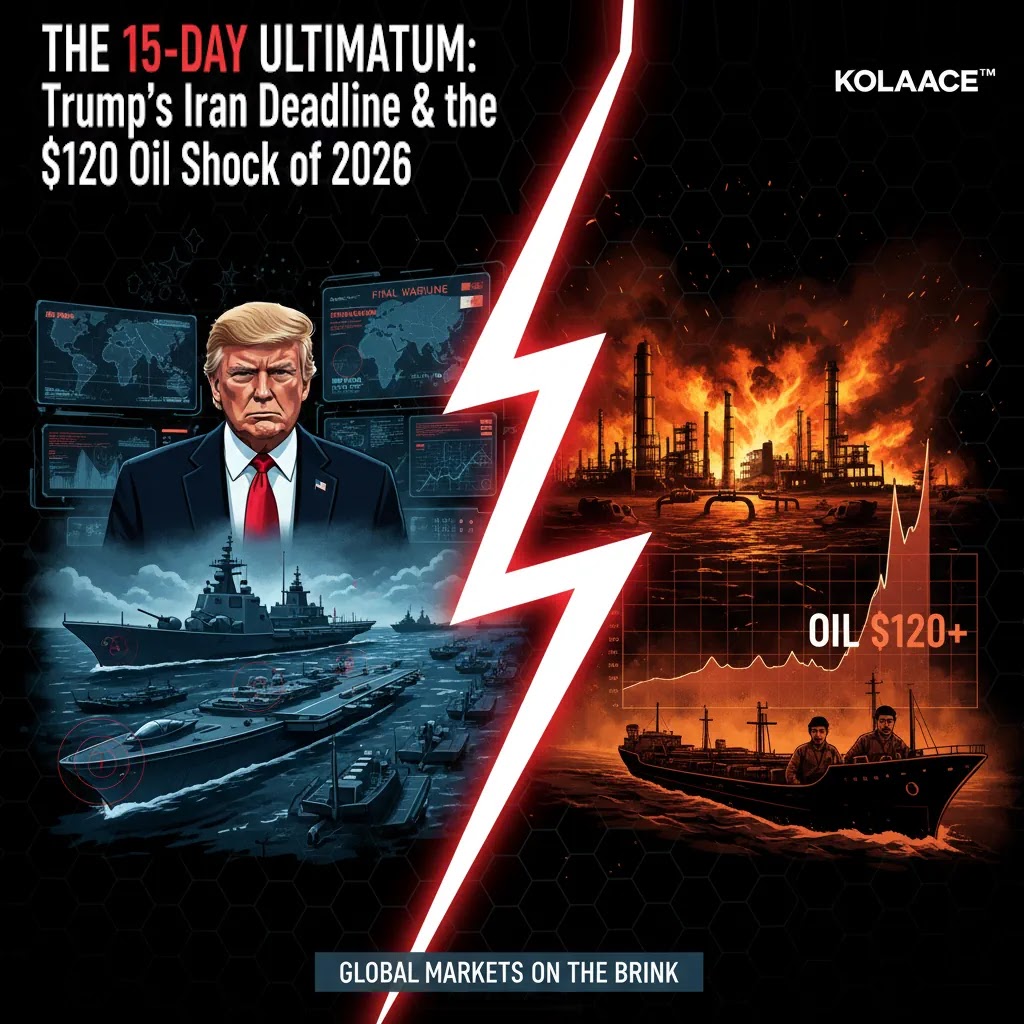
Fuel prices rarely change overnight without a reason. But when geopolitics enters the equation, the impact can be immediate and sharp. The 15 day ultimatum issued to Iran has created exactly that situation, where global oil markets are reacting faster than most businesses can adapt.
For countries like India, where energy costs directly affect transportation, agriculture, and small businesses, this is not just international news. It is a real economic trigger. Even a short disruption in supply routes can push oil prices significantly higher, and that ripple effect reaches every sector.
This moment is important because it connects geopolitics, energy markets, and investment strategy in a very direct way. Understanding it early can help businesses and investors prepare instead of reacting late.
Understanding the 15 Day Ultimatum in Practical Terms
The United States has issued a strict deadline to Iran to accept a new nuclear framework. If negotiations fail, military action becomes a real possibility. This is not just diplomatic pressure. It is backed by visible military deployment in the Gulf region.
The key reason markets are reacting strongly is the location. The Strait of Hormuz handles a large portion of global oil shipments. Any disruption here can instantly reduce supply, pushing prices upward.
Why Markets React So Fast
- Supply risk: Even a temporary blockage affects global oil availability.
- Trader psychology: Fear of shortage drives speculative buying.
- Energy dependency: Major economies rely heavily on stable oil flow.
In simple terms, oil prices move not just on actual shortage, but on the expectation of disruption.
Step by Step: How This Impacts Daily Economics
Step 1: Crude Oil Price Increase
Prices begin rising as soon as risk appears. Even a small percentage increase can translate into major cost changes globally.
Step 2: Fuel Cost Adjustment
Petrol and diesel prices follow crude oil trends. This directly affects logistics and transportation costs.
Step 3: Business Cost Pressure
Small businesses experience increased input costs. Delivery services, manufacturing units, and agriculture operations all feel the impact.
Step 4: Consumer Price Impact
Higher transport costs lead to increased prices for goods and services. This creates inflation pressure across the economy.
Market Response: Energy and Defense Sectors Lead
While many sectors struggle during geopolitical uncertainty, some areas see strong growth. Energy companies and defense related industries typically benefit from increased demand and investment.
Energy Sector Capital Inflow: 2026 Projections (Billions USD)
Investment flows increase as countries secure energy and defense capabilities.
In recent observations, capital tends to move quickly toward sectors that provide stability or strategic advantage during uncertainty.
Real World Scenarios You Should Understand
Transport Business Owner
Higher diesel prices directly reduce margins. Businesses may need to adjust pricing or optimize routes to maintain profitability.
Small Manufacturer
Increased logistics and raw material costs can disrupt production budgets. Advance planning and supplier diversification become important.
Retail Consumer
Price increases in daily goods may seem gradual, but they originate from rising energy costs.
Possible Outcomes: Two Clear Paths
| Scenario | Diplomatic Resolution | Conflict Escalation |
|---|---|---|
| Oil Prices | Remain stable between moderate levels | Sharp increase beyond $100 |
| Global Markets | Gradual recovery | High volatility across sectors |
| Safe Assets | Limited movement | Strong demand for gold and alternative assets |
Pros and Cons of This Situation
Opportunities
- Growth in energy and defense sectors
- Investment opportunities in infrastructure
- Strategic repositioning for businesses
Risks
- Rising fuel and logistics costs
- Inflation pressure on consumers
- Uncertainty in global markets
Who Should Pay Attention
- Exporters and importers managing international trade
- Small businesses dependent on transportation
- Investors tracking energy and commodity markets
Best Practices to Handle This Situation
- Monitor fuel price trends regularly
- Optimize logistics and reduce wastage
- Diversify suppliers to reduce dependency
- Plan pricing strategies with flexibility
Based on observed market behavior, early adaptation often protects margins better than reactive decisions.
Conclusion: Preparing for What Comes Next
The 15 day deadline is more than a political event. It is a trigger that can influence global energy pricing, inflation, and investment trends.
The key takeaway is simple. Businesses and individuals should stay alert, plan for cost fluctuations, and focus on efficiency. Those who understand how geopolitics affects economics can respond faster and make better decisions.
As the situation evolves, tracking oil prices and policy developments will remain critical for navigating the next phase.
Frequently Asked Questions