Most businesses do not track Supreme Court rulings. But this time, ignoring it could be expensive. A single legal decision has changed how global tariffs are applied, how import costs are calculated, and where companies are shifting billions in investment.
The 2026 tariff reset is not just about the United States. It directly impacts supply chains in India, manufacturing decisions in Asia, and pricing strategies for exporters worldwide. If you import goods, run a factory, or depend on global trade, this shift is already affecting your margins.
This is why understanding the “Great Tariff Pivot” is no longer optional. It is now a practical business requirement.
What Happened in 2026: A Simple Explanation
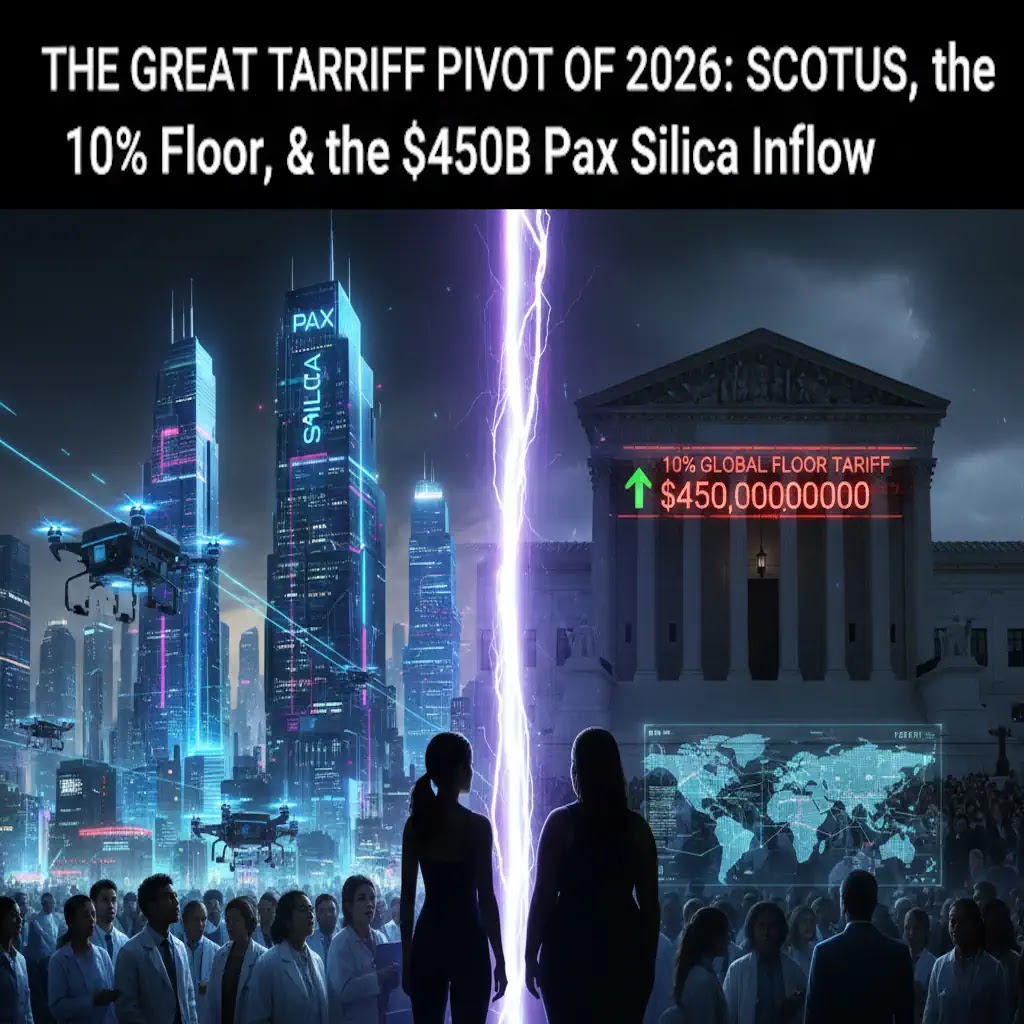
The US Supreme Court ruled that emergency powers under IEEPA cannot be used to impose tariffs. This effectively ended a phase where trade policy could change quickly based on executive decisions.
However, instead of removing tariffs completely, a new system was introduced using Section 122 of the Trade Act.
- A flat 10 percent tariff applied globally
- Removal of unpredictable country-specific spikes
- Continuation of stricter tariffs on select countries under other laws
In simple terms, the system moved from unpredictable high spikes to a predictable baseline.
Why This Change Matters for Real Businesses
Many small and mid-sized businesses struggle not because of high costs, but because of unpredictable costs. When tariffs change suddenly, pricing, contracts, and inventory planning become risky.
Practical Example
Consider an importer dealing in electronics components. Earlier, a sudden tariff increase from 10 percent to 40 percent could wipe out profit margins overnight. Now, even though a 10 percent tariff exists, it is predictable. That allows better pricing strategies and long-term contracts.
From experience, businesses prefer stable costs over low but uncertain costs. Stability improves planning, negotiation, and customer trust.
Step by Step: How the Tariff Pivot Impacts You
Step 1: Cost Stabilization
Uniform tariffs reduce sudden cost shocks in imports.
Step 2: Supply Chain Adjustment
Companies begin shifting sourcing to regions with better trade alignment.
Step 3: Investment Flow
Capital moves toward countries that offer both stability and lower risk exposure.
Step 4: Market Pricing
Businesses adjust product pricing based on predictable cost structures rather than reactive changes.
The $450B Capital Shift: Why Investors Are Moving Fast
The biggest impact of this policy change is not tariffs themselves. It is capital movement. Investors are reallocating funds toward regions that benefit from predictable trade environments.
This includes the Pax Silica ecosystem, where semiconductor and AI infrastructure investments are increasing rapidly.
In India, this translates into growing interest in chip manufacturing, logistics infrastructure, and export-oriented industries.
Capital Migration Projection (Billions USD)
Stable trade policy is driving large scale capital relocation.
Winners and Losers in the New Trade System
| Entity | Tariff Position | Impact |
|---|---|---|
| India | Stable 10% | Attracting manufacturing and semiconductor investment |
| European Union | Stable 10% | Improved export predictability |
| China | Higher tariffs | Gradual supply chain shift toward other regions |
Pros and Cons of the New Tariff Model
Advantages
- Predictable cost structure for businesses
- Reduced sudden policy shocks
- Encourages long-term investment planning
Limitations
- Uniform tariffs still increase baseline costs
- Does not eliminate geopolitical risk
- Some sectors may still face higher duties under other laws
Who Should Act on This Immediately
- Importers and exporters adjusting pricing models
- Manufacturers planning new supply chains
- Investors tracking global capital flows
Who Can Wait
- Local service businesses not dependent on imports
- Fully digital businesses with no physical supply chain
Best Practices for Navigating the Tariff Shift
- Recalculate cost structures based on the 10 percent baseline
- Renegotiate supplier contracts for long-term stability
- Diversify sourcing to reduce dependency on high-tariff regions
- Monitor policy changes regularly, not just annually
Businesses that treat this as a structural shift, not a temporary event, are more likely to stay competitive in the coming years.
Conclusion: Predictability is the Real Advantage
The biggest takeaway from the 2026 tariff reset is not the percentage itself. It is the predictability that comes with it.
Stable policies allow businesses to plan, invest, and grow without constant disruption. In global trade, that stability often matters more than lower costs.
If you operate in any part of the supply chain, this is the time to adjust strategy, lock in advantages, and prepare for a more structured global trade environment.
Frequently Asked Questions