AI is no longer just a tool that helps businesses. It is becoming the foundation of decision making, automation, and even governance. But here is the real problem. Who decides how powerful AI systems should be built, shared, and controlled?
In 2026, this question is shaping global policy. Governments are not only competing in technology, they are competing in rules. For startups, developers, and even small business owners, this is not abstract policy. It directly impacts what tools you can use, how expensive they are, and whether you depend on large tech companies.
If you are building anything with AI today, understanding this shift is no longer optional. It is strategic.
I. Understanding the Core Conflict: Open Access vs Controlled Power
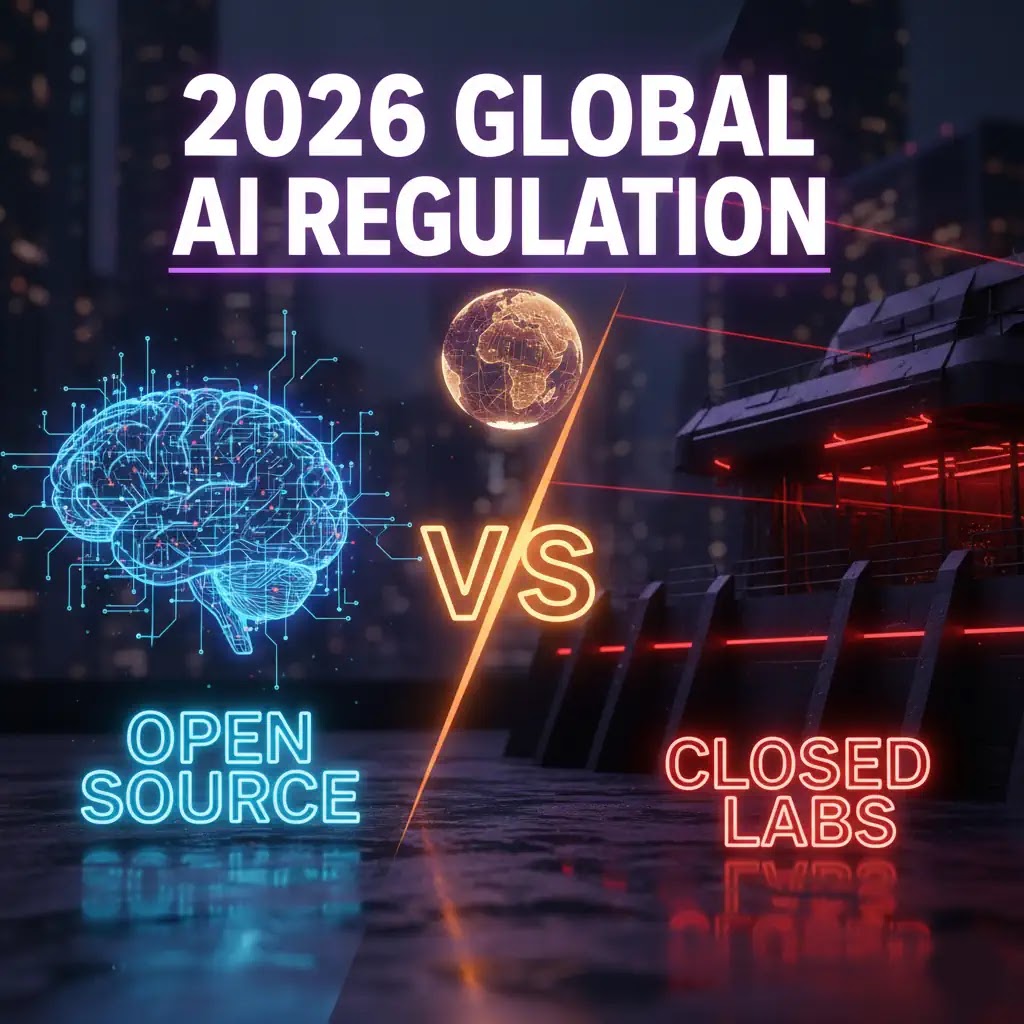
At the center of global AI regulation is a clear divide. It is not technical, it is philosophical.
Open Source AI Approach
This model supports transparency. Companies and researchers release AI models publicly so anyone can study, modify, or deploy them. The idea is simple. More eyes mean better security and faster innovation.
- Startups can build without heavy licensing costs
- Developers can customize models for local needs
- Bias and errors can be identified faster
In practical terms, an Indian small business can use open AI models to build customer support bots without paying high API costs.
Closed Lab AI Approach
This model focuses on control. Advanced AI systems are kept private and accessible only through paid APIs or restricted partnerships.
- Better control over misuse risks
- Protection of intellectual property
- Higher reliability through controlled deployment
For example, large enterprises often prefer closed systems because they offer stability, compliance, and dedicated support.
II. Global AI Regulation in 2026: What Each Power Wants
Different regions are not just regulating AI. They are shaping global standards based on their own priorities.
- European Union: Focus on user protection and risk classification. Strong rules for high risk AI systems.
- United States: Focus on innovation and flexible policies. Companies get more freedom but with increasing accountability.
- China: Focus on rapid development with strict state oversight. AI is aligned with national strategy.
Global AI Regulation Landscape (2026)
| Region | Approach | Primary Goal |
|---|---|---|
| European Union | Strict Regulation | Safety and Rights Protection |
| United States | Flexible Regulation | Innovation and Market Leadership |
| China | Centralized Control | Strategic Dominance |
This fragmentation means one important thing. There may not be a single global AI standard anytime soon.
III. Real World Impact: What This Means for Businesses and Developers
This debate is not theoretical. It directly affects how AI is used in daily operations.
For Startups and Small Businesses
- Open AI reduces cost and increases flexibility
- Closed AI offers reliability but at higher cost
- Regulation may limit access to certain tools
Example scenario. A local e commerce seller wants to automate customer replies. Using open models, they can build a custom chatbot cheaply. Using closed APIs, they get better accuracy but pay monthly fees.
For Enterprises
- Compliance becomes critical
- Data privacy laws must be followed strictly
- Closed systems are often preferred for security
For Developers
- Skill demand shifts toward AI governance knowledge
- Understanding compliance frameworks becomes important
- Hybrid AI solutions become more valuable
IV. Frontier Models: The Hidden Risk Layer
The next level of concern is not basic AI. It is advanced systems known as frontier models.
These models can generate complex outputs but are not always predictable. Even developers cannot fully explain their decision making process.
- Risk in healthcare diagnostics
- Unpredictable financial decisions
- Potential misuse in cyber activities
This is why governments are pushing for controlled testing environments before releasing such systems widely.
Public Trust in AI Governance (2024 vs 2026)
Global trust is declining due to rising concerns about safety and transparency.
V. Pros and Cons of Open vs Closed AI
Open AI Advantages
- Lower cost entry
- Faster innovation cycles
- Community driven improvements
Open AI Limitations
- Higher misuse risk
- Less centralized quality control
Closed AI Advantages
- Better security control
- High performance consistency
- Enterprise ready solutions
Closed AI Limitations
- Expensive access
- Vendor dependency
VI. Who Should Choose What
Choose Open AI if:
- You are a startup or individual developer
- You need customization and flexibility
- Budget is limited
Choose Closed AI if:
- You run a large business
- You require compliance and security
- You need reliable performance
VII. Best Practices for Navigating AI Regulation
- Always check regional AI compliance rules before deployment
- Use hybrid approach when possible
- Do not depend on a single AI provider
- Focus on data privacy and user trust
- Continuously monitor policy updates
VIII. Final Takeaway
The future of AI will not be decided by technology alone. It will be shaped by regulation, access, and control.
Open AI creates opportunity and innovation. Closed AI ensures stability and safety. The real winning strategy for most businesses will likely be a balance between both.
Understanding this shift early gives you a strong advantage, whether you are preparing for UPSC, building a startup, or scaling a business.
Frequently Asked Questions (FAQ)