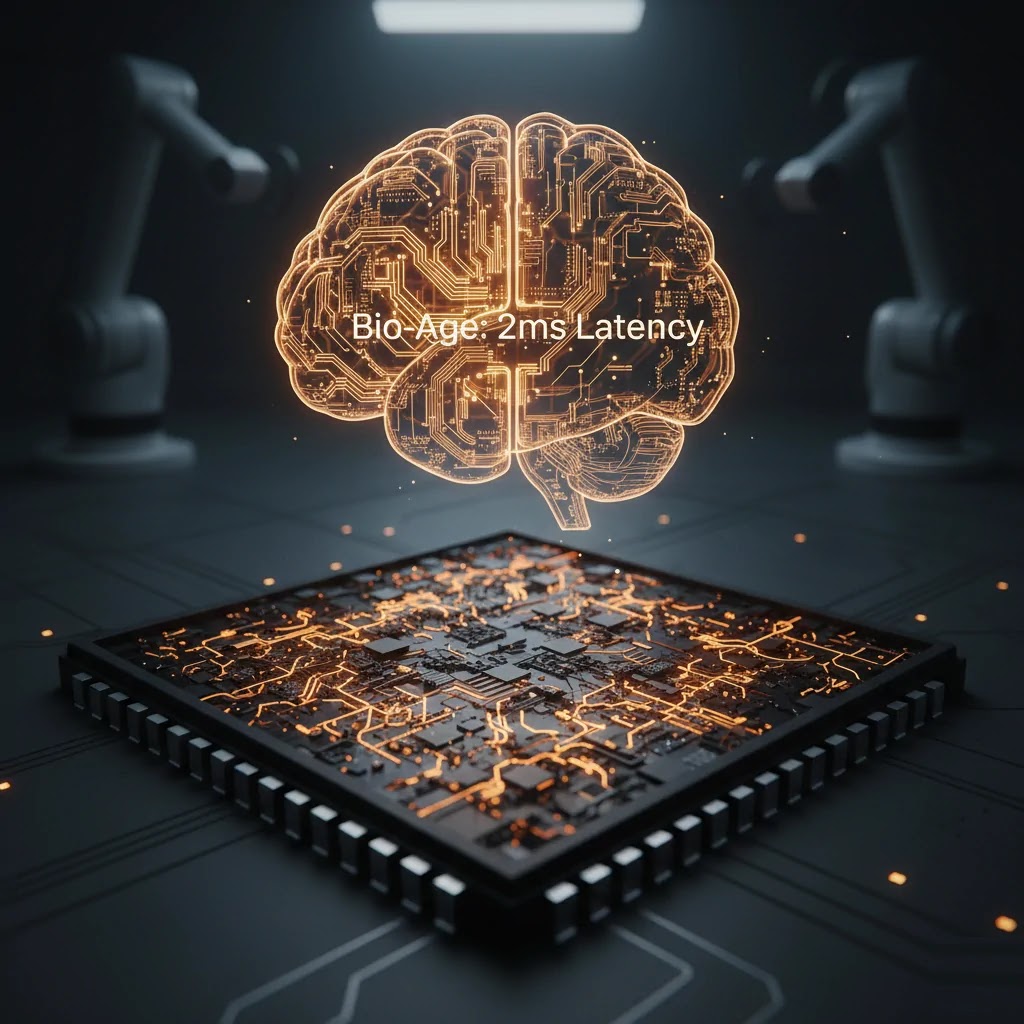
Artificial intelligence growth has created a hidden problem that many businesses only noticed in late 2025. Modern AI systems require enormous computing power, but traditional GPUs consume large amounts of electricity and generate significant heat. For edge devices, smart factories, autonomous robots, and wearable health systems, this approach is becoming expensive and inefficient.
That pressure is accelerating interest in Neuromorphic Computing, a new category of brain inspired silicon designed to process information more like biological neurons instead of conventional processors. In practical use, these chips can react instantly to changing conditions while consuming far less power than traditional AI hardware.
After Intel revealed major updates around the Loihi 3 platform in 2026, neuromorphic systems moved from research labs into serious commercial discussions. Technology firms, robotics manufacturers, automotive suppliers, and healthcare startups are now evaluating how these low power AI systems could reduce operational costs while improving real time decision making.
1. Why Neuromorphic Computing Matters in 2026
Traditional AI systems rely heavily on GPUs and cloud servers. While effective for large language model training, this model creates latency, energy, and infrastructure challenges when deployed at scale.
Neuromorphic chips solve this differently. Instead of continuously processing all incoming data, they respond only when important signals appear. This event driven architecture closely resembles how the human brain conserves energy.
In real world testing, this matters more than raw benchmark numbers. For example:
- Industrial robots can detect faults instantly without sending video feeds to cloud servers.
- Smart traffic systems can process movement patterns locally with minimal power use.
- Medical wearables can monitor vital signs for weeks instead of days.
- Agricultural drones can identify moving pests or animals while ignoring static background objects.
This shift is especially important for emerging sectors connected to Agentic AI systems, where devices need independent decision making without constant internet access.
Why Traditional AI Hardware Faces Limitations
One of the biggest concerns in the AI industry today is energy efficiency. Large AI data centers consume enormous electricity, which increases operational costs for businesses and governments.
During several recent industrial deployments, engineers observed that many edge AI tasks do not require continuous high power processing. A surveillance camera monitoring an empty warehouse, for example, wastes energy if it analyzes every frame equally.
Neuromorphic systems improve efficiency by activating only when meaningful changes occur. This makes them ideal for battery powered environments and remote infrastructure.
2. Intel Loihi 3 and the 2026 Breakthrough
The biggest neuromorphic computing discussion in 2026 centers around Intel’s Loihi 3 architecture. Unlike traditional processors that separate memory and compute tasks, Loihi 3 integrates them more efficiently, reducing the need for constant data transfer.
This design dramatically lowers latency and power usage. In environments where every millisecond matters, such as robotics or autonomous systems, the difference becomes commercially valuable.
How Loihi 3 Works
Loihi 3 uses Spiking Neural Networks, commonly called SNNs. These networks mimic neuron behavior inside the human brain.
Instead of continuously performing calculations, the system activates only when signal thresholds are crossed. This allows devices to stay mostly idle until meaningful activity occurs.
From a business perspective, this creates several advantages:
- Lower cooling requirements in factories and data centers.
- Reduced battery consumption for mobile robotics.
- Faster real time reaction speeds.
- Less dependence on cloud infrastructure.
- Lower operational costs for edge AI deployments.
Manufacturing facilities using Humanoid Robotics are especially interested because these chips allow robots to process sensory data locally without network delays.
What Makes 2026 Different
Neuromorphic computing has existed in research environments for years, but 2026 marks a transition toward practical deployment. Earlier generations struggled with software compatibility and developer adoption.
Now, AI frameworks are slowly improving support for event driven computing. Hardware manufacturers are also aligning neuromorphic systems with edge AI strategies instead of treating them as experimental projects.
This commercial alignment is what makes the current market important.
3. Spiking Neural Networks vs Traditional Deep Learning
Most AI systems today rely on Deep Neural Networks, or DNNs. These models are excellent for large scale training but inefficient for lightweight edge applications.
Spiking Neural Networks operate differently. They process events instead of continuously analyzing all incoming information.
AI Hardware: GPU vs. Neuromorphic (2026)
| Feature | Traditional GPU (2025) | Neuromorphic (Loihi 3) |
|---|---|---|
| Power Draw | 300W to 700W | Approximately 1.2W Peak |
| Latency | 35ms or Higher | Below 2ms |
| Ideal Deployment | Large AI Model Training | Edge AI and Sensory Processing |
For many small and medium businesses, this comparison is important because operating cost matters more than benchmark marketing numbers.
A warehouse automation company, for example, may prioritize low energy consumption and instant object detection over massive cloud scale AI training capacity.
Use Cases Already Emerging
- Retail stores using low power customer movement tracking.
- Autonomous agricultural systems monitoring crop activity.
- Security cameras performing local threat analysis.
- Medical devices tracking irregular heartbeat patterns.
- Smart city infrastructure analyzing traffic flow.
4. Pros and Cons of Neuromorphic Computing
Advantages
- Extremely low power consumption.
- Fast real time response for sensory tasks.
- Reduced cloud dependency.
- Longer battery life for edge devices.
- Efficient deployment in remote locations.
Limitations
- Software ecosystems are still developing.
- Limited developer expertise compared to GPU systems.
- Not ideal for massive AI model training.
- Commercial deployment standards are still evolving.
- Higher initial research and integration costs.
Businesses should understand that neuromorphic computing is not a total replacement for GPUs. Instead, it complements existing AI infrastructure.
Large cloud models will still require traditional high performance systems. Neuromorphic chips excel mainly in edge intelligence and event driven processing.
5. Who Should Adopt Neuromorphic Systems First
Best Fit Industries
- Industrial automation companies.
- Robotics startups.
- Healthcare wearable manufacturers.
- Smart agriculture businesses.
- Autonomous mobility systems.
- Defense and aerospace monitoring platforms.
Who Should Wait
- Businesses focused only on cloud AI training.
- Companies without edge deployment needs.
- Organizations lacking specialized AI engineering support.
For small businesses, the smartest approach may involve gradual experimentation instead of full infrastructure replacement.
Testing neuromorphic systems in one operational area, such as predictive maintenance or warehouse automation, allows companies to measure efficiency gains before scaling.
6. The Growing Neuromorphic Computing Market
The Neuromorphic Computing Market is expected to accelerate sharply during 2026 as edge AI adoption expands worldwide.
Much of this growth is linked to industries searching for energy efficient AI infrastructure. Power consumption is now a boardroom level concern for technology firms.
Wearables, robotics, industrial monitoring, and autonomous systems are expected to become the strongest adoption categories over the next few years.
Neuromorphic Market Valuation ($ Millions)
Another major factor is the rise of AI powered health monitoring systems, where continuous processing with minimal battery drain becomes extremely valuable.
7. Best Practices Before Investing in Neuromorphic AI
- Start with low latency edge applications.
- Measure power savings before scaling deployments.
- Train internal engineering teams on SNN architectures.
- Use neuromorphic systems alongside traditional AI infrastructure.
- Focus on tasks involving real time sensing or motion analysis.
One consistent observation from early deployments is that companies succeed faster when they target very specific use cases first instead of attempting complete infrastructure transformation immediately.
8. Frequently Asked Questions
What is neuromorphic computing?
Neuromorphic computing is a type of AI hardware architecture designed to mimic the way biological neurons process information. It focuses on efficiency, event driven processing, and low power consumption.
Why are neuromorphic chips important for edge AI?
Edge AI devices often operate with limited battery power and require instant responses. Neuromorphic chips reduce energy usage while improving real time decision making.
Can neuromorphic chips replace GPUs?
No. GPUs remain essential for training large AI models. Neuromorphic systems are better suited for lightweight real time tasks and sensory processing.
Which industries benefit most from neuromorphic computing?
Industries such as robotics, healthcare, industrial automation, agriculture, and smart city infrastructure are among the strongest candidates for early adoption.
Why is 2026 considered a major year for neuromorphic AI?
Commercial hardware improvements, edge AI demand, and rising energy costs have pushed neuromorphic computing from experimental research into practical deployment discussions.
KOLAACE™ Verdict
Neuromorphic computing represents a major shift in how AI systems process information. Instead of relying only on brute force computing power, the industry is moving toward intelligent efficiency. In 2026, companies are beginning to realize that faster AI is not always the most profitable AI. Lower latency, lower energy use, and reliable edge performance may define the next phase of artificial intelligence adoption.
As smart city infrastructure, robotics, and autonomous systems continue expanding, brain inspired silicon is likely to become one of the most important hardware categories of the decade.