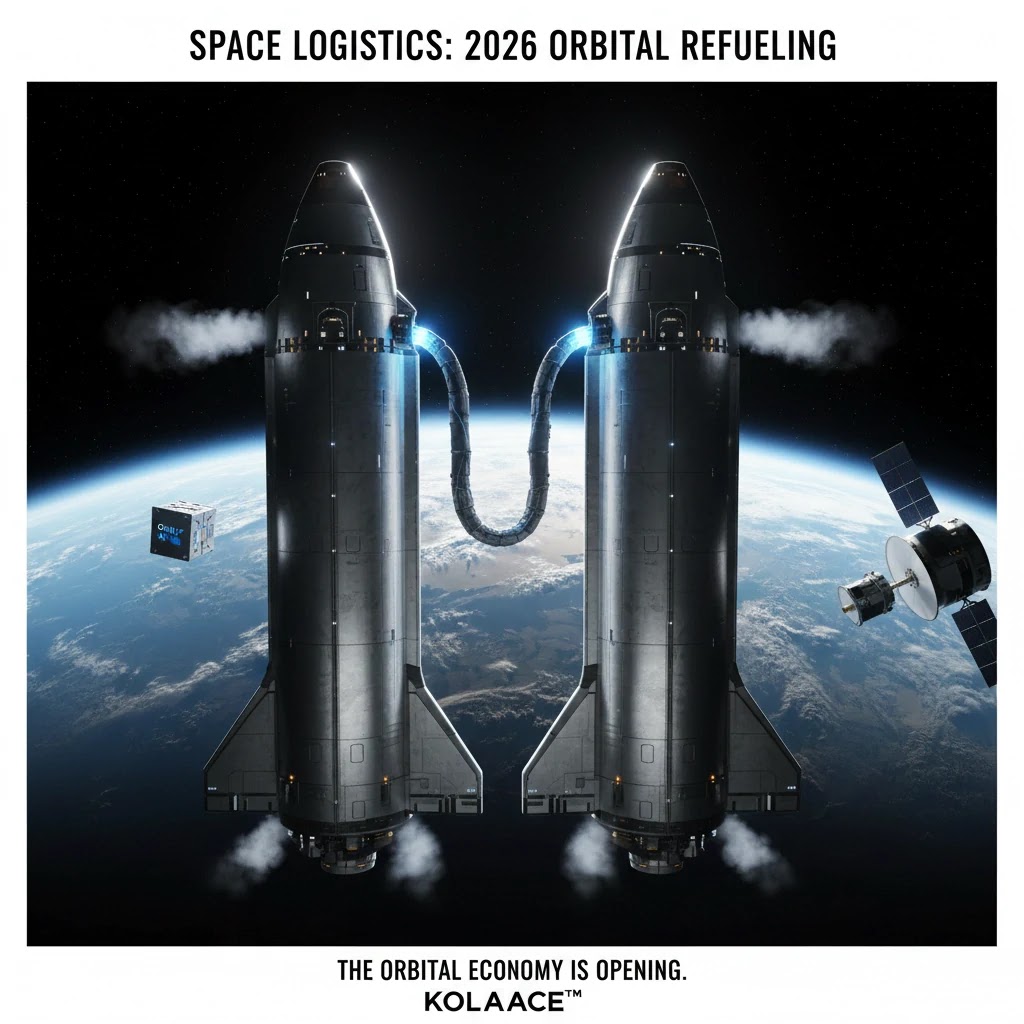
Space exploration is entering a completely different phase in 2026. For years, the global focus stayed on building bigger rockets and reducing launch costs. That problem is slowly being solved. The next challenge is far more practical, how to keep spacecraft operating for months or years without returning to Earth. Fuel limitations have become the biggest bottleneck for lunar missions, military satellites, deep space probes, and commercial communication systems.
Orbital refueling stations are emerging as the infrastructure layer that could solve this problem. Instead of treating spacecraft like disposable hardware, the industry is moving toward reusable orbital logistics networks. In simple terms, satellites and deep space vehicles may soon refuel in orbit just like aircraft refuel on the ground.
This shift matters far beyond the space sector. Industries connected to Lunar Economy systems, global broadband, defense surveillance, navigation, and autonomous shipping all depend on reliable orbital infrastructure. A satellite that can be serviced instead of replaced saves enormous costs over time.
1. Why Orbital Refueling Matters in 2026
Most satellites launched today carry a fixed amount of fuel. Once that supply runs out, the mission usually ends even if the onboard systems are still functional. This approach creates unnecessary waste and increases launch frequency.
Orbital refueling changes the economics of space operations. Instead of replacing an entire spacecraft, operators can extend its life through fuel transfers and maintenance missions.
Key reasons the industry is investing heavily in orbital logistics
- Lower long term satellite replacement costs
- Longer mission durations for lunar and Mars missions
- Better maneuverability for military and communication satellites
- Reduced space debris through reusable servicing systems
- Support for future deep-space mining and manufacturing
Engineers working on modern satellite fleets often compare the old approach to throwing away a truck because the fuel tank became empty. The hardware itself may still operate perfectly for years.
This is especially important as Edge Computing infrastructure and 6G satellite networks continue expanding globally. More satellites in orbit means higher demand for maintenance and fuel support.
2. SpaceX Starship and the June 2026 Fuel Transfer Mission
The most closely watched event in space logistics this year is the planned Starship propellant transfer mission. SpaceX intends to dock two Starships in Low Earth Orbit and transfer cryogenic methane and liquid oxygen between them.
This may sound straightforward on paper, but the engineering difficulty is extremely high. Cryogenic fuel must remain at ultra low temperatures in a zero gravity environment. Even small thermal fluctuations can create pressure instability or fuel boil-off.
What engineers are solving during orbital fuel transfer
- Precise autonomous docking between large spacecraft
- Managing fluid movement in microgravity
- Preventing fuel evaporation during transfer
- Real time pressure monitoring through AI sensor systems
- Maintaining structural stability during fuel exchange
One aerospace consultant compared the challenge to transferring LPG between two moving tankers while floating in vacuum conditions. Every small vibration matters.
NASA’s Artemis lunar plans depend heavily on successful orbital refueling. Without in-space fuel transfer, carrying heavy lunar cargo becomes inefficient and extremely expensive.
These missions also depend on AI-driven monitoring systems connected through advanced 6G connectivity infrastructure, where edge sensors continuously track fuel pressure, heat conditions, and docking alignment.
3. Orbit Fab and the Rise of Space Fuel Stations
While large companies focus on Moon missions, startups are building the service layer for everyday orbital operations. Orbit Fab is one of the most discussed companies in this category.
The company’s RAFTI refueling interface is designed to standardize in-space fuel transfer. Think of it as creating a universal charging port, but for satellites.
This standardization matters because satellites are built by many different manufacturers. Without a common refueling interface, servicing missions become difficult and expensive.
How orbital refueling stations could operate commercially
- Fuel depots positioned in strategic orbital zones
- Autonomous servicing spacecraft delivering propellant
- Subscription-based servicing contracts for satellite operators
- Emergency orbital rescue missions for damaged systems
- On-demand maneuver support for defense satellites
Industry analysts increasingly view orbital logistics as a future recurring revenue business rather than a one-time aerospace project. Companies operating navigation satellites, weather systems, internet constellations, and defense platforms all benefit from longer asset life.
This maintenance-first philosophy mirrors trends seen in Personalized Longevity technology, where extending the usable lifespan of systems becomes more valuable than constant replacement.
Orbital Servicing Capabilities: 2026 Evolution
| Feature | 2024 Legacy | 2026 Standard |
|---|---|---|
| Fuel Strategy | Stored at Launch | In-Orbit Top-ups |
| Docking Tech | Manual/Fixed | Autonomous RAFTI / GRASP |
| Design Model | Disposable Assets | Modular Refuelable Fleets |
4. Real World Use Cases Beyond Moon Missions
Many people associate orbital refueling only with Mars or lunar exploration. In reality, commercial applications closer to Earth may generate the first large revenue streams.
Commercial satellite operators
Telecom companies can reposition satellites to improve regional coverage instead of launching replacement units. This becomes important for global internet systems and future rural connectivity projects.
Defense and surveillance systems
Military satellites often need rapid maneuvering capability to avoid threats or reposition sensors. Refueling support increases operational flexibility.
Earth observation and agriculture
Longer satellite life helps weather forecasting, crop monitoring, and disaster management systems. Countries dependent on monsoon forecasting can benefit from uninterrupted observation infrastructure.
Deep space cargo transport
Future cargo missions transporting mining equipment or construction hardware to lunar bases will almost certainly require orbital fuel depots.
As Physical AI systems become more active in space operations, autonomous servicing robots may eventually perform repairs and fuel transfer without human intervention.
5. Advantages and Challenges of Orbital Refueling
Major advantages
- Extends satellite lifespan significantly
- Reduces long term launch expenses
- Supports deep space exploration missions
- Improves flexibility for military and telecom systems
- Helps reduce orbital debris over time
Current limitations
- High infrastructure development costs
- Complex autonomous docking requirements
- Limited international fuel transfer standards
- Regulatory uncertainty for commercial operations
- Extreme safety requirements for cryogenic fuels
From an investment perspective, the sector still carries substantial technical risk. Many concepts work in simulations but require years of real orbital testing before mass adoption.
However, aerospace analysts increasingly agree that reusable logistics systems are necessary if the global space economy is expected to scale sustainably during the next decade.
6. An $8.8 Billion Logistic Powerhouse
The global space logistics market has reached approximately $8.82 billion in 2026. This rapid expansion reflects growing demand for satellite servicing, orbital transportation, autonomous docking systems, and fuel management technologies.
One major growth driver is the increasing number of satellites launched for broadband internet and navigation services. Modern satellites often need regular orbital adjustments to avoid debris or optimize positioning.
In practical business terms, orbital refueling infrastructure could eventually become as essential to space operations as airports are to aviation.
Space Logistics Market Valuation ($ Billions)
7. Best Practices for Companies Entering Space Logistics
For startups and investors exploring orbital logistics opportunities, the biggest lesson from early aerospace deployments is simple. Reliability matters more than hype.
Important strategic considerations
- Focus on interoperability standards early
- Prioritize autonomous safety systems
- Build partnerships with launch providers
- Invest heavily in thermal management research
- Develop modular servicing architectures
Small aerospace firms entering this market often underestimate how important software reliability becomes in autonomous orbital operations. A minor docking error in orbit can destroy multi-million dollar hardware.
That is why companies developing AI navigation systems, robotic servicing tools, and low-latency communication networks are attracting increasing attention from investors.
8. Frequently Asked Questions
What is an orbital refueling station?
An orbital refueling station is a space-based platform or servicing vehicle that transfers fuel to satellites or spacecraft while they remain in orbit.
Why is orbital refueling important for Moon missions?
Deep space missions require enormous amounts of fuel. Refueling in orbit allows spacecraft to carry larger cargo loads without launching fully fueled systems directly from Earth.
Can existing satellites be upgraded for refueling?
Some newer satellites are being designed with refueling interfaces, but many older systems were not built for servicing compatibility.
Which companies are leading the orbital logistics industry?
SpaceX, Orbit Fab, Northrop Grumman, and several emerging aerospace startups are actively developing orbital servicing and fuel transfer technologies.
Will orbital refueling reduce space debris?
Potentially yes. Extending satellite lifespan reduces the need for constant replacement launches, which may help lower the number of inactive spacecraft in orbit.
KOLAACE™ Verdict
The future of space expansion will depend less on rocket launches and more on sustainable orbital infrastructure. In 2026, orbital refueling stations are becoming the backbone of long-duration missions, satellite servicing, and commercial lunar operations. The companies building these systems today are not simply supporting spacecraft. They are building the supply chain of the future space economy.
As the industry shifts toward reusable and serviceable orbital assets, logistics capability may become one of the strongest competitive advantages in aerospace. Continue exploring our latest space tech trends for more future-focused analysis.