Workforce Strategy Overview
- Collaboration First: AI extends human capability instead of replacing it.
- System Driven Work: Teams operate through structured workflows, similar to automated income systems.
- Skill Shift: Problem solving, decision making, and AI supervision become core skills.
- Speed Advantage: Hybrid teams execute tasks faster with fewer errors.
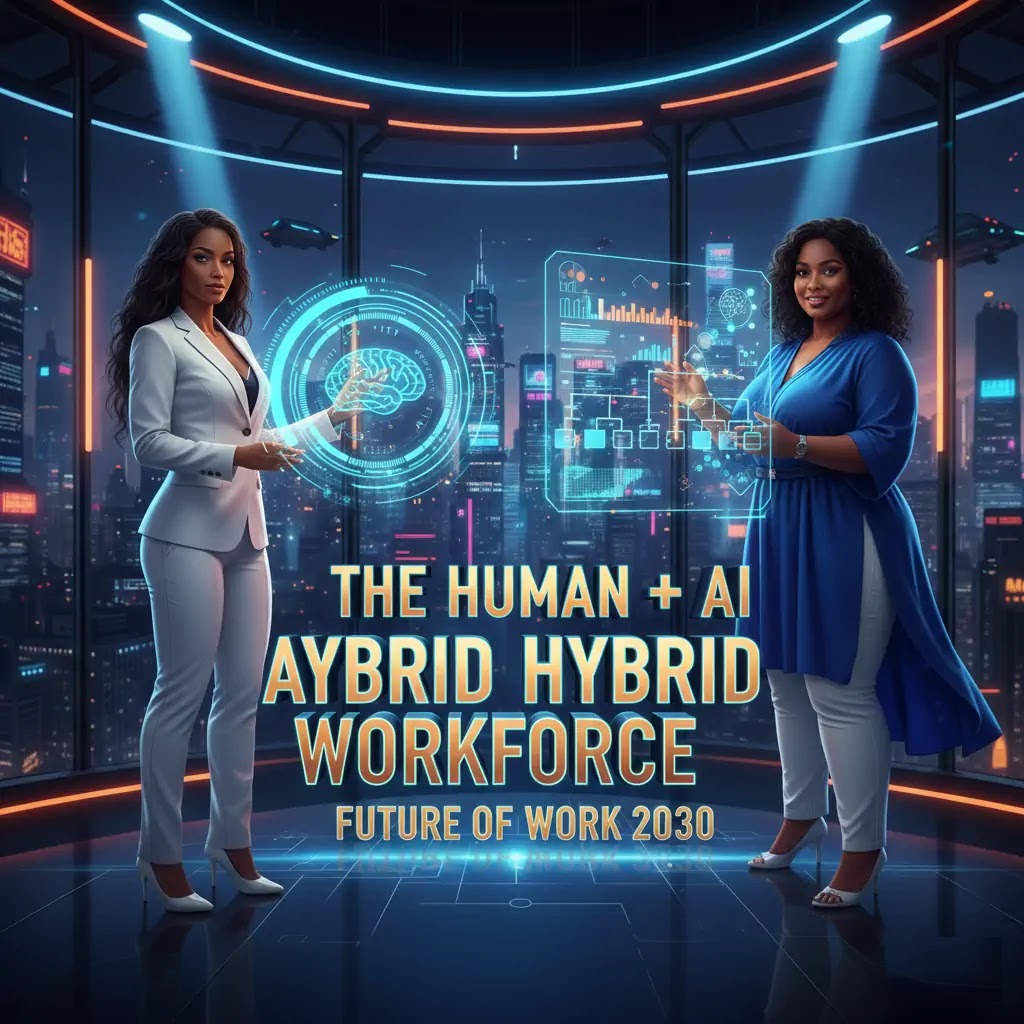
Many businesses today struggle with slow execution, repetitive tasks, and rising operational costs. Hiring more people is no longer the most efficient solution. The real shift happening now is the move toward a Human plus AI hybrid workforce, where systems handle execution and humans focus on direction and creativity.
This is not a future concept. It is already visible in small businesses, startups, and even solo creators. Tasks that once required teams can now be managed by one person supported by AI tools. The key difference is not just using AI, but integrating it into daily workflows.
A hybrid workforce means every role is supported by intelligent systems. For example, a marketing professional no longer spends hours analyzing data manually. Instead, AI tools generate insights instantly, allowing the person to focus on strategy and messaging.
Industry Transformation Benchmarks
How responsibilities are shifting between AI systems and human professionals.
| Industry | AI Primary Role | Human Primary Role |
|---|---|---|
| Marketing | Data processing, content drafting | Storytelling and audience connection |
| Finance | Risk analysis and forecasting | Strategic planning and judgment |
| Healthcare | Pattern recognition in data | Patient interaction and care decisions |
| Software | Code generation and testing | Architecture and innovation |
Across industries, the pattern is consistent. AI handles speed and data, while humans handle meaning, judgment, and context.
Workforce Transformation Timeline
Growth of AI supported work environments.
Step by Step: Building a Hybrid Workforce
Step 1: Identify Work That Can Be Assisted
Start by analyzing daily tasks. Focus on repetitive actions like data entry, reporting, or responding to common queries.
Step 2: Introduce AI Support Tools
Use AI tools as assistants, not replacements. Let them handle drafts, analysis, and routine communication.
Step 3: Redesign Roles
Shift human roles toward supervision, decision making, and creative work. This increases both productivity and job satisfaction.
Step 4: Build Integrated Workflows
Connect tools into a system. This ensures smooth data flow and reduces manual switching between tasks.
Step 5: Monitor and Improve
Track performance regularly. Adjust workflows based on real results, not assumptions.
Real World Use Cases
Small Business Owner
Automates customer responses, manages inventory tracking, and uses AI for marketing content. Result is faster growth without hiring more staff.
Freelancer
Uses AI to generate drafts, organize tasks, and handle communication. This allows handling more clients efficiently.
Startup Team
Combines a small team with automation tools to manage operations, marketing, and analytics. This reduces burn rate and increases speed.
Pros and Cons of Hybrid Workforce
Advantages
- Higher productivity with fewer resources
- Faster execution of tasks
- Better use of human creativity and thinking
- Scalable systems that grow with the business
Limitations
- Requires initial setup and learning
- Dependence on tools and systems
- Risk of over automation without human review
Who Should Use This Model
- Business owners aiming to scale efficiently
- Professionals who want to increase output without burnout
- Teams looking to modernize operations
Who Should Avoid It
- Organizations without clear workflows
- Teams resistant to adopting new tools
Best Practices for Long Term Success
- Start small and expand gradually
- Maintain human oversight at all stages
- Continuously train team members on new tools
- Focus on solving real problems, not just adopting trends
“The future of work belongs to those who combine human judgment with the speed of intelligent systems.”
Conclusion
The hybrid workforce is not about replacing people. It is about redesigning how work gets done. Businesses that adopt this model early gain a strong advantage through speed, efficiency, and better decision making. The key is to treat AI as a system component, not just a tool.
Frequently Asked Questions
Most roles will evolve instead of disappearing. People will focus more on managing systems and making decisions.
Begin with small automation steps, then gradually integrate tools into a connected workflow system.
Yes. Small businesses benefit the most because they can scale without large teams.
Critical thinking, adaptability, and the ability to work with AI tools will be essential skills.