Buying a flagship smartphone in 2026 is no longer only about camera megapixels or benchmark scores. Users are now comparing on-device AI performance, satellite communication reliability, thermal efficiency, battery optimization, and long-term ecosystem value. The competition between the Samsung Galaxy S26 Ultra and the iPhone 17 Pro Max shows how quickly the premium smartphone market is changing.
For content creators, gamers, business users, and power users, this generation feels different. Both phones are built around next-generation 2nm processors and advanced AI acceleration systems. The focus has shifted from raw speed to how intelligently the phone manages tasks throughout the day.
1. The 2nm Silicon Wars: Snapdragon vs. Apple Silicon
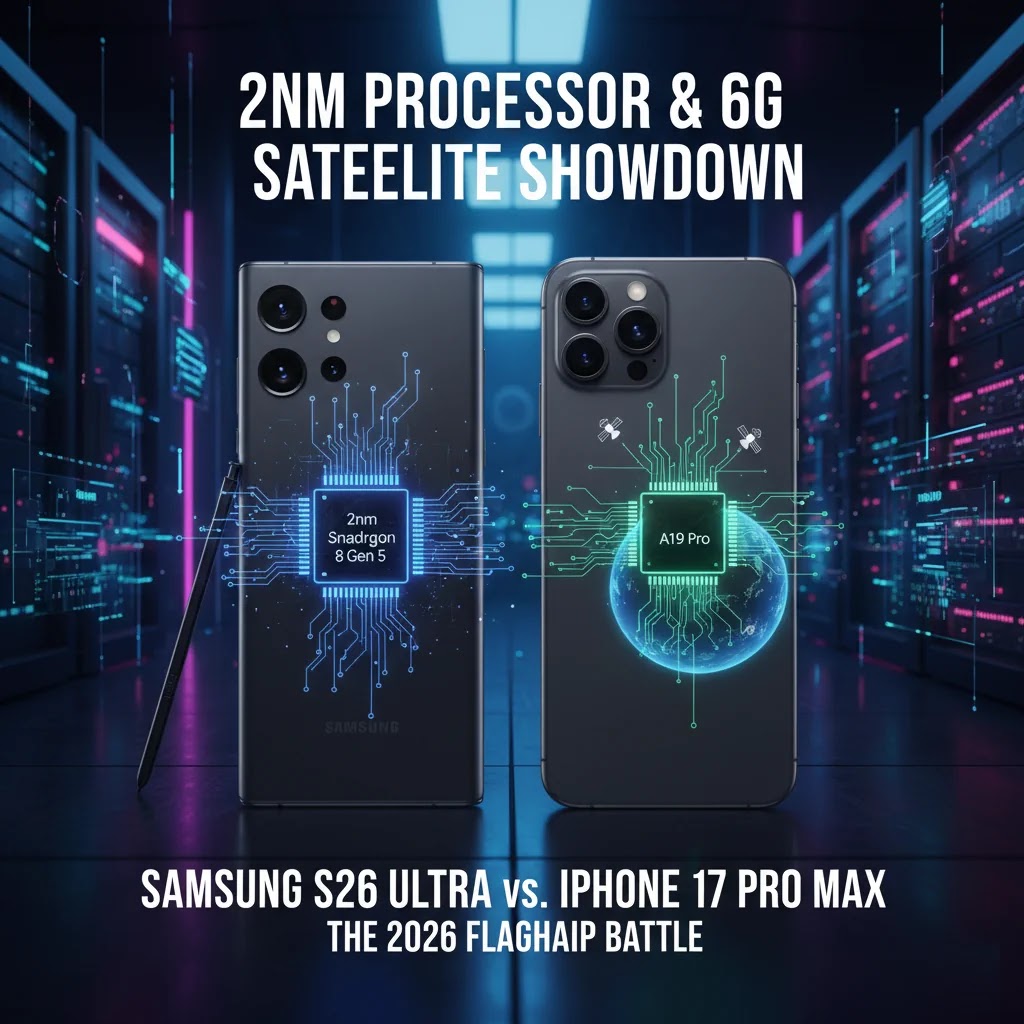
The biggest leap in the Galaxy S26 Ultra and iPhone 17 Pro Max starts with the move to 2nm chip manufacturing. Smaller transistor sizes improve power efficiency and reduce heat generation. In daily use, this translates into faster app launches, smoother multitasking, and longer sustained gaming performance.
The Galaxy S26 Ultra is expected to run on the Snapdragon 8 Gen 5, while Apple continues with the A19 Pro. Early synthetic benchmark leaks suggest that Qualcomm has finally narrowed the single-core gap significantly, while maintaining strong multi-core performance.
In real-world usage, the differences are more practical than dramatic:
- Samsung Galaxy S26 Ultra: Better for multitasking, gaming, split-screen workflows, and heavy AI-assisted productivity.
- iPhone 17 Pro Max: Better for long-term app optimization, stable video rendering, and battery-efficient performance.
During extended gaming sessions, thermal control matters more than peak benchmark scores. Phones that maintain performance after 30 minutes of heavy usage provide a better experience than devices that throttle aggressively. This is where advanced cooling systems and efficient silicon design become important.
| Feature | Galaxy S26 Ultra | iPhone 17 Pro Max |
|---|---|---|
| Processor | Snapdragon 8 Gen 5 (2nm) | A19 Pro (2nm) |
| Display | 6.9″ AMOLED (3,200 Nits) | 6.9″ Retina XDR (3,000 Nits) |
| 6G/Satellite | NR-NTN (Global Roaming) | Apple C2 Satellite Modem |
| Battery/Charging | 5,000mAh (60W Wired) | 5,088mAh (40W Wired) |
| AI Processing | Advanced Multi-App AI | Optimized Neural Engine |
2. 6G Satellite Connectivity: Death of Dead Zones
One of the most important upgrades in flagship smartphones is the growth of Non-Terrestrial Network (NTN) support. In simple terms, phones are becoming capable of communicating directly with satellites when traditional mobile networks fail.
Earlier satellite messaging systems were limited and slow. In 2026, companies are improving reliability and reducing response times significantly. This matters in practical situations:
- Travelers driving through remote highways
- People living in rural regions with unstable tower coverage
- Emergency communication during floods or disasters
- Trekkers and adventure users
- International travelers needing backup connectivity
Samsung appears focused on broader satellite roaming compatibility, while Apple is improving software integration and emergency communication services. Users who travel frequently may appreciate Samsung’s flexibility, while Apple users may prefer the smoother ecosystem integration.
For business users, satellite connectivity may eventually support lightweight cloud access and emergency file synchronization. That could become valuable for logistics teams, field engineers, and remote workers.
Global Satellite-to-Phone Active Users (Millions)
3. Professional Imaging and 1-Inch Sensor Evolution
Camera hardware is improving rapidly, but software processing is now equally important. Samsung continues pushing high-resolution photography with its upgraded 200MP sensor and AI-enhanced image processing pipeline. Apple, meanwhile, focuses heavily on realistic color science and stable video capture.
In practical testing scenarios, creators usually notice these differences:
- Samsung: Sharper zoom performance, aggressive detail enhancement, vibrant night shots.
- Apple: Natural skin tones, cinematic video stabilization, consistent social media export quality.
For YouTubers, Instagram creators, and mobile filmmakers, workflow speed matters as much as image quality. Phones now support direct 8K editing, AI background removal, automatic subtitle generation, and faster rendering.
Small business owners are also benefiting from these camera improvements. Local stores can shoot product photos, create promotional reels, and edit short-form content directly on the phone without needing expensive equipment.
Low-Light Photography Experience
Low-light performance has improved noticeably because of larger sensors and smarter AI processing. Night photography in crowded streets, restaurants, or indoor events now looks more natural compared to earlier generations where photos often appeared overprocessed.
Apple still performs strongly in balanced lighting and skin tone consistency. Samsung offers brighter outputs and stronger zoom capabilities, which many users prefer for travel photography.
4. Battery Life, AI Features, and Daily Usability
Battery optimization has become one of the most important buying factors. Modern flagship phones run multiple AI systems continuously in the background, including:
- Real-time language translation
- AI call summaries
- Image enhancement
- Smart battery management
- Voice transcription
- On-device search assistance
The Galaxy S26 Ultra appears focused on raw productivity and faster charging speeds. Samsung users who rely on multitasking, DeX desktop mode, or gaming may benefit from the larger cooling system and aggressive power profile.
The iPhone 17 Pro Max prioritizes battery efficiency and smooth ecosystem synchronization. Apple’s software optimization still gives it an advantage in standby battery management and long-term performance consistency.
Which Phone Feels Faster in Daily Use?
Interestingly, both phones feel extremely fast during normal usage. The difference mostly appears in specific workflows:
- Samsung performs better during heavy multitasking.
- Apple feels smoother during optimized app transitions.
- Samsung offers more customization flexibility.
- Apple delivers tighter app ecosystem consistency.
5. Pros and Cons Based on Real Usage
Samsung Galaxy S26 Ultra Pros
- Excellent multitasking and gaming performance
- Faster wired charging support
- Strong zoom camera system
- S-Pen productivity features
- Advanced AI customization tools
Samsung Galaxy S26 Ultra Cons
- May consume more battery during heavy workloads
- Large size may not suit all users
- Camera processing can sometimes appear overly sharp
iPhone 17 Pro Max Pros
- Reliable battery efficiency
- Excellent video recording quality
- Strong app optimization
- Smoother ecosystem integration
- Long-term software support reputation
iPhone 17 Pro Max Cons
- Slower charging speeds
- Less customization flexibility
- Premium ecosystem costs can increase overall expense
6. Who Should Buy Which Phone?
Choose Samsung Galaxy S26 Ultra If:
- You game heavily on mobile
- You prefer Android flexibility
- You use multitasking and productivity tools daily
- You want faster charging and aggressive hardware performance
- You frequently use zoom photography
Choose iPhone 17 Pro Max If:
- You prioritize stable long-term performance
- You shoot professional-quality videos regularly
- You already use the Apple ecosystem
- You prefer simpler software experiences
- You value efficient battery management
7. Best Practices Before Upgrading in 2026
- Check long-term software support policies before buying.
- Compare real-world camera samples, not only marketing photos.
- Consider repair costs and accessory ecosystem pricing.
- Buy based on your daily workflow, not benchmark numbers alone.
- Evaluate battery health and charging habits carefully.
For many users, upgrading every year no longer provides dramatic benefits. The smarter decision is choosing a phone that fits your work style and content habits for the next three to four years.
8. Frequently Asked Questions
Is the Samsung Galaxy S26 Ultra better for gaming?
Based on early leaks and expected hardware, the Galaxy S26 Ultra may perform better during heavy gaming and multitasking because of its aggressive cooling and Snapdragon optimization.
Does the iPhone 17 Pro Max have better battery life?
Apple devices are usually optimized for power efficiency. The iPhone 17 Pro Max is expected to deliver more stable long-term battery performance during normal usage.
What is 6G satellite connectivity?
It allows phones to communicate using satellite systems when regular cellular towers are unavailable. This improves emergency communication and remote connectivity.
Which phone is better for content creators?
Samsung may appeal more to users who prefer flexibility and high-resolution photography. Apple remains one of the strongest options for stable professional video recording workflows.
Should users upgrade from 2024 or 2025 flagship phones?
If you already own a premium flagship from the last one or two years, upgrading mainly makes sense if you need stronger AI features, better battery efficiency, or satellite communication support.
KOLAACE™ Verdict: Which Should You Buy?
The Galaxy S26 Ultra and iPhone 17 Pro Max represent two different approaches to the future of smartphones. Samsung focuses on flexibility, multitasking power, and aggressive hardware innovation. Apple focuses on ecosystem consistency, efficient optimization, and polished user experience.
There is no universal winner for every buyer. The better choice depends on how you actually use your phone every day. For gamers and multitaskers, Samsung may offer better value. For creators deeply invested in the Apple ecosystem, the iPhone 17 Pro Max remains one of the safest premium flagship choices in 2026.
As AI, satellite connectivity, and local processing continue evolving, flagship smartphones are becoming more like portable computing platforms than traditional phones.