Cooking in 2026 is no longer just about recipes and skills. Many people struggle with time, consistency, and maintaining healthy eating habits. This is where the smart kitchen becomes important. Instead of manually controlling everything, your kitchen now assists you with decisions, timing, and even nutrition planning.
Modern kitchens are powered by connected systems that use Edge AI processing. This means your appliances process data instantly without relying on the cloud. The result is faster response, better privacy, and more accurate cooking adjustments.
At the center of this shift are two major innovations, AI ovens and robotic chefs. Both aim to simplify cooking, but they work in very different ways. Understanding this difference is important before investing in any smart kitchen setup.
What Is an AI Oven and How It Works
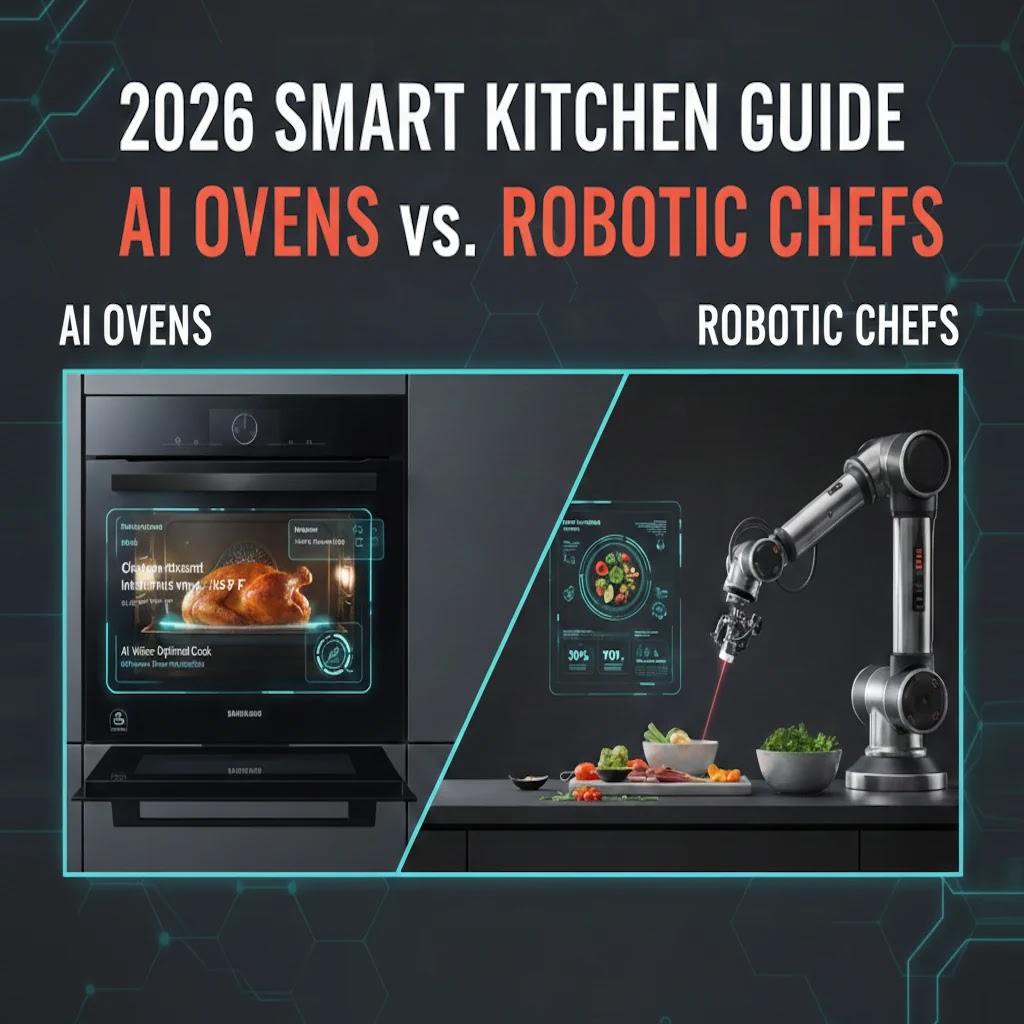
An AI oven is not just a heating device. It is a smart system that uses cameras, sensors, and machine learning models to understand what you are cooking. Once food is detected, the oven adjusts temperature, humidity, and cooking time automatically.
For example, if you place raw chicken inside, the oven can:
- Identify the food type using an internal camera
- Set the correct cooking mode automatically
- Monitor surface browning to avoid burning
- Adjust heat levels in real time
This is especially useful for beginners or busy professionals who cannot monitor cooking continuously. It reduces guesswork and improves consistency.
Real Use Case
In many urban homes, working professionals use AI ovens for daily meals. Instead of ordering food, they prepare simple dishes like grilled vegetables or baked chicken with minimal effort. The oven handles timing and precision, which saves time and reduces mistakes.
What Is a Robotic Chef
A robotic chef goes beyond cooking assistance. It physically performs cooking tasks such as chopping, stirring, flipping, and plating. These systems are designed to replicate human cooking actions using robotic arms and AI decision systems.
Unlike AI ovens, robotic chefs handle the entire cooking process. They can follow complex recipes step by step without human involvement.
Typical capabilities include:
- Ingredient handling and preparation
- Automated stirring and mixing
- Precise timing for multi step recipes
- Consistent taste replication
Where Robotic Chefs Are Used
Robotic chefs are currently more common in high-end restaurants, cloud kitchens, and luxury homes. Small food businesses also use them to maintain consistent taste across multiple orders.
AI Ovens vs Robotic Chefs: Key Differences in 2026
| Feature | AI Oven | Robotic Chef |
|---|---|---|
| Function | Automates cooking conditions | Performs full cooking process |
| Ease of Use | Very easy for beginners | Requires setup and learning |
| Cost | Moderate | Very high |
| Best For | Home users | Businesses and premium users |
Robotic Kitchen Market Growth in 2026
Market Growth: The Robotic Kitchen Economy
Estimated growth of the global robotic kitchen market in billion dollars till 2028.
The market is growing rapidly due to demand for convenience and health focused cooking. Integration with AI health wearable devices allows kitchens to suggest meals based on calorie needs and activity levels.
“The future kitchen is not just automated, it is aware of your habits, health, and daily routine.”
Pros and Cons
AI Oven
- Easy to use and beginner friendly
- Affordable compared to robotic systems
- Improves cooking accuracy
- Limited to oven based cooking
Robotic Chef
- Handles full cooking process
- Ensures consistent taste
- Very expensive
- Requires space and maintenance
Who Should Use What
Choose an AI oven if:
- You want quick and reliable daily cooking
- You are a beginner or have limited time
- You prefer a budget friendly smart upgrade
Choose a robotic chef if:
- You run a food business or cloud kitchen
- You need consistent output at scale
- You have a high budget and space
Best Practices for Smart Kitchens
- Start with one smart appliance before full automation
- Keep software updated for better AI performance
- Use health integrations for personalized meals
- Maintain hygiene of sensors and cameras
Conclusion
AI ovens and robotic chefs both represent the future of cooking, but they serve different needs. AI ovens are practical, accessible, and ideal for most households. Robotic chefs are powerful but currently limited to premium use cases.
The smart approach is to adopt gradually. Start with AI powered appliances and move toward automation based on your needs and budget.
Frequently Asked Questions (FAQ)
A smart kitchen uses connected appliances and AI systems to automate cooking, improve efficiency, and provide personalized meal suggestions.
Yes, they are useful for daily cooking, especially for people who want convenience and consistent results without much effort.
They involve advanced robotics, sensors, and AI systems, which increases manufacturing and maintenance costs.
Yes, when connected with health devices, they can suggest meals based on calorie intake, activity levels, and dietary goals.