Gaming in 2026 is no longer just about graphics or frame rates. The real shift is happening in how players interact with games. Many gamers now expect natural movement, instant response, and deeper immersion.
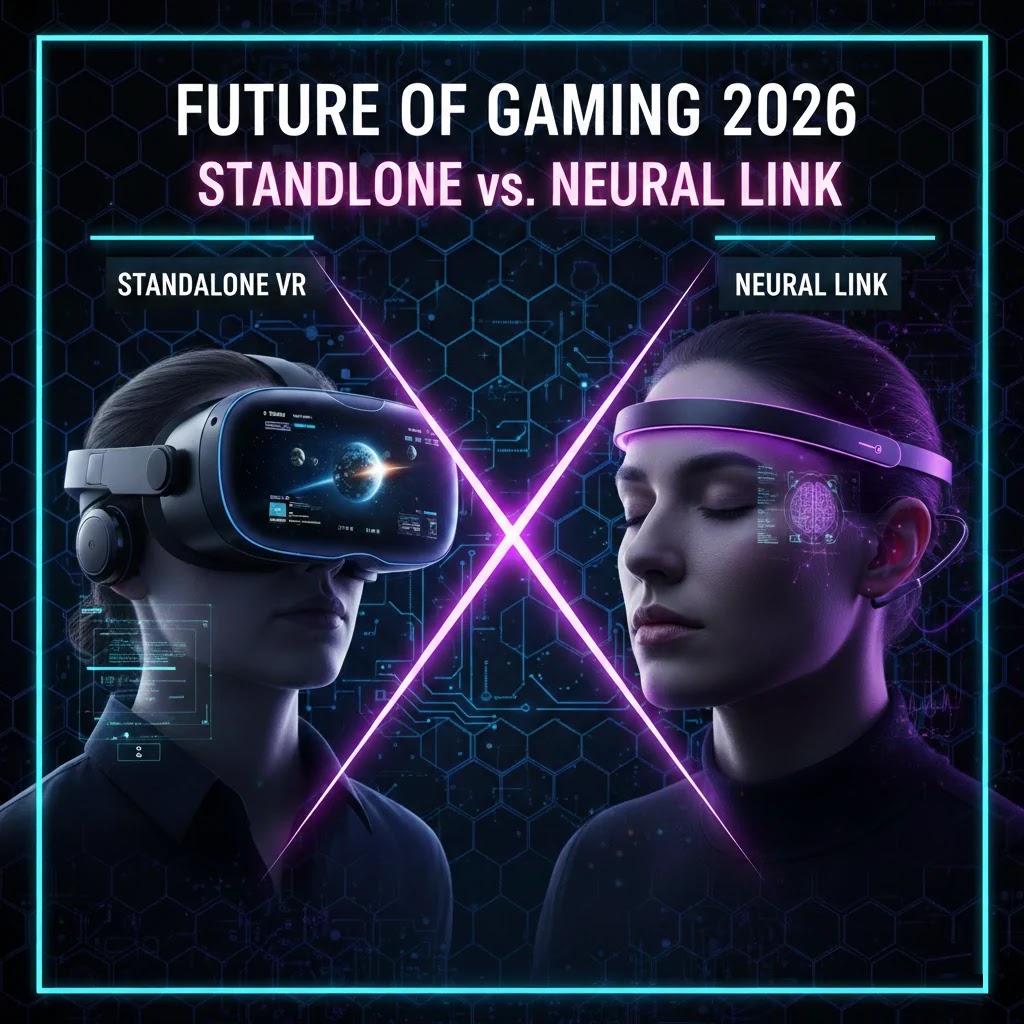
Two technologies are shaping this transition. Standalone VR headsets are becoming more powerful and accessible, while brain computer interface gaming is entering early real-world use. The difference between holding a controller and thinking an action is becoming smaller each year.
This guide breaks down what actually matters for gamers, developers, and even small gaming businesses such as VR cafes.
What Is Standalone VR Gaming in 2026
Standalone VR refers to headsets that do not need a PC or console. Devices like modern VR systems combine display, processing, and sensors in one unit.
In practical usage, this means:
- No cables or external setup
- Quick start for casual and regular gamers
- Reliable performance for most games
Many users in India prefer standalone VR because it is easier to install and maintain, especially in homes or gaming cafes.
What Is Neural Link or BCI Gaming
Brain computer interface gaming allows players to control games using neural signals. Instead of pressing buttons, the system reads intent from brain activity and converts it into actions.
Current real-world setups are still limited, but early use cases include:
- Competitive training environments
- Accessibility solutions for disabled users
- Experimental high immersion gameplay
Latency improvements from edge computing have made these systems more responsive, which is why interest is growing among professional gamers.
Standalone VR vs Neural Link: Key Differences in 2026
| Feature | Standalone VR Gaming | Neural Link Gaming |
|---|---|---|
| Input Method | Gesture, controllers, eye tracking | Brain signal based input |
| Immersion Level | Visual and physical interaction | Direct cognitive interaction |
| Accessibility | Widely available | Limited and experimental |
| Setup Complexity | Simple | Advanced setup required |
Step by Step: Choosing the Right Gaming Technology
Step 1: Define Your Usage
If you play casually or with friends, VR is practical. If you are exploring competitive or experimental gaming, BCI may be relevant.
Step 2: Check Budget
VR headsets are more affordable. Neural systems require higher investment and specialized hardware.
Step 3: Evaluate Setup Space
VR needs physical space for movement. Neural systems need technical setup but less physical movement space.
Step 4: Consider Long Term Use
VR has strong game support and ecosystem. BCI is still evolving and may change rapidly.
Real World Use Cases
1. Gaming Cafes
VR setups are already profitable for small businesses. Easy maintenance and wide game libraries make them suitable for daily customers.
2. Competitive eSports Training
BCI systems are being tested to improve reaction speed and decision making. This is still niche but growing.
3. Home Entertainment
Families prefer VR due to ease of use and multiplayer options.
4. Accessibility Gaming
BCI offers new possibilities for players who cannot use traditional controllers.
Pros and Cons
Standalone VR Advantages
- Affordable and accessible
- Large game ecosystem
- Easy to set up and maintain
Standalone VR Limitations
- Still depends on physical movement
- Limited by hardware battery life
Neural Gaming Advantages
- High immersion potential
- Faster input response in ideal setups
- New accessibility possibilities
Neural Gaming Limitations
- Very limited availability
- High cost and complexity
- Still under development
Who Should Use What
Choose VR if:
- You want a reliable gaming setup today
- You run a gaming cafe or small business
- You prefer ready to use systems
Consider Neural Gaming if:
- You are an early adopter or researcher
- You want cutting edge interaction technology
- You are involved in competitive training environments
Best Practices Before Investing
- Test VR devices before buying to check comfort
- Start with proven platforms instead of experimental setups
- Evaluate long term support and updates
- For businesses, calculate return per session or per user
Final Insight for 2026
Standalone VR is currently the practical choice for most users. Neural gaming is promising but still evolving. The future may combine both, but for now, choosing depends on your budget, purpose, and willingness to experiment.
“The real evolution in gaming is not just what you see, it is how naturally you can interact with the virtual world.”
Frequently Asked Questions (FAQ)
It is mostly limited to research and high-end setups. Regular consumers still rely on VR systems.
Yes. VR offers a complete ecosystem with games, apps, and regular updates.
VR is more practical due to lower cost, easier maintenance, and higher customer demand.
No. VR will likely evolve alongside neural technologies rather than being replaced completely.
Low latency systems, better interaction methods, and gradual adoption of brain-based controls are key trends.