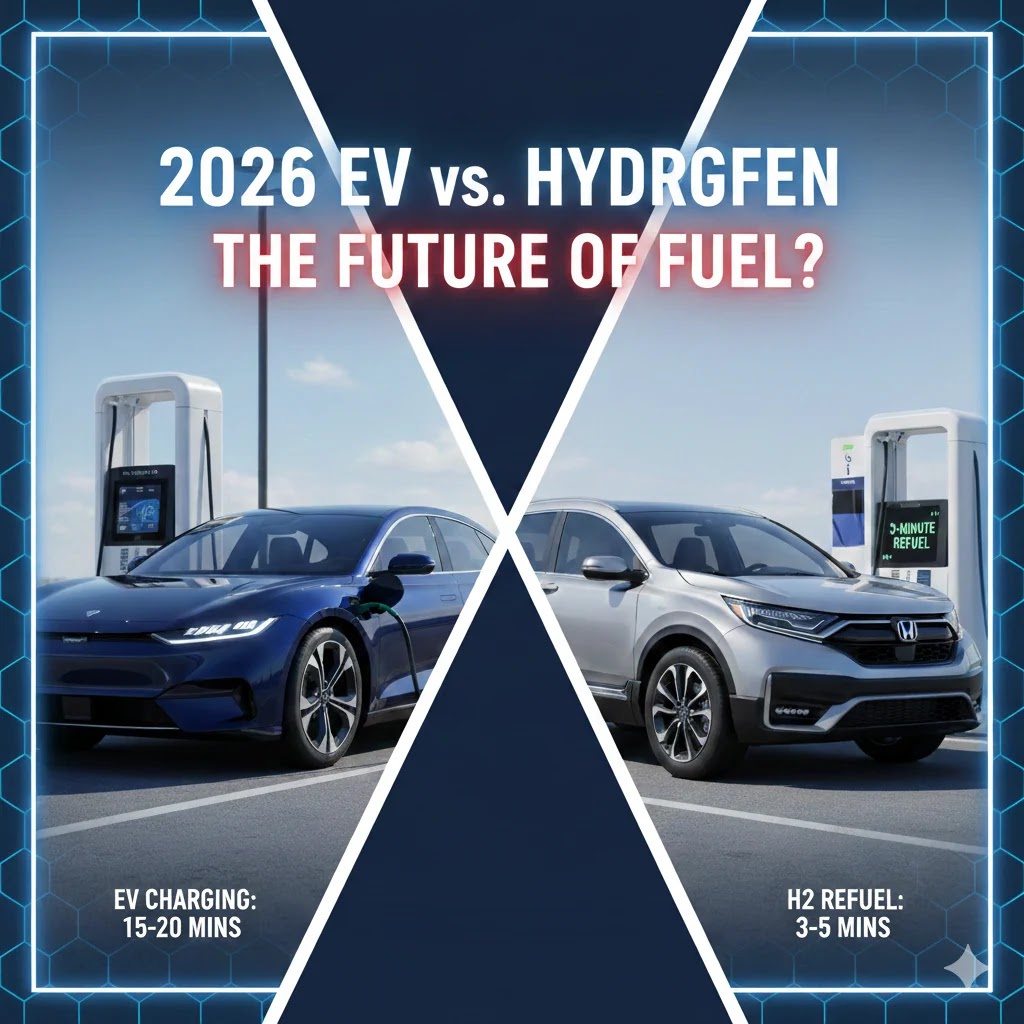
Choosing between an EV and a hydrogen car in 2026 is no longer simple. Many buyers assume electric vehicles are the default future, but that is only part of the story. If you drive long distances, run a fleet, or depend on uptime, your decision changes completely.
In real world usage, the biggest pain points are charging time, infrastructure availability, and long term running costs. This is exactly where the comparison between battery electric vehicles and hydrogen fuel cell vehicles becomes important.
The introduction of models like the Honda CR V e FCEV has brought hydrogen back into the conversation. At the same time, AI optimized charging networks are making EV ownership easier than ever.
Understanding the Core Difference
Before comparing features, it is important to understand how both technologies work.
Battery Electric Vehicles
EVs store electricity in large batteries. You charge them at home or at public stations, and the stored energy powers the motor.
Hydrogen Fuel Cell Vehicles
Hydrogen cars generate electricity inside the vehicle using hydrogen gas. This electricity then powers the motor, and the only byproduct is water vapor.
In simple terms, EVs store energy, while hydrogen vehicles generate energy on demand.
Practical Insight
From experience, EVs are easier for daily use if you have home charging. Hydrogen vehicles feel more like petrol cars because refueling is quick and familiar.
EV vs Hydrogen: 2026 Performance and Refueling Comparison
| Feature | Standard 2026 EV | Honda e FCEV 2026 |
|---|---|---|
| Refuel Time | 18 to 25 minutes fast charging | 3 to 5 minutes hydrogen refill |
| Driving Range | 300 to 450 miles | Around 270 miles |
| Backup Mode | Battery only | Short electric only driving mode |
| Best Use Case | City and daily commuting | Fleet and long usage cycles |
Step by Step: How to Decide Between EV and Hydrogen
1. Check Infrastructure in Your Area
If charging stations are easily available or you can charge at home, EV is the logical choice. Hydrogen stations are still limited in most regions.
2. Analyze Your Daily Driving Pattern
Short city drives favor EVs. Long continuous driving with minimal downtime favors hydrogen.
3. Evaluate Running Cost
Electricity is usually cheaper than hydrogen fuel, especially for home charging setups.
4. Consider Refueling Convenience
If waiting 20 minutes for charging is not practical for your schedule, hydrogen offers a clear advantage.
5. Think Long Term
EV infrastructure is expanding faster, which makes it a safer long term investment for most buyers.
Real World Use Cases
Urban families
EVs work best because home charging reduces fuel costs and daily inconvenience.
Taxi and fleet operators
Hydrogen vehicles are useful because they minimize downtime between trips.
Small business owners
Delivery businesses benefit from EVs due to lower operating costs, especially in cities.
Highway and long distance drivers
Hydrogen vehicles provide faster turnaround, making them practical for continuous travel.
Infrastructure Growth in 2026
2026 Market Analysis: Infrastructure Growth
Growth comparison of refueling systems between 2025 and 2026.
Charging infrastructure is still far ahead globally. However, hydrogen is growing faster in specific sectors like logistics and industrial transport.
“The real competition is not EV vs hydrogen, it is infrastructure vs convenience.”
Pros and Cons
EV Advantages
- Lower running cost
- Wider charging network
- Easy home charging
EV Limitations
- Charging time can be long
- Battery degradation over time
Hydrogen Advantages
- Very fast refueling
- Good for heavy usage
Hydrogen Limitations
- Limited refueling stations
- Higher fuel cost
Who Should Choose What
Choose EV if
- You drive mostly in cities
- You have access to home charging
- You want lower daily costs
Choose Hydrogen if
- You need fast refueling
- You operate a fleet or business
- You drive long distances regularly
Conclusion
In 2026, EVs are still the most practical option for everyday users due to strong infrastructure and lower costs. Hydrogen vehicles are promising but currently limited by availability.
The best decision depends on your usage pattern. For most people, EVs offer convenience and savings. For high usage scenarios, hydrogen can be more efficient.
Frequently Asked Questions (FAQ)
Hydrogen is better for fast refueling, but EVs are more practical due to better infrastructure.
Yes, modern hydrogen vehicles follow strict safety standards and are tested extensively.
EVs are generally cheaper to run because electricity costs less than hydrogen fuel.
It is unlikely. Both technologies will coexist based on different use cases.
Final Insight
The smartest approach is to choose based on your real usage, not trends. Technology will keep evolving, but practical convenience should guide your decision.