Most investors entering the metaverse space make one mistake. They chase hype instead of understanding what actually generates revenue. In 2026, the metaverse is no longer about virtual land or speculative tokens. It is built on real businesses that sell hardware, run AI systems, and manage user platforms.
If you are building a serious portfolio, the real question is not whether to invest in the metaverse. The question is where to allocate capital, AI infrastructure, immersive hardware, or digital platforms. Each category behaves very differently in terms of risk, growth, and long term stability.
Understanding the Metaverse Investment Landscape
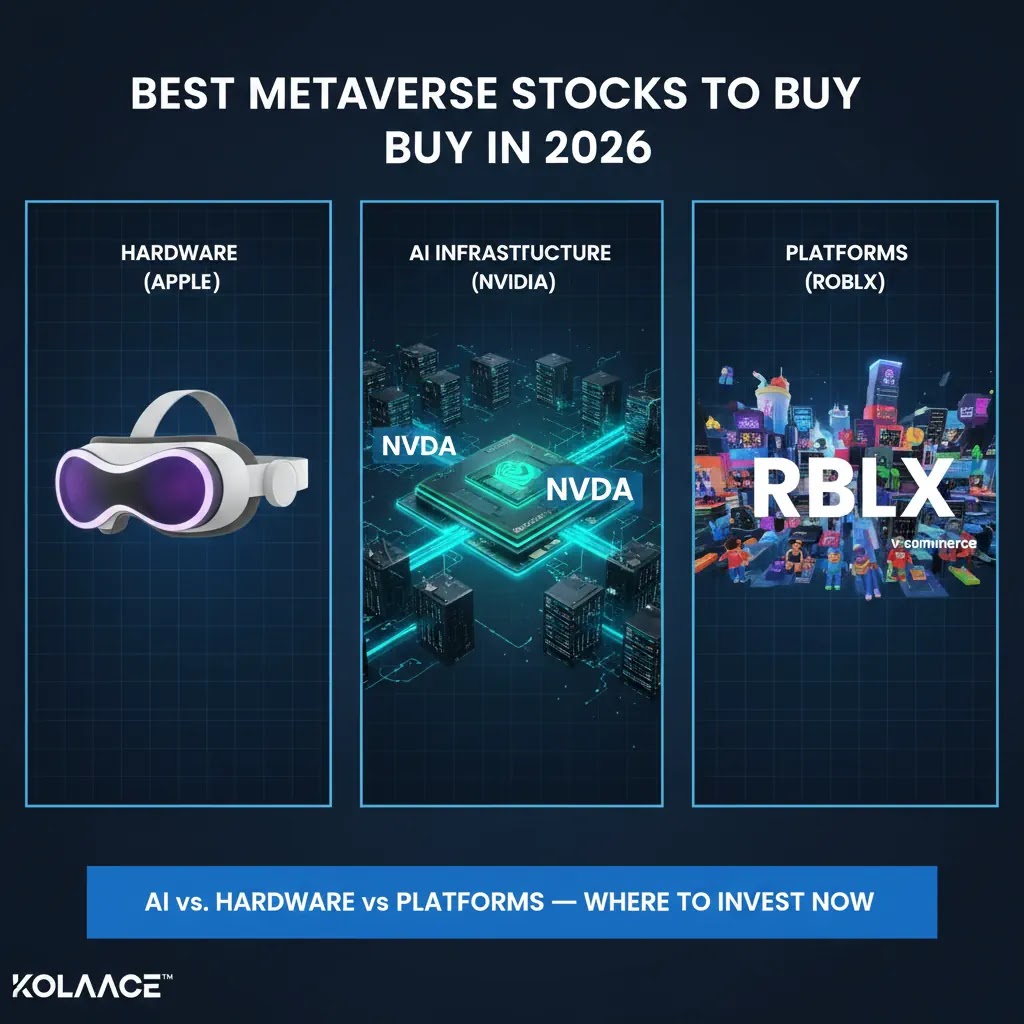
The metaverse ecosystem works like a layered system. Each layer depends on the one below it. Investors who understand this structure tend to make better long term decisions.
- AI and Infrastructure: Powers everything from virtual environments to digital humans
- Hardware: Devices that allow users to enter immersive spaces
- Platforms: Applications where users interact, shop, and create
From real market behavior, AI companies are generating consistent revenue, hardware companies are improving margins, and platforms are still in a growth phase with higher risk.
1. AI Infrastructure: The Most Stable Layer
Every metaverse experience, from virtual meetings to 3D shopping, runs on high performance AI systems. This makes AI infrastructure one of the strongest investment areas.
Key Players
- NVIDIA (NVDA): Dominates GPU computing used for rendering and AI processing
- Microsoft (MSFT): Provides cloud infrastructure through Azure AI
In practical terms, companies in this category earn revenue regardless of which platform wins. That makes them less risky compared to consumer facing businesses.
Metaverse Sector Contribution
AI continues to dominate overall value contribution in 2026.
2. Hardware Companies: The Gateway to the Metaverse
Hardware companies control how users enter the metaverse. This includes VR headsets, AR glasses, and spatial computing devices.
Key Players
- Apple (AAPL): Focuses on premium spatial computing with Vision Pro series
- Meta Platforms (META): Expanding aggressively with Quest devices
From an investor perspective, hardware is capital intensive but offers strong long term positioning. Once a device ecosystem is established, switching costs become high for users.
3. Platforms: High Growth but Higher Risk
Platforms are where users spend time, create content, and generate revenue through digital transactions. This includes gaming, social interaction, and virtual commerce.
Key Players
- Roblox (RBLX): Strong creator economy and younger audience base
- Unity (U): Engine behind many immersive applications
These companies can grow rapidly, but they depend heavily on user engagement. If user growth slows, revenue can drop quickly.
| Category | Example Stock | Strength | Risk |
|---|---|---|---|
| AI | NVIDIA | Consistent demand | Low |
| Hardware | Apple | Strong ecosystem | Medium |
| Platforms | Roblox | High growth | High |
4. Practical Investment Strategy
If you are building a balanced portfolio, consider this simple approach:
- Allocate majority capital to AI infrastructure for stability
- Add hardware stocks for long term growth
- Limit exposure to platform stocks unless you accept higher risk
This structure helps reduce volatility while still capturing upside potential.
5. Pros and Cons of Investing in Metaverse Stocks
Advantages
- Exposure to future technology trends
- High growth potential in selected sectors
- Diversification across multiple industries
Risks
- Market hype can distort valuations
- Technology adoption may take time
- High competition among platforms
6. Who Should Invest and Who Should Avoid
Suitable for:
- Long term investors
- Technology focused portfolios
- Investors comfortable with innovation cycles
Not suitable for:
- Short term traders seeking quick gains
- Risk averse investors
- Those unfamiliar with tech sectors
7. Best Practices Before Investing
- Analyze company fundamentals, not just trends
- Track revenue sources and growth drivers
- Diversify across sectors
- Avoid investing based on hype cycles
Conclusion
The metaverse is evolving into a real economic system backed by strong companies. The smartest approach is not to chase trends but to understand where value is created.
AI infrastructure offers stability, hardware provides long term positioning, and platforms deliver growth potential. A balanced approach across these layers can help build a strong portfolio in 2026.
Frequently Asked Questions