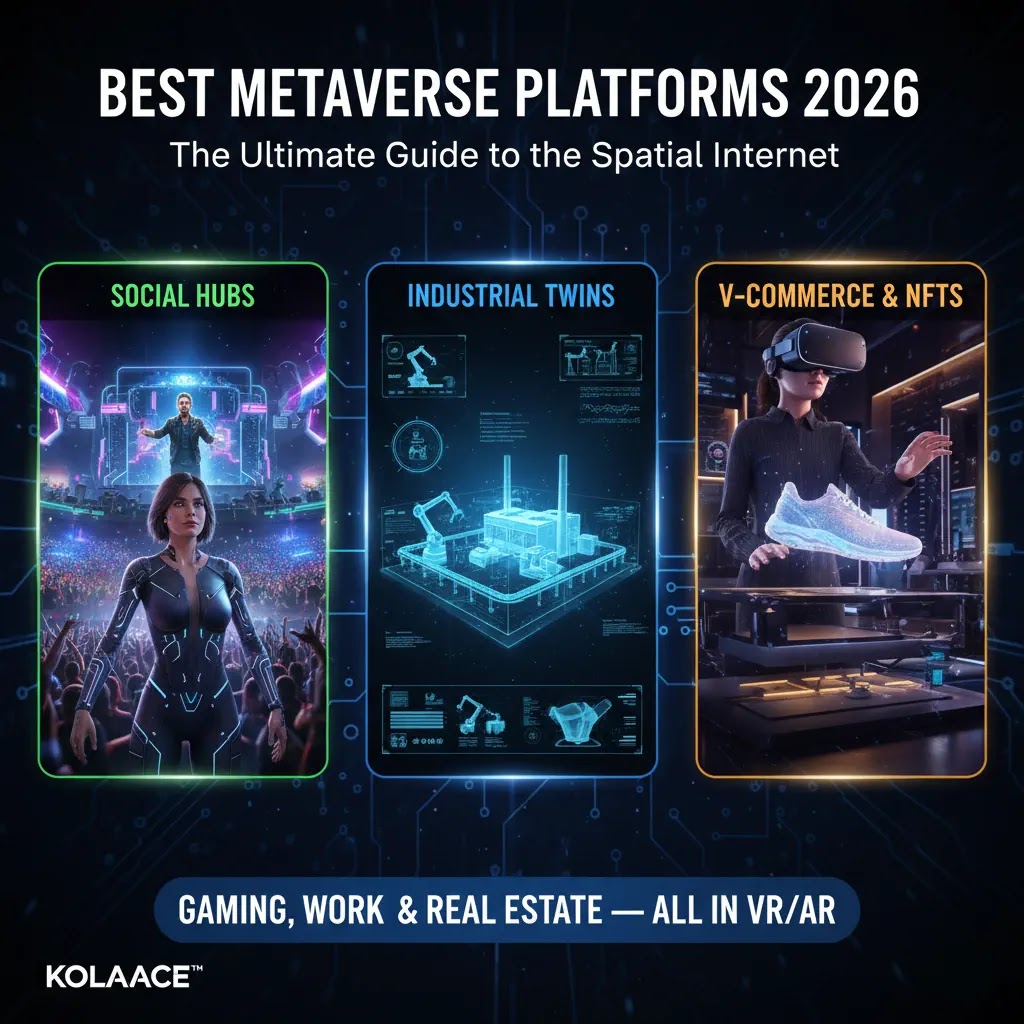
If you tried the metaverse a few years ago, chances are you left disappointed. Empty worlds, laggy performance, and no real purpose made it feel like a tech demo rather than a useful ecosystem. In 2026, that has changed. The new generation of metaverse platforms is built around real use cases, not just hype.
Today, the metaverse is better understood as the spatial internet, where digital experiences blend with real life activities like work, shopping, gaming, and collaboration. The biggest shift is not technology alone, it is how people are actually using these platforms daily.
What Defines a Top Metaverse Platform in 2026
Not all platforms are equal. The strongest platforms today share a few key characteristics that separate them from early failures.
- Real utility: Used for work, commerce, or entertainment, not just exploration
- Strong ecosystem: Developers, creators, and brands actively building inside it
- Cross device support: Works on VR, desktop, and mobile
- Monetization: Clear ways for users and businesses to earn
From practical observation, platforms that solve real problems tend to retain users. Those that rely only on novelty lose engagement quickly.
1. Consumer Platforms Leading Adoption
Roblox
Roblox has evolved into more than a gaming platform. It is now a creator economy engine where individuals and small businesses build experiences and sell virtual goods.
In real scenarios, many creators generate income by selling skins, accessories, and access passes. Brands also use Roblox for digital marketing campaigns targeted at younger audiences.
Horizon Worlds
Meta has improved Horizon significantly by focusing on realism and social interaction. Facial tracking and better avatars make communication feel more natural.
The platform is now heavily focused on virtual commerce. Users attend events, explore stores, and purchase products inside the environment.
Fortnite
Fortnite is no longer just a game. It functions as a social platform hosting concerts, brand events, and interactive experiences.
Large scale events often attract millions of users simultaneously, making it one of the most engaging platforms available.
Metaverse Market Expansion
Rapid growth driven by real world use cases and improved hardware.
2. Platform Comparison Based on Use Case
| Platform | Best For | Monetization | Accessibility |
|---|---|---|---|
| Decentraland | Virtual land and events | Crypto economy | Web and VR |
| Microsoft Mesh | Work collaboration | Subscription | Enterprise devices |
| NVIDIA Omniverse | Industrial simulation | Enterprise licensing | High end systems |
3. Step by Step: How to Choose the Right Platform
Step 1: Define Your Goal
Are you here to play, build a business, or collaborate professionally. Your goal determines the platform.
Step 2: Check Device Compatibility
Ensure the platform works on your device, whether VR headset, PC, or mobile.
Step 3: Evaluate Monetization Options
Look at how you can earn or generate value from your time spent on the platform.
Step 4: Test User Experience
Spend time inside the platform before committing. Smooth performance and active users are key indicators.
4. Real World Use Cases
Small Businesses
Local brands can open virtual stores and showcase products without paying for physical retail space.
Education
Institutions conduct virtual classes and simulations, improving engagement.
Manufacturing
Factories use digital twins to test layouts before actual construction, reducing costs and errors.
Entertainment
Concerts, events, and social gatherings happen in immersive environments.
5. Pros and Cons of Metaverse Platforms
Advantages
- Immersive user experience
- New income opportunities
- Global reach without physical limits
Limitations
- Hardware requirements can be expensive
- Some platforms still lack user base
- Learning curve for beginners
6. Who Should Use These Platforms
Ideal for:
- Creators and developers
- Businesses exploring digital presence
- Tech enthusiasts
Not ideal for:
- Users looking for simple experiences
- People with limited hardware access
7. Best Practices for Getting Started
- Start with beginner friendly platforms like Roblox
- Focus on one platform instead of jumping between many
- Learn basic creation tools to maximize value
- Stay updated with platform changes and features
Conclusion
The metaverse in 2026 is no longer about exploration alone. It is about practical use. The best platforms are those that provide real value, whether through income, collaboration, or entertainment.
Choosing the right platform depends on your goals. If you focus on usability and long term potential, the spatial internet can become a meaningful part of your digital life.
Frequently Asked Questions