Electricity bills are rising, outages are still common in many regions, and rooftop solar is no longer just for large homes. In 2026, homeowners are asking a practical question, how can I store my own power efficiently and use it when I actually need it?
This is where residential solid-state batteries are starting to gain attention. They promise higher energy storage, better safety, and longer lifespan compared to traditional lithium-ion systems. But the real question is not just about technology, it is about cost, ROI, and real-world usability.
In this guide, we break down how solid-state batteries perform in actual home setups, how they compare with lithium-ion, and whether they are worth the investment in 2026.
What Are Residential Solid-State Batteries
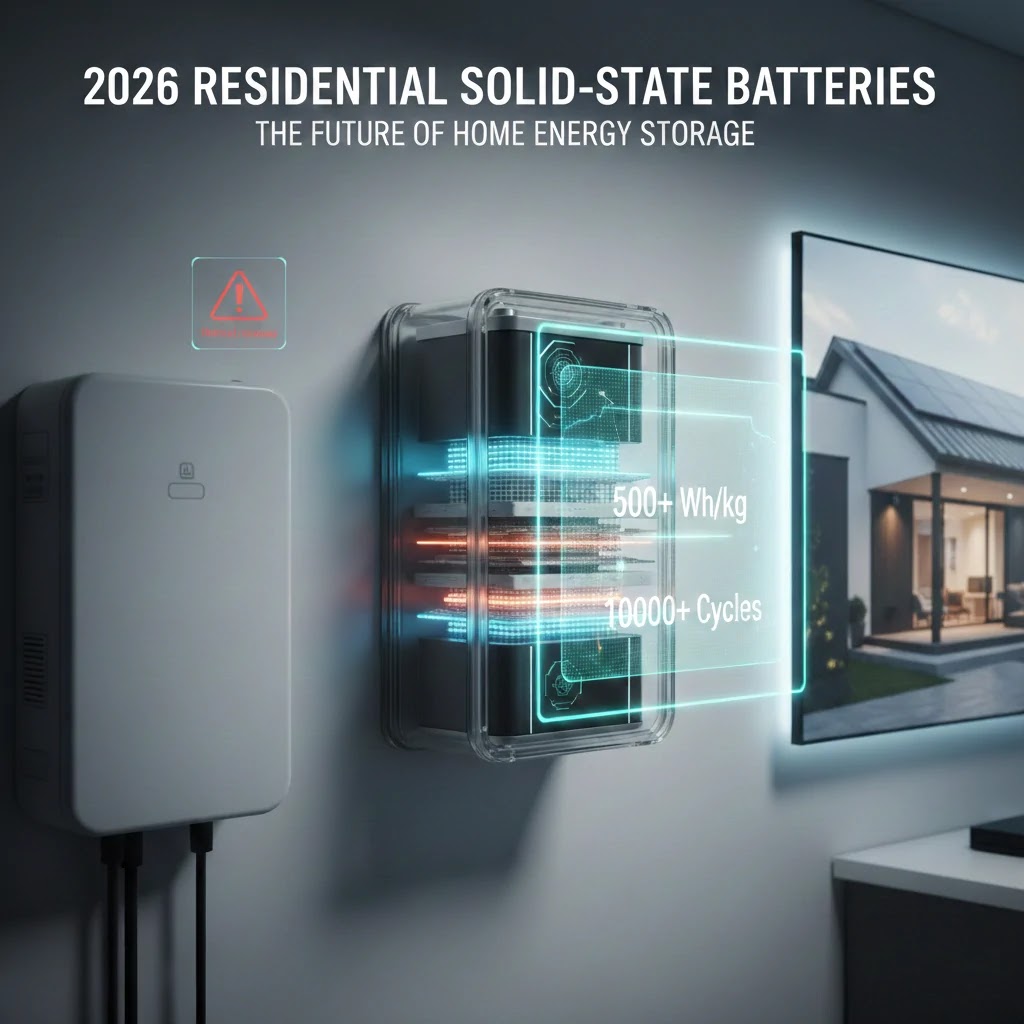
Solid-state batteries replace the liquid electrolyte found in lithium-ion systems with a solid material such as ceramic or polymer. This change may sound small, but it directly impacts safety, efficiency, and durability.
In practical terms, this means:
- Less risk of overheating inside homes
- More energy stored in a compact unit
- Slower degradation over years of daily use
For homeowners using rooftop solar, this translates into better daily energy utilization instead of wasting excess generation.
2026 Storage Face-Off: Solid-State vs Lithium-Ion
| Performance Metric | Lithium-Ion | Solid-State (2026) |
|---|---|---|
| Energy Density | 200 to 250 Wh per kg | 450 to 550 plus Wh per kg |
| Life Cycles | 2,500 to 4,000 | 8,000 to 12,000 plus |
| Charging Speed | 4 to 8 hours | Under 1 hour in optimized setups |
| Fire Risk | Possible under stress | Significantly reduced |
Actual performance depends on inverter, wiring, and installation quality.
Real-World Use Cases That Matter
1. Urban Homes with Limited Space
In apartments or compact houses, space is always a constraint. Solid-state batteries store more energy in smaller units, which allows installation in utility rooms or even wall-mounted setups.
2. Areas with Frequent Power Cuts
In regions where outages happen daily, battery cycling is high. A lithium-ion system may degrade faster under such usage, while solid-state batteries handle repeated cycles better.
3. Small Businesses and Shops
Retail shops, clinics, and home offices benefit from uninterrupted power. With faster charging and higher cycle life, these batteries reduce downtime and operational losses.
4. Solar-Heavy Homes
Homes generating excess solar power during the day can store more energy and use it at night, reducing grid dependency significantly.
Cost and ROI Analysis in 2026
Let’s be realistic. Solid-state batteries are still expensive compared to lithium-ion systems. However, cost alone does not tell the full story.
Upfront Cost
- Solid-state systems cost 30 to 60 percent more in 2026
- Limited production keeps prices higher
Long-Term ROI
- Longer lifespan means fewer replacements
- Higher efficiency improves solar savings
- Lower maintenance costs over time
In real scenarios, homeowners who use batteries daily tend to recover the cost difference within 6 to 10 years, especially in areas with high electricity tariffs.
“The real value of a home battery is not just backup, it is how much grid electricity you avoid buying over the next decade.”
Pros and Cons You Should Know
Advantages
- High energy density saves space
- Long lifespan reduces replacement cost
- Improved safety for indoor installations
- Better performance with solar systems
Limitations
- Higher upfront investment
- Limited availability in some regions
- Compatibility checks required with older inverters
Who Should Use Solid-State Batteries
Best Fit
- Homes with solar panels
- Users planning long-term energy savings
- Areas with frequent outages
- Small businesses needing reliable backup
Not Ideal If
- You need the cheapest upfront solution
- Your usage is very low
- You plan to move within a few years
Best Practices Before Installation
- Check inverter compatibility carefully
- Size your battery based on actual usage, not assumptions
- Review local electricity policies and net metering rules
- Hire certified installers to avoid performance issues
- Plan ventilation and placement even if safety is improved
Final Verdict for 2026
Solid-state batteries are not just a future concept anymore. For users focused on long-term savings, safety, and efficient solar usage, they offer a clear advantage despite higher initial cost. If your goal is short-term savings, lithium-ion still makes sense. If your goal is long-term energy independence, solid-state is worth serious consideration.
Frequently Asked Questions
They are available in limited markets and premium segments. Wider adoption is expected as manufacturing scales.
In most residential scenarios, they can last 12 to 15 years or more depending on usage and maintenance.
Yes, especially when paired with solar. The ability to store and use your own energy reduces dependence on grid electricity.
Yes, but you may need to check inverter compatibility and system configuration before upgrading.
The process is similar to lithium-ion systems, but professional installation is recommended for best performance and safety.