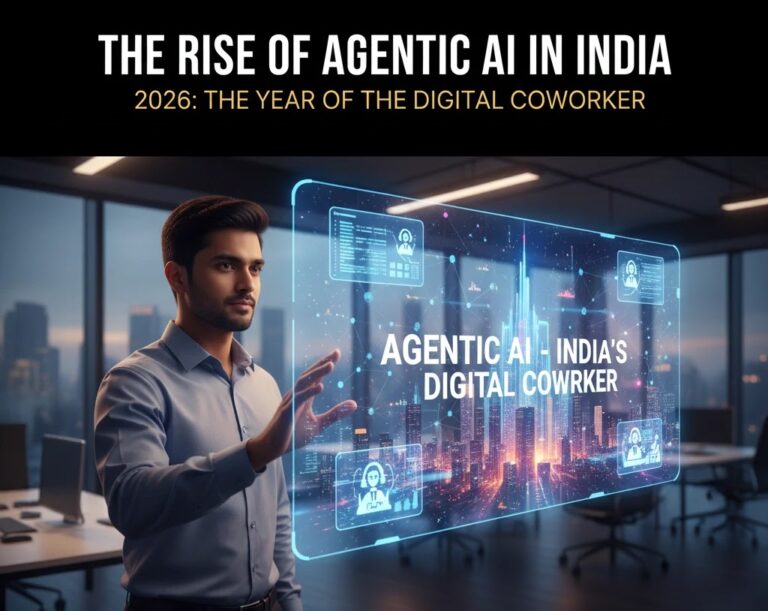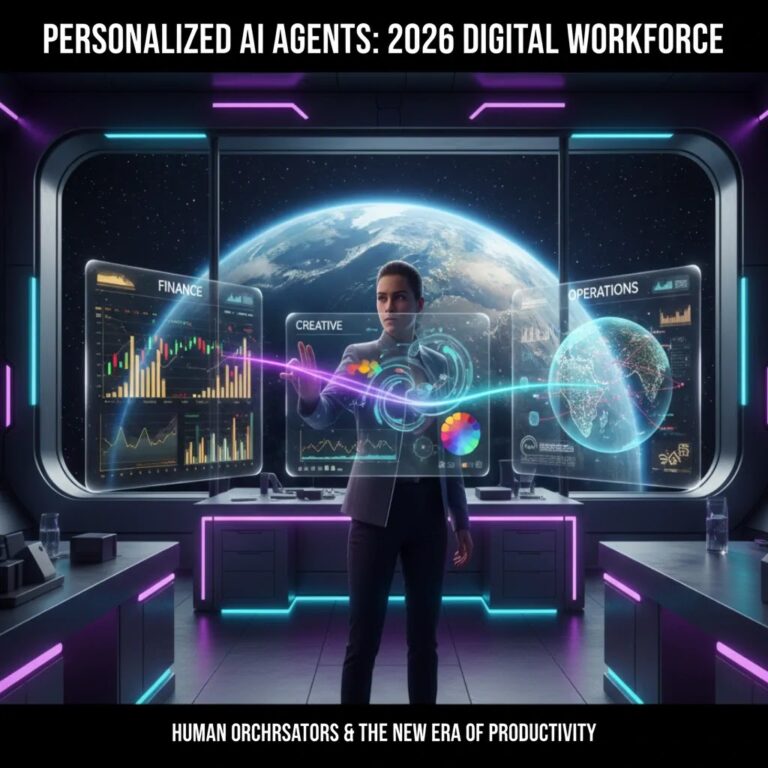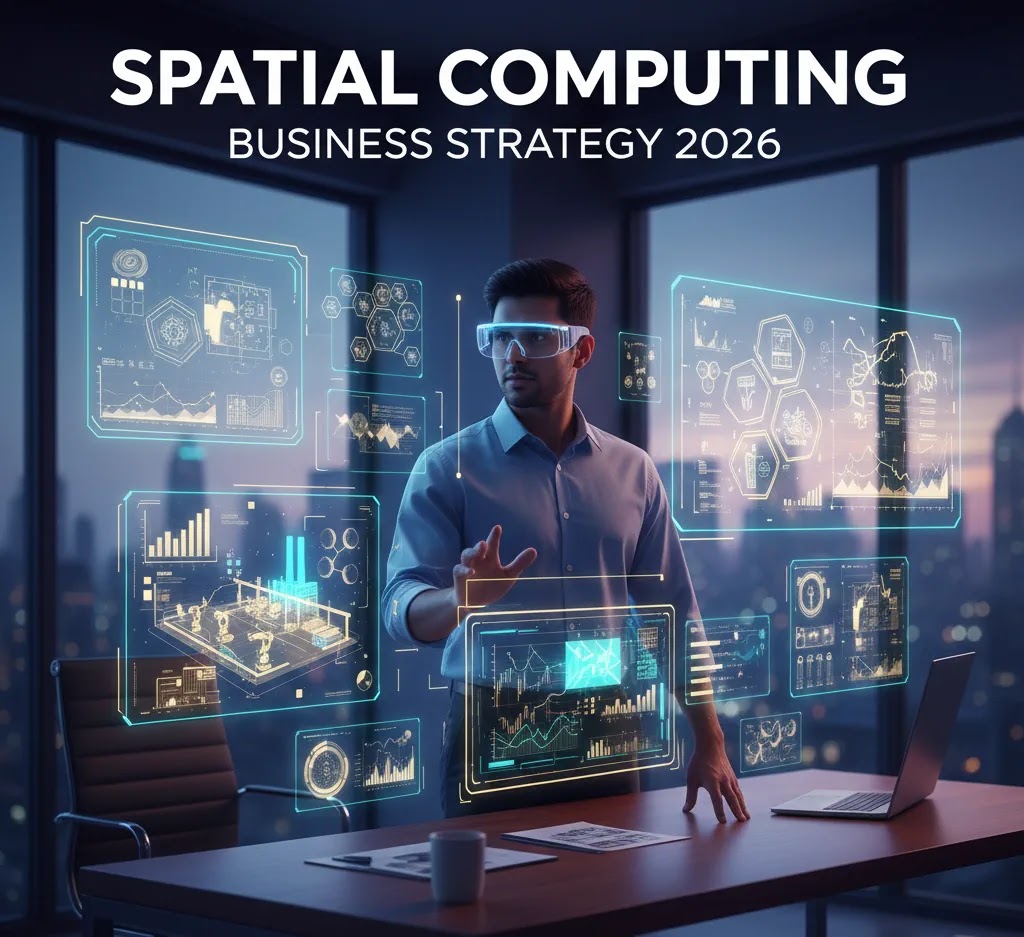
For years, digital work has been trapped inside flat screens. Teams switched endlessly between tabs, dashboards, spreadsheets, video calls, and design software. As businesses grew more dependent on remote collaboration and real-time analytics, traditional office setups started showing clear limitations.
In 2026, spatial computing is changing that experience completely. Instead of interacting with information only through monitors, users can now place digital content directly into physical environments. Virtual dashboards can float above desks, 3D product models can appear inside meeting rooms, and remote coworkers can collaborate inside immersive shared workspaces.
This shift is driving the rise of the Phygital Workplace, a blend of physical and digital systems designed to improve productivity, visualization, collaboration, and decision-making. For many businesses, spatial computing is no longer viewed as experimental technology. It is becoming part of daily operations.
What is Spatial Computing and Why Does It Matter in 2026?
Spatial computing refers to technologies that allow digital content to interact naturally with physical environments. This includes augmented reality, mixed reality, extended reality, spatial mapping, gesture control, and AI-powered environmental awareness.
Instead of opening multiple windows on a laptop, users can organize virtual workspaces around an entire room. Data can appear anchored to physical locations, and digital objects can be manipulated using natural hand movements, voice commands, or eye tracking.
Core Technologies Powering Spatial Computing
- XR headsets and lightweight smart glasses.
- Real-time spatial mapping systems.
- AI-based gesture and voice recognition.
- Cloud rendering and edge computing.
- 3D collaboration platforms.
- Digital twin simulation technology.
What makes 2026 different is that these technologies are finally becoming practical for businesses outside large enterprise environments. Hardware costs are gradually decreasing, internet infrastructure is improving, and AI systems are making immersive interfaces easier to use.
Many startups and mid-sized companies are now exploring spatial workflows because they can improve communication and reduce operational inefficiencies.
1. The Desktop is No Longer Limited to a Screen
One of the biggest changes introduced by spatial computing is the transformation of the traditional workspace. In many modern offices, the room itself is becoming the interface.
With lightweight XR devices, users can create multiple virtual monitors without purchasing physical screens. Dashboards, analytics panels, task boards, and communication tools can all exist within the surrounding environment.
How Businesses Are Using Spatial Workspaces
- Virtual dashboards pinned to office walls.
- Floating analytics panels for live monitoring.
- 3D brainstorming boards during meetings.
- Persistent task management spaces.
- Virtual multi-monitor setups for remote workers.
Small technology firms and creative agencies are especially interested in these setups because they reduce physical hardware dependency while increasing workspace flexibility.
In practical testing environments, many users report improved focus when they can separate workflows spatially instead of stacking everything into overlapping desktop windows.
For remote professionals working from compact apartments or coworking spaces, spatial computing also creates the feeling of having a much larger digital office.
2. Digital Twins Are Improving Industrial Decision-Making
One of the most valuable applications of spatial computing in 2026 is the use of Digital Twins. A digital twin is a virtual replica of a physical object, system, building, or machine that updates using real-world data.
Industries such as manufacturing, logistics, construction, healthcare, and energy are increasingly using digital twins to simulate operations before making expensive real-world decisions.
Real-World Business Applications
- Factory managers testing machine layout changes virtually.
- Construction firms visualizing building modifications before implementation.
- Warehouse operators optimizing movement paths and inventory placement.
- Maintenance teams identifying equipment failures early.
- Healthcare institutions planning complex infrastructure upgrades.
For manufacturing businesses, digital twins can significantly reduce downtime because engineers can test adjustments in a virtual environment before touching physical equipment.
In many industrial zones across India, businesses are experimenting with predictive maintenance systems connected to digital twin platforms. These systems help detect performance issues before machinery failures become expensive.
Operational Insight: Spatial computing becomes most valuable when it helps teams understand complex systems faster. Better visualization often leads to faster and more accurate decisions.
3. Immersive Collaboration is Reshaping Remote Work
Traditional video meetings often create communication fatigue because conversations remain confined to flat windows and static presentations. Spatial collaboration platforms attempt to solve this by creating shared immersive environments.
In 2026, many distributed teams are experimenting with collaborative 3D workspaces where participants appear as realistic avatars with spatial audio, gesture tracking, and shared interactive objects.
Benefits of Spatial Collaboration
- More natural team communication.
- Improved engagement during meetings.
- Better product demonstrations and training.
- Interactive brainstorming sessions.
- Reduced dependence on physical office space.
For global companies with distributed teams, immersive collaboration creates stronger team presence compared to traditional video conferencing.
Educational institutions and training centers are also adopting spatial collaboration because complex topics become easier to understand in interactive 3D environments.
4. How Small Businesses Can Use Spatial Computing
Many people assume spatial computing is useful only for large corporations. However, smaller businesses are beginning to discover practical applications that improve operations without massive budgets.
Practical Small Business Use Cases
- Interior designers showing clients virtual room layouts.
- Retail stores creating immersive product previews.
- Training institutes offering virtual learning simulations.
- Real estate agencies providing 3D property walkthroughs.
- Repair technicians visualizing equipment instructions hands-free.
In sectors like architecture and manufacturing, spatial visualization often improves client understanding because customers can see concepts more clearly than through static presentations.
Some businesses are also using mixed reality training systems to reduce onboarding time for new employees. Interactive visual instructions help workers learn procedures faster than traditional manuals.
5. Advantages and Limitations of Spatial Computing
Key Advantages
- Improved visualization of complex information.
- Enhanced remote collaboration.
- Better training and simulation environments.
- Reduced physical hardware dependency.
- Faster decision-making through immersive data interaction.
Current Challenges
- High hardware costs for advanced XR systems.
- Battery limitations in wearable devices.
- Learning curve for non-technical users.
- Privacy concerns related to spatial tracking.
- Infrastructure requirements for smooth performance.
While spatial computing is evolving rapidly, businesses should avoid adopting technology purely for trend value. The strongest implementations solve clear operational problems and improve measurable workflows.
6. Best Practices Before Adopting Spatial Computing
Businesses considering spatial computing adoption should begin with focused use cases instead of large-scale deployments.
Recommended Implementation Strategy
- Identify workflows that benefit from visualization or collaboration.
- Start with pilot projects before full deployment.
- Train employees gradually on immersive interfaces.
- Evaluate productivity improvements realistically.
- Prioritize security and data privacy policies.
- Choose scalable platforms with long-term support.
Companies that approach spatial computing strategically are more likely to achieve long-term operational benefits instead of short-term novelty.
In many cases, even modest implementations such as virtual collaboration rooms or 3D training modules can create meaningful improvements.
Conclusion
Spatial computing is gradually reshaping how businesses interact with data, collaborate remotely, and design operational workflows. The transition from flat digital interfaces to immersive spatial environments represents a major evolution in workplace technology.
As hardware becomes lighter, AI systems become smarter, and immersive tools become more affordable, spatial computing may eventually become as common as laptops and smartphones are today.
For businesses exploring future-ready workflows in 2026, the biggest opportunity is not simply adopting new devices. The real advantage comes from improving communication, visualization, efficiency, and decision-making through better interaction with information.
The organizations that learn how to combine physical environments with intelligent digital systems effectively could gain a strong operational edge in the evolving 3D economy.
Would you work inside a fully spatial office environment in the future? Share your thoughts in the comments below.
Frequently Asked Questions
What is spatial computing?
Spatial computing combines digital information with physical environments using technologies such as augmented reality, mixed reality, AI, and spatial mapping.
What does “phygital” mean?
“Phygital” refers to the blending of physical and digital experiences into a connected environment.
How are businesses using digital twins?
Businesses use digital twins to simulate machines, buildings, and systems virtually before making real-world operational changes.
Can small businesses benefit from spatial computing?
Yes, small businesses can use spatial computing for product visualization, virtual training, immersive marketing, and collaborative workflows.
What are the biggest challenges of spatial computing?
Major challenges include hardware costs, device comfort, infrastructure requirements, privacy concerns, and adoption learning curves.