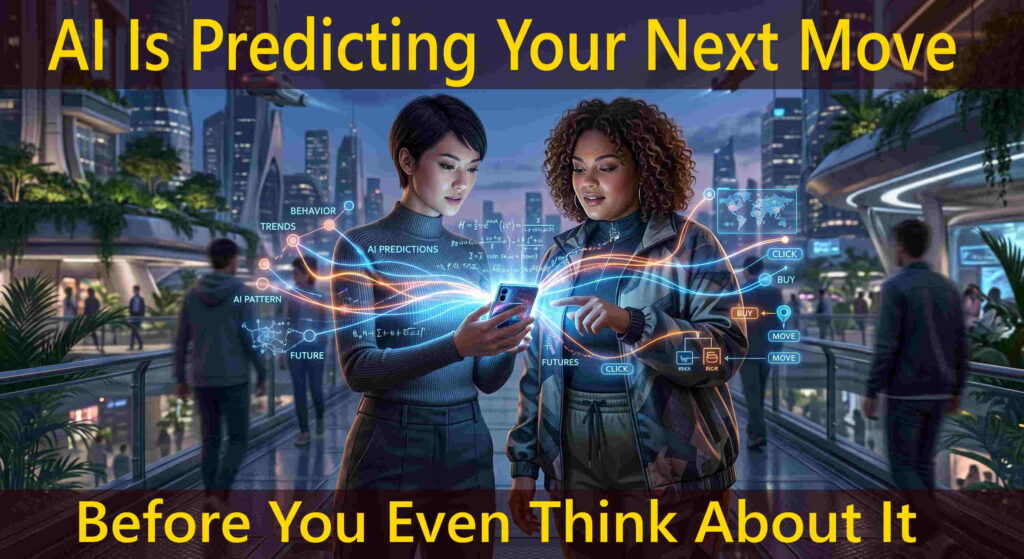
Have you ever searched for a product once, then started seeing ads, videos, and recommendations related to it everywhere? Or maybe your phone suggested the exact route you were about to take before you opened maps. These moments feel strange because modern AI systems are no longer waiting for instructions. They are learning behavior patterns and predicting what users are likely to do next.
Predictive AI has quietly become part of daily life. It powers shopping recommendations, fraud detection, video suggestions, smart assistants, navigation apps, healthcare alerts, and even inventory forecasting for businesses. Most people interact with these systems every day without realizing how deeply they influence decisions.
What makes this technology fascinating is not that it can “read minds.” It cannot. What it actually does is analyze patterns, routines, habits, timing, location data, engagement signals, and millions of similar behavioral examples to estimate future actions with surprising accuracy.
In this guide, you will learn how predictive AI works, why it feels so personal, where businesses are using it successfully, the real benefits and dangers involved, and how to stay in control of your own digital behavior.
→ Read: How Big Data is Shaping the Future of Consumer Behavior
What Is Predictive AI?
Predictive AI is a branch of Artificial Intelligence that uses data patterns to estimate future actions, choices, or outcomes. Unlike traditional software that follows fixed commands, predictive systems continuously learn from behavior.
A normal application works like this:
- If a user clicks a button, open a page
- If a password is correct, allow login
- If battery is low, show a warning
Predictive AI works differently. Instead of relying only on pre-written rules, it studies historical behavior and calculates probabilities.
For example, if a user checks food delivery apps every Friday evening after office hours, the system begins recognizing that routine. Over time, it may send restaurant offers shortly before the expected browsing time.
This process depends heavily on:
- Machine Learning models
- Behavioral analysis
- Pattern recognition
- Probability scoring
- Continuous feedback loops
The more data available, the more accurate predictions usually become.
Why Predictive AI Feels Uncomfortably Accurate
Many people assume devices are secretly listening to conversations because recommendations often feel extremely specific. In reality, predictive systems are usually combining multiple behavioral signals together.
These signals include:
- Search history
- Browsing behavior
- Purchase patterns
- Typing speed
- Scrolling habits
- Watch time
- Location history
- App usage timing
- Interaction frequency
Individually, these signals may look meaningless. Combined together, they create a detailed behavioral profile.
For example, imagine someone who:
- Recently searched for trekking shoes
- Watched travel videos late at night
- Checked weather forecasts in hill stations
- Viewed train ticket prices
- Opened fitness apps more frequently
The AI system may predict an upcoming trip before the user even books anything.
This is why predictive AI often feels like digital intuition.
How Predictive AI Works Step by Step
Modern predictive systems operate through a continuous cycle of data collection, learning, and optimization.
1. Data Collection
The system gathers behavioral information from multiple sources. This may include app activity, search queries, clicks, purchases, device usage, and location signals.
For businesses, customer data may also include:
- Shopping cart activity
- Email engagement
- Support tickets
- Product browsing patterns
- Subscription history
2. Data Cleaning and Organization
Raw data is often messy. AI systems remove duplicate, incomplete, or irrelevant information before processing it.
This step improves prediction accuracy significantly.
3. Pattern Recognition
Machine Learning models begin identifying repeated behaviors and correlations.
Examples include:
- Users who buy laptops often purchase accessories within 7 days
- Late-night browsing increases impulse purchases
- Certain weather conditions increase food delivery orders
4. Probability Scoring
The AI calculates the likelihood of future actions.
For example:
- 80% chance of opening music app
- 65% chance of ordering food
- 40% chance of cancelling subscription
5. Predictive Action
Once confidence becomes high enough, the system responds proactively.
This may include:
- Showing recommendations
- Sending reminders
- Loading apps faster
- Offering discounts
- Blocking suspicious transactions
- Adjusting notifications
Where Predictive AI Is Already Being Used
Smartphones and Apps
Smartphones use predictive AI constantly. Keyboard suggestions, photo sorting, battery optimization, app recommendations, and route suggestions all rely on prediction models.
E-commerce Platforms
Online stores use predictive AI to increase conversions and reduce abandoned carts.
Popular applications include:
- Personalized product recommendations
- Dynamic pricing
- Inventory forecasting
- Customer retention analysis
- Demand prediction
Small businesses are increasingly using affordable AI tools for these tasks instead of relying only on enterprise software.
Banking and Finance
Fraud detection systems monitor unusual spending behavior in real time.
If a transaction suddenly appears from another city or follows unusual patterns, predictive AI can temporarily block it within seconds.
Healthcare
Wearable devices now monitor sleep, heart rate, stress levels, and activity patterns to identify potential health risks earlier.
Hospitals also use predictive systems for patient risk assessment and appointment optimization.
Content Platforms
Streaming services and social media platforms use predictive engines to maximize engagement.
These systems decide:
- What videos appear first
- Which posts become viral
- What music gets recommended
- What content keeps users watching longer
Real Business Use Cases That Actually Work
Local Retail Stores
A clothing store can analyze seasonal buying patterns and predict which products will sell faster before festivals or holidays. This helps reduce dead inventory and improve cash flow.
Food Delivery Businesses
Restaurants use predictive demand forecasting to estimate peak ordering hours. This improves staffing decisions and reduces delivery delays.
Content Creators and YouTubers
Creators increasingly rely on predictive analytics to understand audience behavior.
AI tools can estimate:
- Best upload times
- Topics likely to trend
- Audience retention drops
- Thumbnail performance
- Keyword opportunities
For educational creators, this helps optimize content strategy without relying only on guesswork.
Customer Support Teams
Businesses now use predictive AI to identify customers who may leave due to dissatisfaction.
Instead of reacting after cancellation, companies can intervene earlier with support or targeted offers.
Reactive Technology vs Predictive AI
| Feature | Traditional Technology | Predictive AI |
|---|---|---|
| User Interaction | Waits for commands | Anticipates intent |
| Learning Ability | Static behavior | Continuously improves |
| Personalization | Manual settings | Automatic adaptation |
| Decision Making | Rule based | Probability based |
| Efficiency | Reactive optimization | Preventive optimization |
Benefits of Predictive AI
- Faster Decision Making: AI reduces the time needed to process information and make recommendations.
- Better User Experience: Personalized systems save time and reduce friction.
- Higher Business Efficiency: Predictive analytics improves inventory planning, staffing, and customer targeting.
- Fraud Prevention: Financial systems can detect unusual activity before major damage occurs.
- Resource Optimization: Predictive systems help reduce waste in logistics, energy, and manufacturing.
- Improved Customer Retention: Businesses can identify dissatisfaction early.
The Risks Nobody Should Ignore
Despite its convenience, predictive AI introduces serious concerns.
Privacy Erosion
Accurate prediction requires massive amounts of behavioral data. Many users do not fully understand how much information is being collected.
Behavior Manipulation
Recommendation systems can quietly influence purchasing decisions, attention spans, and even opinions.
Algorithmic Bias
If training data contains bias, predictions can become unfair or discriminatory.
Digital Echo Chambers
Users may repeatedly see similar viewpoints and content, limiting exposure to new ideas.
Overdependence on Automation
As AI handles more decisions automatically, users may gradually lose awareness of how systems influence behavior.
→ Read: Navigating AI Ethics: Bias, Privacy, and the Future of Tech
Best Practices to Protect Your Privacy
You cannot completely avoid predictive AI in modern digital life, but you can reduce unnecessary data exposure.
Review App Permissions Regularly
Disable permissions that are not essential, especially:
- Always-on location access
- Microphone access
- Background activity tracking
Reset Advertising IDs
Most smartphones allow users to reset ad tracking identifiers.
Use Privacy Focused Browsing
Private browsing modes and tracker blockers can reduce behavioral profiling.
Train the Algorithm Yourself
Mark irrelevant recommendations as “Not Interested” whenever possible.
Avoid Oversharing
Every quiz, app signup, and social interaction contributes to behavioral prediction systems.
Who Should Use Predictive AI Tools?
Good Fit For:
- Small businesses
- E-commerce stores
- Content creators
- Marketing teams
- Customer support operations
- Logistics companies
- Healthcare monitoring systems
Use Carefully If:
- Your business handles sensitive personal data
- You lack proper data protection policies
- You depend entirely on automated decision systems
- You cannot explain how predictions are generated
The Future of Predictive AI in 2026 and Beyond
Predictive AI is rapidly evolving toward autonomous decision making.
Instead of simply suggesting actions, future systems may complete tasks automatically.
Examples already being tested include:
- AI assistants booking appointments automatically
- Smart homes adjusting energy usage independently
- Shopping systems placing recurring orders automatically
- Financial assistants managing subscriptions and bills
- Business AI agents handling customer interactions
This shift is often called Agentic AI, where systems move from prediction to action.
→ Read: The Rise of Agentic AI: Why Autonomous Systems Are Next
Conclusion
Predictive AI is no longer futuristic technology. It already shapes how people shop, travel, watch content, communicate, and make decisions online.
The reason these systems feel so powerful is simple. Human behavior is often more predictable than most people realize. AI models analyze those routines at massive scale and convert them into probability driven decisions.
For businesses, predictive AI offers enormous advantages in efficiency, personalization, and customer understanding. For users, it creates convenience and faster digital experiences.
At the same time, convenience always comes with tradeoffs. Privacy, transparency, and ethical use of data will become increasingly important as predictive systems grow more advanced.
The key is not to fear AI, but to understand how it works. Once users understand the mechanics behind prediction systems, they gain far more control over their digital lives.
Frequently Asked Questions
Can AI actually read your mind?
No. AI cannot read thoughts. Predictive systems analyze behavioral patterns, data history, and probabilities to estimate likely actions.
Why do ads sometimes feel extremely accurate?
Advertising systems combine search history, browsing patterns, app activity, purchases, and engagement data to build detailed behavioral profiles.
Is predictive AI dangerous?
Predictive AI itself is not inherently dangerous, but misuse of personal data, manipulation, bias, and excessive tracking create legitimate concerns.
How do businesses benefit from predictive AI?
Businesses use predictive AI for demand forecasting, customer retention, fraud detection, personalized marketing, inventory planning, and automation.
Can users reduce AI tracking?
Yes. Users can limit app permissions, reset advertising IDs, use privacy focused browsers, clear cookies regularly, and reduce unnecessary data sharing.