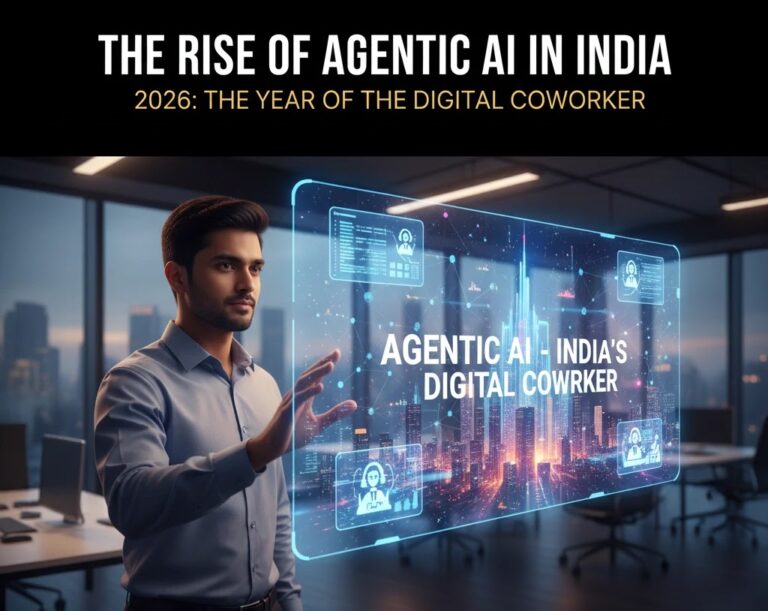
Introduction: The Invisible AI Layer Already Running Daily Life in India
Most people in India do not wake up thinking about artificial intelligence. They think about traffic, mobile recharges, food delivery, train timings, online payments, crop prices, or whether a package will arrive on time. Yet behind almost all of these experiences, AI is quietly making decisions every second.
When a payment app flags a suspicious transaction, when YouTube recommends videos in Hindi or Marathi, or when Google Maps reroutes you away from traffic, AI is already at work. The biggest shift is that India is not adopting AI through futuristic robots. It is adopting AI through practical everyday tools that solve real problems for millions of people.
What makes this transformation unique is that many users do not even realize they are using AI. For them, it simply feels like apps are becoming smarter, faster, and more personalized. From village farmers using voice assistants to urban shopkeepers using smart billing systems, AI has quietly entered homes, markets, schools, hospitals, and government services.
In this guide, we will explore how AI is changing life in India, where it is having the biggest impact, what risks people should understand, and why the next few years could completely reshape how Indians interact with technology.
→ Read: The Evolution of Digital Public Infrastructure in Emerging Markets
Basic Concepts: What AI Actually Looks Like in India
In many Western discussions, AI is often linked to robotics labs, autonomous cars, or complex research systems. In India, the story is different. Here, AI is mostly invisible software integrated into daily services.
Artificial intelligence simply means systems that can learn patterns, process information, make predictions, and respond intelligently. Instead of replacing people completely, most Indian AI systems are designed to assist users and improve efficiency.
For example:
- Voice assistants help users search in regional languages.
- UPI fraud detection systems monitor unusual transactions instantly.
- E commerce platforms personalize product recommendations.
- EdTech apps adjust lessons based on student performance.
- Agriculture apps predict weather and crop conditions.
The most important factor is accessibility. India has millions of first time internet users. Many are not fluent in English and may not be comfortable typing long queries. AI helps bridge this gap through voice recognition, translation, and conversational interfaces.
A farmer speaking Marathi into a smartphone and receiving crop advice is a practical example of AI in action. The technology disappears into the background while the experience feels natural.
Core Explanation: Why AI Adoption Is Accelerating Across India
India’s AI growth is closely linked to the rise of digital infrastructure. Over the past decade, systems like Aadhaar, UPI, affordable smartphones, and low cost internet access have created a massive digital ecosystem.
Every digital action creates data. Payments, searches, purchases, travel routes, and customer preferences all generate information. AI systems use this data to identify patterns and automate decisions.
This is why AI is growing rapidly in India:
- Smartphone penetration is high. Millions now access digital services daily.
- Regional language demand is rising. AI helps platforms serve non English users.
- Small businesses need automation. AI tools reduce manual work.
- Digital payments created data trails. This allows smarter financial systems.
- Government services are digitizing. AI improves efficiency and scale.
Unlike some countries focused mainly on high end AI research, India’s approach is heavily application driven. The focus is solving problems like access, affordability, efficiency, and inclusion.
For example, many fintech companies now provide small business loans based on digital transaction history rather than traditional paperwork. A street vendor who regularly receives UPI payments may now qualify for credit even without formal banking history.
That is a major economic shift happening quietly in the background.
→ Read: How UPI and Digital Payments Paved the Way for Smart Automation
How AI Works in Everyday Indian Apps: Step by Step
Many people use AI driven services daily without understanding the process behind them. Here is a simple breakdown using a voice assistant example.
- Step 1: Voice Input. A user speaks into a smartphone in Hindi, Marathi, Tamil, or another regional language.
- Step 2: Speech Recognition. The AI converts spoken words into digital text.
- Step 3: Language Processing. The system identifies meaning, context, and user intent.
- Step 4: Data Retrieval. Relevant information is fetched from databases or online systems.
- Step 5: Personalized Output. The answer is translated back into speech or displayed in the preferred language.
This entire process happens within seconds. What feels simple to the user is actually the result of advanced AI models working continuously in the background.
Real World Examples: How AI Is Affecting Different Sectors in India
1. AI in Small Businesses and Kirana Stores
Small retailers are increasingly using AI powered billing apps and inventory tools. These systems track customer purchases, identify fast moving products, and reduce stock wastage.
One practical example is grocery stores using AI generated sales predictions during festivals. Instead of relying only on instinct, shopkeepers can estimate demand more accurately.
This is especially valuable for products with limited shelf life like dairy, snacks, or bakery items.
2. AI in Agriculture
Farmers are using AI based weather prediction tools, soil analysis apps, and crop disease detection systems. Some apps allow farmers to upload plant photos and instantly identify possible diseases.
In areas where access to agricultural experts is limited, these tools save time and reduce crop losses.
3. AI in Education
EdTech platforms now personalize lessons based on student performance. If a student struggles with mathematics or grammar, the system automatically recommends easier exercises and additional explanations.
Students preparing for competitive exams like UPSC, NEET, or JEE increasingly rely on AI powered study planners and mock analysis tools.
4. AI in Healthcare
Hospitals and health apps are using AI for appointment scheduling, symptom checking, and medical image analysis. Rural telemedicine platforms also use AI translation tools to improve communication between doctors and patients.
5. AI in Transportation and Delivery
Food delivery and logistics companies depend heavily on AI for route optimization. These systems predict traffic, weather delays, and customer demand in real time.
In crowded Indian cities, even saving a few minutes per delivery creates huge operational advantages.
Features and Benefits: Why AI Matters for Everyday Indians
AI adoption is growing because it solves practical problems. Most users care less about the technology itself and more about convenience, speed, and affordability.
- Faster Digital Services: Tasks that once took hours can now be completed in minutes.
- Regional Language Access: AI helps non English speakers use digital platforms more confidently.
- Financial Inclusion: Small vendors and gig workers gain access to loans and financial tools.
- Smarter Recommendations: Apps personalize content, shopping, and entertainment experiences.
- Reduced Fraud: AI systems detect suspicious activity quickly.
- Better Customer Support: AI chat systems answer common questions instantly.
- Improved Productivity: Businesses automate repetitive tasks and reduce manual errors.
Comparison Table: Traditional Systems vs AI Powered Systems
| Area | Traditional Approach | AI Powered Approach |
|---|---|---|
| Customer Support | Long wait times and manual responses | Instant chatbot assistance |
| Banking | Paper based verification | Automated fraud detection and smart lending |
| Education | Same lessons for every student | Personalized learning paths |
| Retail | Manual stock management | Predictive inventory systems |
| Navigation | Static maps and guesswork | Real time traffic optimization |
Who Benefits the Most From AI in India?
AI adoption is not limited to large companies. Some of the biggest beneficiaries are ordinary users and small businesses.
People Who Benefit Most
- Students preparing for competitive exams
- Small business owners and retailers
- Farmers using smart agriculture tools
- Freelancers and remote workers
- Regional language internet users
- Digital payment users and small vendors
People Who May Face Challenges
- Workers in repetitive customer support roles
- People without smartphone or internet access
- Users unaware of privacy and cybersecurity risks
- Businesses slow to adopt digital tools
The digital divide remains a serious concern. AI benefits are strongest where internet access and digital literacy already exist.
Security, Privacy, and Risks People Should Understand
While AI improves convenience, it also creates new concerns that users should not ignore.
- Data Privacy Risks: Apps collect large amounts of personal information.
- Deepfake Scams: Fake voice recordings and videos are becoming more realistic.
- Misinformation: AI generated content can spread quickly online.
- Job Disruption: Some repetitive roles may gradually decline.
- Algorithm Bias: AI systems are only as good as the data used to train them.
One growing issue in India is financial fraud using AI generated voice cloning. Scammers can imitate familiar voices and trick victims into sending money.
This makes digital awareness and cybersecurity education increasingly important.
→ Read: Navigating Cybersecurity and Deepfakes in the Modern Digital Era
Best Practices: How to Use AI Safely and Productively
AI tools are becoming powerful, but users should approach them carefully and practically.
- Verify important information before acting on it.
- Avoid sharing sensitive personal or banking data unnecessarily.
- Use strong passwords and two factor authentication.
- Learn basic digital literacy and fraud awareness.
- Use AI to improve productivity, not replace critical thinking.
- Choose trusted platforms with transparent privacy policies.
For students and professionals, AI works best as an assistant rather than a complete replacement for human judgment.
Future Trends: What India’s AI Future May Look Like
The next stage of AI adoption in India will likely focus on deeper personalization and automation.
Voice first systems will become more common, especially for regional language users. AI assistants may soon help people complete government forms, manage finances, schedule healthcare appointments, and even provide personalized education support.
We may also see:
- AI powered rural healthcare assistants
- Smart farming networks connected through sensors
- AI based traffic systems in major cities
- Localized AI education tutors
- Advanced fraud prevention systems for digital payments
India’s large population and digital ecosystem make it one of the most important AI growth markets globally.
The real transformation may not come from futuristic robots. It may come from simple tools quietly solving daily problems for millions of people.
Frequently Asked Questions
Is AI already widely used in India?
Yes. AI is already integrated into digital payments, navigation apps, online shopping, streaming platforms, banking systems, customer support, and education technology.
How does AI help people in rural India?
AI helps through regional language support, weather prediction, agriculture tools, telemedicine, and voice based digital services that reduce dependence on English literacy.
Can AI replace jobs in India?
Some repetitive jobs may reduce over time, especially in basic support roles. However, AI is also creating new opportunities in technology, automation management, data analysis, and digital services.
Is AI dangerous for privacy?
AI systems often collect large amounts of user data. This makes privacy protection, cybersecurity awareness, and responsible regulation extremely important.
What industries in India are adopting AI the fastest?
Banking, fintech, retail, education, healthcare, logistics, and digital media are currently among the fastest growing AI driven sectors in India.
Conclusion: India’s AI Revolution Is Practical, Not Futuristic
India’s AI transformation is different from the science fiction image many people imagine. It is not mainly about robots walking through cities. It is about invisible systems improving payments, education, healthcare, transportation, customer service, and communication.
The biggest reason many people have not noticed this shift is because successful technology often feels natural. AI works silently in the background while users simply experience smoother services and smarter apps.
For India, the opportunity is enormous. AI can improve inclusion, productivity, accessibility, and economic growth at a scale few countries can match. At the same time, issues like privacy, misinformation, and digital inequality must be handled carefully.
The future of AI in India is already unfolding. Most people are simply experiencing it one app, one payment, and one recommendation at a time.
→ Read: How to Use a Biometric ATM in 2026