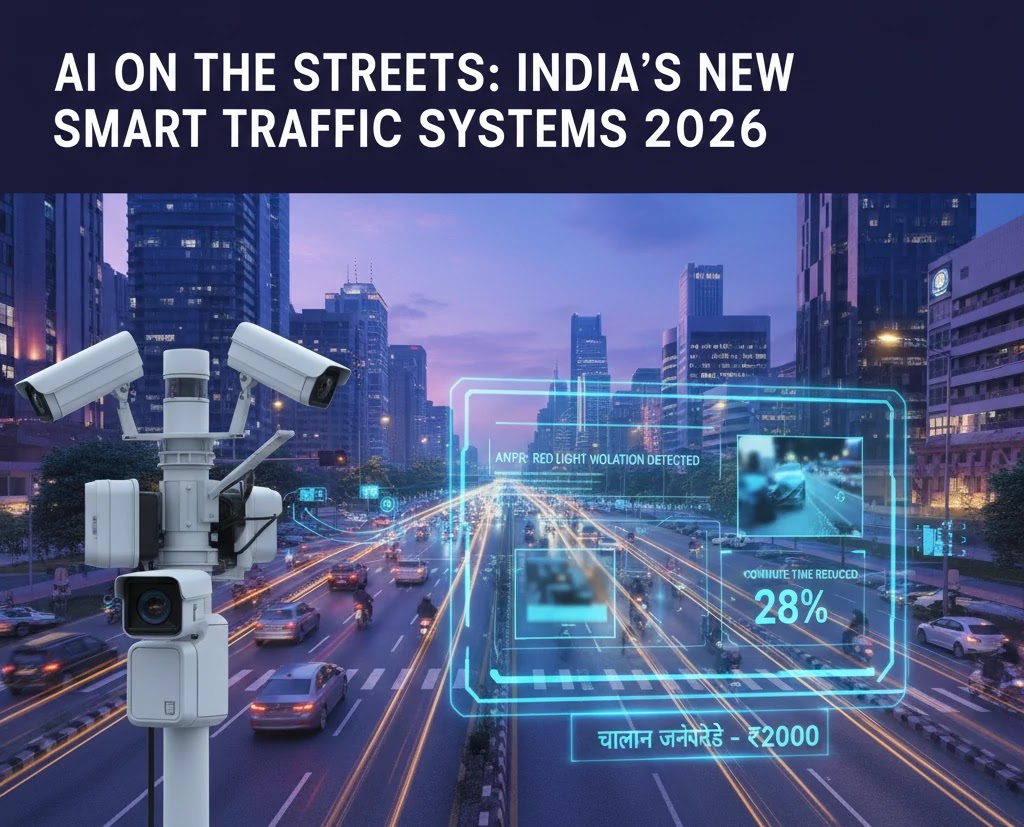

If you’ve driven through Delhi or Mumbai this week, you might have noticed something different at the intersections. As of February 2026, India has officially entered the era of the Integrated Traffic Management System (ITMS). This isn’t just about cameras; it’s about an AI brain that controls the heartbeat of our cities in real-time.
1. What is ITMS? The AI Controlling the Signals
The new system uses an Adaptive Traffic Control System (ATCS). Instead of fixed timers, AI sensors calculate vehicle density in real-time. If one side of the road is empty, the AI switches the light to green for the crowded side instantly. This is part of the Delhi 2026 pollution action strategy, designed to reduce commute times by up to 30% and cut emissions from idling engines.
2. ANPR Cameras: No More Manual Challans
The days of traffic police waving you over are fading. High-definition Automatic Number Plate Recognition (ANPR) cameras now scan every vehicle. These AI “eyes” are trained to detect several violations simultaneously:
- Red light jumping and stop-line violations.
- Triple riding and “No Helmet” detection using advanced computer vision.
- Wrong-side driving and illegal parking in high-density corridors.
Fines are generated within seconds and sent directly to your phone, linked via your FASTag and Vahan database. In 2026, you can even challenge these challans digitally within 45 days if you believe the AI made an error.
KOLAACE Efficiency Tip: Ensure your HSRP (High Security Registration Plate) is clean and undamaged. The AI uses these plates to verify insurance and PUC status—keeping them readable avoids unnecessary “flagging” by the system.
3. The “Green Wave” and Emergency Priority
One of the most impressive features of the 2026 rollout is the Green Wave for emergency vehicles. Using RFID and GPS integration, the ITMS can detect an approaching ambulance and clear the entire path by turning all subsequent signals green. This “Agentic” response is saving lives daily across major Indian metros.
Conclusion: Navigating a Smarter India
The digital transformation of our roads is a major step toward the “Smart India” vision. As we continue our journey toward 50,000 posts on KOLAACE, staying ahead of these technological shifts is essential for both your safety and your productivity. The AI isn’t just watching—it’s optimizing our way of life.
Have you encountered a “Smart Corridor” yet? Share your thoughts on the new AI traffic rules below!