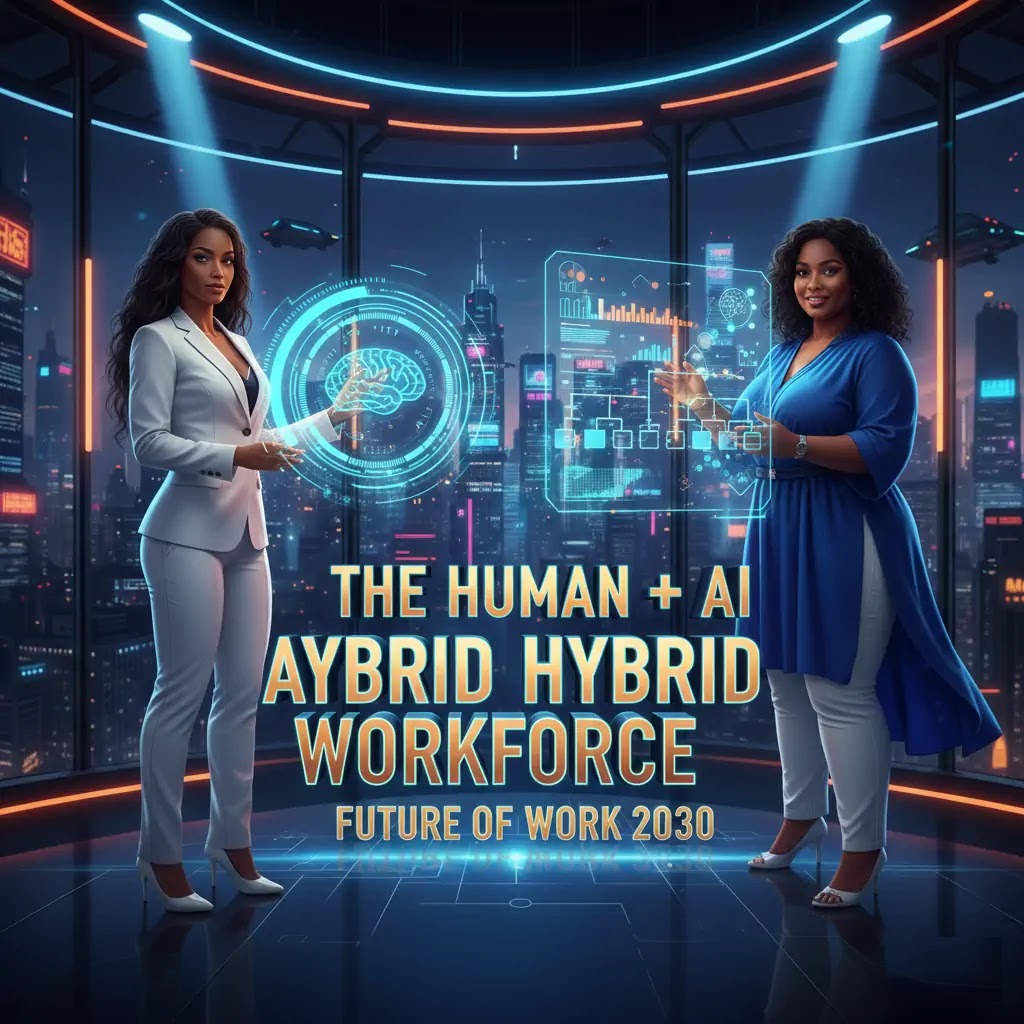
The Human + AI Hybrid Workforce: Future of Work 2030
Workforce Strategy Overview
- Collaboration over Competition: AI enhances human capability rather than replacing it.
- Infrastructure Focus: Just as we build automated income engines, we must architect automated workforces.
- Skill Evolution: Critical thinking and AI orchestration are the new requirements.
- Operational Speed: Hybrid teams execute significantly faster than traditional models.
The future of work is not humans versus AI. It is humans empowered by AI. By 2030, the most successful organizations will operate as Human + AI hybrid workforces — blending artificial intelligence systems with human creativity, strategy, and emotional intelligence.
A hybrid workforce integrates artificial intelligence tools directly into daily workflows. This shift is similar to how decentralized AI nodes are currently revolutionizing compute power; we are now decentralizing intelligence across the entire employee base.
Industry Transformation Benchmarks
*Analysis of role distribution between AI systems and human professionals by 2030.
| Industry | AI Primary Role | Human Primary Role |
|---|---|---|
| Marketing | Analytics & Content Gen | Brand Storytelling |
| Finance | Risk Modeling | Strategic Investment |
| Healthcare | Data Diagnostics | Patient Care & Empathy |
| Software | Code Testing/Gen | Architecture & Innovation |
Market Shift: Workforce AI Augmentation
Adoption rate of AI augmentation across professional roles (Projected Growth).
Core Components of the Hybrid Model
- AI Co-Pilots: Personalized agents that manage documentation and research.
- Decision Intelligence: AI models that run simulations for strategic validation.
- Human Oversight Layer: The ethical and creative guardrails that define culture.
“The competitive advantage of the future belongs to the company that can integrate AI the fastest while keeping human talent the most creative.”
Frequently Asked Questions
AI will automate tasks, but most professional roles will evolve into “orchestration” roles where humans manage AI-driven workflows.
By building scalable infrastructure, much like the models discussed in our guide on building automated wealth systems.