Cross border shopping used to come with hidden friction. A product priced fairly on an international website could become unexpectedly expensive after foreign exchange markup, payment gateway fees, and bank charges were added during checkout. Many buyers accepted these extra costs because there were limited alternatives.
In 2026, payment systems connected through BRICS Pay are changing how international retail payments work. Instead of routing transactions through multiple global intermediaries, the system connects domestic payment rails directly. That means shoppers can often pay using local currency and familiar mobile payment apps while merchants receive funds in their own currency.
For regular travelers, online shoppers, freelancers, and small import businesses, the biggest advantage is not just speed. It is visibility and cost control. You can see conversion rates upfront, settle payments faster, and avoid part of the markup commonly added by traditional international card networks.
From a practical user experience perspective, the process feels closer to scanning a local QR code than performing a traditional international transfer.
What Is BRICS Pay and Why It Matters for International Shopping
BRICS Pay is a cross border retail payment framework designed to connect national payment systems from participating economies. Instead of depending entirely on international card processors or delayed bank transfers, participating countries can process transactions more directly.
In simple terms, the system acts as a bridge between domestic payment networks such as UPI, Pix, and similar real time payment rails. A customer pays through a local payment app, while the merchant receives settlement in their own currency.
This structure matters because traditional international payments usually involve several layers:
- Card processors
- Intermediary banks
- Currency conversion providers
- Settlement delays between institutions
Each layer can add fees or reduce transparency. BRICS Pay attempts to simplify this chain.
Common Problems BRICS Pay Tries to Solve
- High foreign exchange conversion charges
- Slow international settlement times
- Lack of clarity on final payment amount
- Dependency on international card approval systems
- Difficult payment experience for small merchants
How BRICS Pay Works During a Real Purchase
For most users, the process is surprisingly simple. The technical infrastructure operates in the background while the payment flow remains familiar.
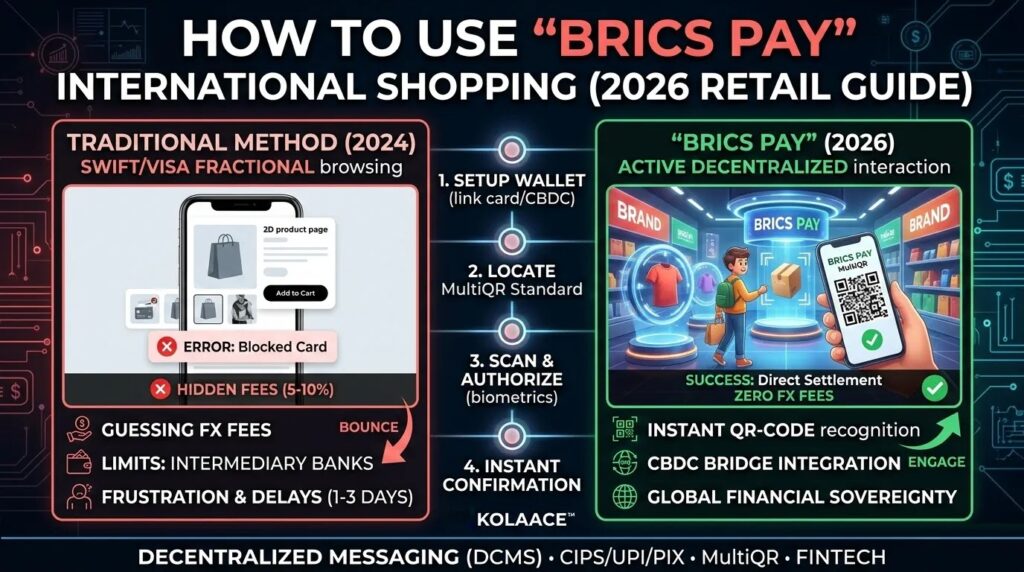
A typical transaction usually follows these steps:
- You select an international merchant that supports BRICS Pay integration
- The merchant generates a compatible QR code or payment request
- Your app displays the amount in local currency
- The conversion happens automatically using live exchange rates
- Payment is authorized instantly through biometric or PIN verification
In many cases, the shopper never directly interacts with foreign currency at all. The system handles conversion in the background while displaying the estimated final amount before confirmation.
This creates a smoother experience for users who frequently purchase products, subscriptions, digital tools, or imported goods from international sellers.
BRICS Pay vs Traditional International Payment Methods
Understanding the difference helps explain why many shoppers and small businesses are experimenting with alternative payment systems in 2026.
| Feature | Traditional International Payments | BRICS Pay |
|---|---|---|
| Settlement Speed | Often delayed | Near real time processing |
| Currency Conversion | Multiple markups possible | Transparent live conversion |
| User Experience | Card and bank dependent | QR and app focused flow |
| Small Merchant Access | Complex onboarding | Simpler integration potential |
| Transaction Visibility | Final charges may vary | Clear amount before approval |
Traditional payment systems still dominate many regions, especially for global ecommerce giants. However, alternative payment infrastructure is gaining attention because users increasingly care about fee transparency and mobile first experiences.
Step by Step Guide to Using BRICS Pay for International Shopping
1. Install a Supported Payment Application
Start by downloading an official application or banking app that supports BRICS Pay compatible transactions. Some apps integrate directly with national payment systems such as UPI or Pix.
Before registering, verify:
- Whether your country supports cross border usage
- Merchant compatibility in your destination market
- Transaction and spending limits
2. Complete Identity Verification
Most platforms require basic KYC verification before enabling international functionality. This usually includes:
- Mobile number verification
- Government identification
- Bank account linking
Although verification adds an extra step, regulated onboarding improves security and reduces fraud risk.
3. Link Your Preferred Funding Source
You can normally connect:
- Bank accounts
- Domestic payment wallets
- Supported debit or credit cards
Experienced users often prefer direct bank linking because it may reduce additional processing charges compared to card based transactions.
4. Scan the Merchant QR or Use Supported Checkout
At checkout, scan the QR code displayed by the merchant or choose the BRICS Pay option online. The system automatically generates a payment request in your local currency.
Always review:
- Exchange rate shown
- Merchant name
- Total payable amount
- Any platform fee displayed
5. Confirm and Track the Transaction
After approval, the payment usually settles within seconds or minutes. Most apps provide a digital receipt with conversion details and transaction history.
For frequent international shoppers, keeping records becomes useful for budgeting and expense tracking.
Real World Use Cases for BRICS Pay
International Online Shopping
People purchasing electronics, fashion items, or niche products from overseas marketplaces often use BRICS Pay to reduce forex related costs. The checkout process feels more predictable compared to international card billing.
Travel and Tourism
Travelers benefit from QR based payments at restaurants, retail stores, and local service providers without carrying large amounts of cash or managing separate forex cards.
Small Business Imports
Small retailers importing inventory in smaller quantities often lose margin due to banking charges. Faster cross border settlement can improve cash flow management.
Freelancers and Digital Professionals
People paying for software subscriptions, cloud services, digital advertising, or international productivity tools can monitor conversion costs more clearly.
Users Who Benefit Most From BRICS Pay
- Frequent international shoppers
- Remote workers paying for global tools
- Tourists making QR based payments abroad
- Small import businesses
- Students paying international service providers
Pros and Cons of Using BRICS Pay
Advantages
- Lower international transaction costs in many cases
- Faster payment settlement
- Simple mobile and QR based experience
- Clearer currency conversion visibility
- Reduced dependency on traditional card systems
Limitations
- Merchant support is still expanding
- Availability varies by country and banking integration
- Internet access is required for most transactions
- Some users may face onboarding restrictions
- Exchange rates can still fluctuate during volatile periods
From a practical perspective, BRICS Pay works best when users treat it as an additional payment option rather than a total replacement for every international payment method.
Who Should Use BRICS Pay and Who Should Avoid It
Most suitable for:
- People who regularly buy products from overseas sellers
- Travelers visiting participating countries
- Freelancers paying international service providers
- Small businesses handling frequent low value imports
- Users comfortable with mobile first payment systems
Possibly less suitable for:
- Users shopping only within domestic markets
- People in regions without active support
- Businesses requiring traditional invoice based banking flows
- Users uncomfortable with digital payment apps
Best Practices for Safe and Efficient International Payments
- Verify merchant QR codes before scanning
- Check live exchange rates before approval
- Enable biometric authentication and app security locks
- Use official apps only from trusted app stores
- Track transaction history regularly for budgeting
- Avoid public WiFi during large transactions
Experienced users also recommend testing the system with a smaller transaction first before relying on it for expensive international purchases.
Conclusion
International retail payments are gradually moving toward faster and more transparent systems. BRICS Pay represents part of that transition by connecting domestic payment infrastructure across multiple countries.
For shoppers, the biggest benefit is clarity. Instead of navigating hidden fees and delayed settlements, users can often complete international purchases with simpler mobile workflows and more predictable conversion costs.
The system is still evolving, and adoption will depend on merchant integration, regulation, and regional support. Even so, for frequent cross border buyers and small businesses, BRICS Pay already offers a practical alternative to traditional international payment methods.
Frequently Asked Questions