Many small businesses do not fail because the product is weak. They struggle because cash arrives too late. A profitable business can still miss inventory opportunities, pause advertising campaigns, or delay supplier payments simply because working capital is stuck in approval processes.
That problem is exactly why Just in Time Capital is becoming popular in 2026. Instead of borrowing large amounts months in advance, businesses now unlock funding exactly when operational data shows a real need.
For ecommerce sellers, local retailers, service providers, and even home based businesses, this funding model changes how growth decisions are made. Capital becomes flexible, responsive, and closely tied to actual business performance.
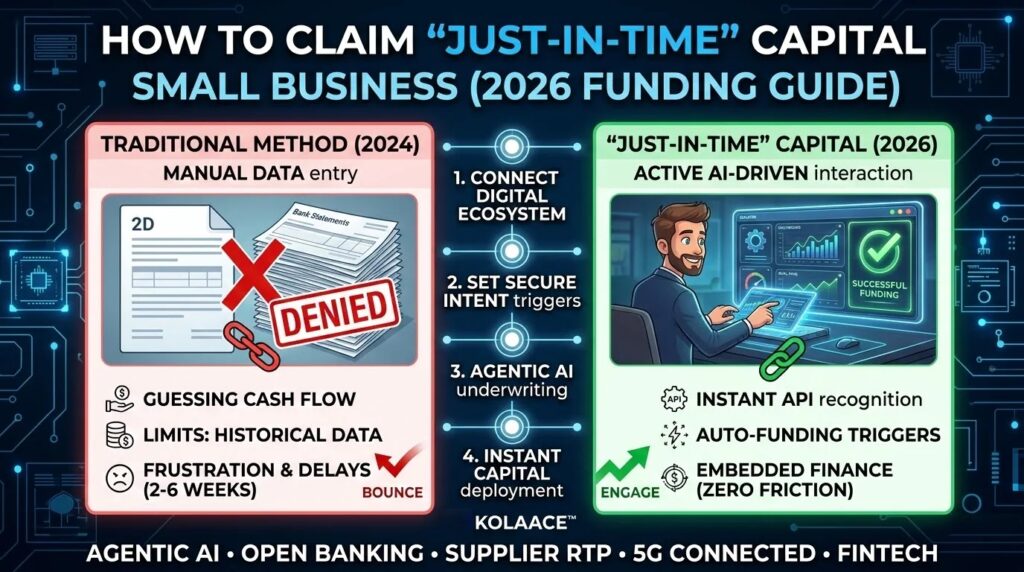
Unlike traditional business loans, Just in Time Capital works more like an embedded financial layer. Your sales platforms, inventory systems, payment processors, and accounting tools continuously share signals with the funding provider. When specific conditions are met, funds can be released automatically.
In practical use, this helps businesses avoid one common mistake. Borrowing too much too early and paying for money that sits unused.
What Is Just in Time Capital
Just in Time Capital, often called JIT funding, is a modern financing model where businesses receive capital based on live operational activity instead of only historical records.
Traditional lenders mainly review tax filings, collateral, and previous revenue. JIT systems analyze current business momentum. This includes:
- Daily sales volume
- Inventory movement
- Customer repayment patterns
- Advertising performance
- Supplier payment history
- Cash flow consistency
From a practical business perspective, this approach is faster because risk analysis happens continuously in the background.
For example, if a seasonal product suddenly starts selling faster than expected, the funding system may automatically increase available capital for restocking before inventory runs out.
How Just in Time Funding Works in 2026
The biggest change in 2026 is automation. Modern funding systems no longer operate as separate financial products. They integrate directly into business workflows.
Core Process Behind JIT Capital
- Your business platforms share operational data securely
- AI based systems evaluate business health continuously
- Predefined triggers activate funding automatically
- Repayment adjusts dynamically based on revenue
This means funding decisions happen faster because the provider already understands your business activity before you request money.
Common Funding Triggers
- Inventory falling below a preset limit
- Sales growth crossing a weekly threshold
- High return on ad spend during campaigns
- Supplier discount opportunities with limited timing
- Large incoming customer orders
Businesses using smart triggers usually avoid panic borrowing because funding activates only for specific operational purposes.
Traditional Loans vs Just in Time Capital
Traditional business loans still work well for large expansions or long term infrastructure investments. However, daily operational funding requires more flexibility than older lending systems were designed for.
| Feature | Traditional Loan | Just in Time Capital |
|---|---|---|
| Approval Speed | Several days or weeks | Often instant or same day |
| Data Evaluation | Past financial records | Real time business performance |
| Capital Usage | Fixed amount upfront | Released only when needed |
| Repayment Style | Fixed schedule | Often linked to revenue flow |
| Operational Flexibility | Lower | High flexibility |
In real business scenarios, the difference becomes clear during fast growth periods. A business using static loans may struggle with timing, while a JIT enabled business can react immediately to demand spikes.
Step by Step Guide to Claim Just in Time Capital
1. Organize Your Financial Data
Before applying for any JIT funding system, clean up your operational records. Most providers rely heavily on automation, which means poor quality data creates inaccurate risk assessments.
- Update accounting records regularly
- Separate business and personal transactions
- Track inventory accurately
- Remove duplicate or outdated invoices
Small businesses that maintain organized digital records usually qualify faster and receive better funding limits.
2. Connect Your Business Platforms
Most systems require integration with tools your business already uses.
- Ecommerce stores
- Point of sale systems
- Accounting software
- Inventory management tools
- Business bank accounts
The more complete your operational visibility, the better the funding system can evaluate your business stability.
3. Set Smart Funding Rules
This is where businesses gain real operational value. Instead of manually requesting funds every time, you define clear conditions.
Examples include:
- Release inventory funding when stock reaches 20 percent
- Increase advertising budget during high conversion weekends
- Unlock payroll backup during delayed client payments
- Reserve emergency capital for supplier disruptions
Businesses that use simple triggers first generally avoid overspending and funding misuse.
4. Monitor Cost Efficiency
Just because funding is fast does not mean it should be used constantly. Track whether the capital actually generates profitable growth.
Experienced operators usually compare:
- Revenue generated from funded activity
- Total repayment cost
- Profit margin after repayment
- Operational improvement created by faster execution
5. Build a Healthy Funding History
Consistent repayment behavior improves future access. Businesses with stable operational performance often receive:
- Lower fees
- Higher funding limits
- Faster approvals
- More flexible repayment structures
Real World Use Cases for Small Businesses
Retail Stores
Retail businesses often lose sales because popular items go out of stock during demand spikes. JIT funding can automatically release restocking capital based on live inventory movement.
Ecommerce Sellers
Online sellers commonly face advertising opportunities that require immediate spending. Instead of waiting for monthly cash flow cycles, JIT systems can expand ad budgets when return on investment improves.
Local Service Businesses
Agencies, repair shops, and consulting firms frequently deal with delayed invoices. JIT capital helps maintain payroll and operations without forcing owners into large traditional loans.
Restaurants and Food Businesses
Restaurants benefit from short term funding during festivals, local events, and weekend demand spikes. Smart funding triggers can help purchase additional inventory without disrupting normal cash reserves.
Home Based Businesses
Small home operated brands often struggle with bulk supplier requirements. Flexible funding helps these businesses accept larger customer orders without exhausting working capital.
Pros and Cons of Just in Time Capital
Advantages
- Fast access to operational funding
- Capital aligns with actual business activity
- Lower risk of paying for unused funds
- Useful during seasonal demand spikes
- Flexible repayment models in many systems
- Reduces delays in inventory and marketing decisions
Limitations
- Requires digital business infrastructure
- Not available equally across all industries
- Overuse can create dependency on short term funding
- Some providers charge higher fees for high risk sectors
- Businesses with inconsistent revenue may qualify for less capital
From a financial planning perspective, JIT funding works best as a growth tool, not as a replacement for responsible budgeting.
Who Should Use This Funding Model
Best Fit Businesses
- Ecommerce stores with steady order flow
- Retail businesses with inventory turnover
- Service providers with delayed invoices
- Seasonal businesses with demand spikes
- Small companies already using digital systems
Who Should Avoid or Delay Adoption
- Businesses without consistent sales data
- Companies operating mostly in cash without digital tracking
- Owners who struggle with financial discipline
- Businesses seeking large long term infrastructure funding
For many small businesses, the right approach is combining stable long term financing with flexible operational funding.
Best Practices to Maximize JIT Funding Safely
- Use funding for revenue generating activities first
- Track performance metrics weekly
- Avoid activating multiple funding triggers at once
- Review repayment costs regularly
- Maintain emergency cash reserves separately
- Keep supplier relationships strong even when funding is automated
- Regularly audit connected financial tools for accuracy
One practical observation from businesses using embedded finance systems is that disciplined operators benefit the most. Fast funding amplifies both good and bad decisions. Clear financial oversight still matters.
Final Takeaway
Just in Time Capital represents a major shift in how small businesses access funding. Instead of relying entirely on slow approval systems and fixed borrowing structures, businesses can now match capital directly with operational timing.
For companies managing inventory, advertising, payroll, or seasonal growth, this flexibility can reduce delays that previously limited expansion.
The most successful businesses in 2026 are not necessarily the ones with the biggest loans. They are the ones that can move quickly when opportunities appear. Smart, responsive funding helps make that possible.
Frequently Asked Questions