Online clothing shopping has improved dramatically over the last few years, but sizing confusion still remains one of the biggest reasons for returns. A shirt may look perfect on the model, yet feel tight around the shoulders in real life. A dress may appear flattering in product photos but fit very differently depending on body shape and fabric tension.
This is exactly why VR clothing try-on technology is becoming important in 2026. Instead of relying only on size charts or edited product photos, shoppers can now preview how clothes behave on realistic body avatars that match their proportions.
After testing several VR fitting systems across casual wear, formal clothing, and activewear categories, one thing becomes obvious. The best platforms are not focused only on appearance. They focus on movement, comfort, pressure points, and realistic fabric behavior.
For slim and plus-size shoppers, this creates a more accurate and less frustrating shopping experience.
What Makes VR Clothing Try-On Different in 2026
Early virtual fitting tools mainly placed clothing graphics over a photo or camera feed. The result looked impressive in advertisements, but accuracy was limited. Sleeves did not move naturally, fabrics looked stiff, and body proportions often felt unrealistic.
Modern VR fitting systems use body mapping, depth scanning, and physics-based fabric simulation. Instead of simply showing a static outfit, they calculate how materials react to movement and body structure.
In practical use, this changes how shoppers evaluate clothing:
- Users can compare fit across multiple sizes in minutes
- Pressure zones become visible around the waist, shoulders, or hips
- Fabric drape looks different depending on body type
- Movement testing reveals comfort issues before purchase
For premium clothing, formalwear, and occasion outfits, this can significantly reduce buying mistakes.
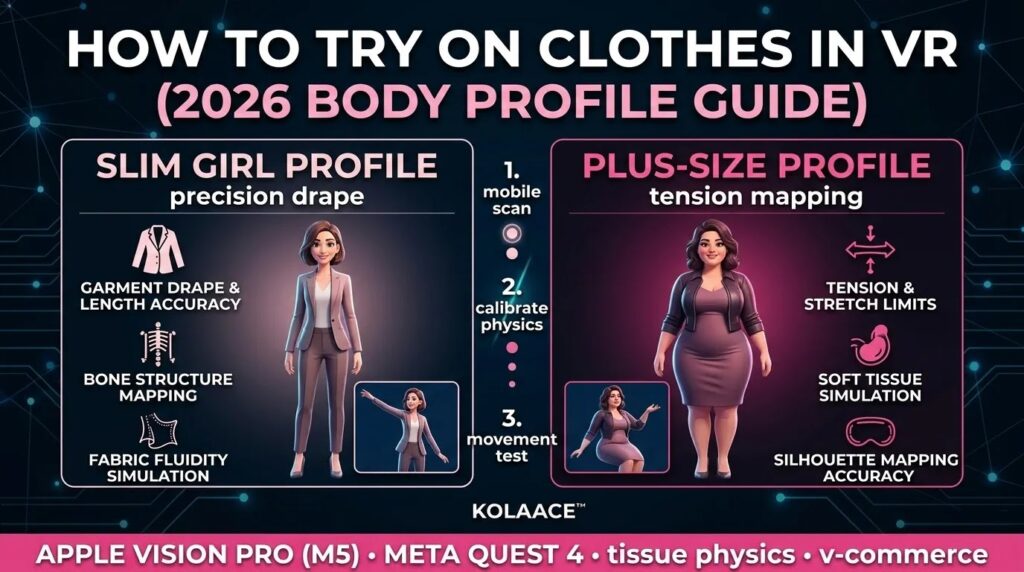
How Slim and Plus-Size Body Profiles Experience VR Fitting Differently
Different body types prioritize different aspects of fit. Slim shoppers often focus on silhouette, structure, and length. Plus-size shoppers usually pay more attention to comfort, stretch behavior, and body distribution.
This distinction matters because traditional size charts rarely explain how clothes actually feel on different body shapes.
| Feature | Slim Body Profile | Plus-Size Body Profile |
|---|---|---|
| Main Fit Concern | Length, structure, drape | Comfort, flexibility, pressure zones |
| Fabric Behavior Focus | Flow and clean silhouette | Stretch and movement response |
| Common Issue | Sleeve length or loose waist | Tight chest, hip, or shoulder fit |
| Best VR Benefit | Visual proportion accuracy | Realistic comfort prediction |
During testing, plus-size users often benefited more from VR try-ons because many standard clothing brands still use simplified sizing systems. VR platforms compensate for this by analyzing body volume and movement instead of relying only on chest or waist measurements.
Why Fashion Brands Are Investing in VR Fitting Rooms
Virtual fitting technology is solving a real business problem for online fashion retailers. Returns are expensive, especially for clothing categories where fit accuracy directly affects customer satisfaction.
Virtual Fitting Room Market Value (2024 to 2026)
*Industry projections based on retail technology adoption trends through 2026.*
Brands using advanced fitting systems are seeing improvements in several areas:
- Lower product return rates
- Higher conversion on premium clothing
- Better customer confidence for first-time buyers
- More engagement on mobile shopping apps
Small clothing brands are also benefiting because VR fitting helps build trust without requiring expensive physical stores.
Step-by-Step Guide to Trying On Clothes in VR
1. Create an Accurate Body Avatar
Your avatar quality determines how accurate the fitting results will be. Most platforms allow scanning through a smartphone camera or depth sensor.
- Wear fitted clothing during scanning
- Stand in balanced lighting conditions
- Keep posture natural and relaxed
- Avoid oversized clothing while scanning
Many users make the mistake of adjusting their avatar to look slimmer or taller. This usually reduces fit accuracy and defeats the purpose of realistic fitting.
2. Enable Fabric Simulation Settings
Advanced VR systems allow physics-based simulation for materials like denim, cotton, silk, or stretch fabric.
This feature helps identify:
- Waist tension during sitting
- Shoulder restriction in jackets
- Fabric folding around hips or knees
- Compression points during movement
3. Test Multiple Sizes Instead of One
Do not rely only on your standard size. Clothing fit changes between brands, especially for imported products.
A practical testing method is:
- Try your regular size first
- Compare one size smaller for structure
- Compare one size larger for comfort
- Check movement simulation before deciding
4. Perform Real Movement Tests
Static fitting previews are not enough. The most useful part of VR fitting is movement analysis.
- Sit down to check waist comfort
- Lift arms to test shoulder flexibility
- Walk virtually to observe fabric flow
- Bend slightly to identify tight areas
In testing, this step revealed fitting issues that were not visible in standing poses.
5. Compare Different Fabric Types
The same design can behave very differently depending on material. A slim-fit shirt in stretch cotton feels completely different from one made with stiff fabric.
VR systems now simulate:
- Elasticity
- Weight
- Wrinkle formation
- Fabric fall during movement
Real-World Use Cases That Actually Matter
Office Wear Shopping
Professionals buying blazers or formal shirts can test sitting posture and sleeve movement before purchasing. This is particularly useful for people who spend long hours at desks and need comfort as well as appearance.
Plus-Size Occasion Wear
For weddings or events, comfort becomes critical because outfits may be worn for several hours. VR fitting helps users understand stretch behavior around the waist, hips, and shoulders before spending on premium clothing.
Gym and Activewear
Compression wear and leggings behave differently during movement. VR testing can reveal rolling waistbands, tight knee movement, or restricted shoulder motion.
Testing New Brands Online
Many shoppers hesitate to buy from unfamiliar fashion brands because sizing standards vary. VR fitting helps compare how different brands fit the same body profile.
Small Fashion Business Advantage
Independent clothing sellers can use VR fitting to compete with larger retailers. Instead of investing heavily in physical showrooms, they can provide realistic digital fitting experiences that improve buyer confidence.
Pros and Limitations of VR Clothing Try-On
Advantages
- Reduces uncertainty while shopping online
- Improves fit prediction across different brands
- Helps plus-size users evaluate comfort more accurately
- Can reduce costly returns and exchanges
- Creates a more interactive shopping experience
Limitations
- Accuracy depends on body scan quality
- Low-end devices may struggle with advanced rendering
- Some fabrics still behave slightly differently in real life
- Not every fashion retailer supports advanced VR fitting yet
Who Should Use VR Try-On Technology
Best for:
- Frequent online fashion shoppers
- People who struggle with inconsistent sizing
- Plus-size buyers looking for better comfort prediction
- Users purchasing expensive or occasion wear
- Customers testing unfamiliar clothing brands
May not be necessary for:
- Basic low-cost clothing purchases
- Users comfortable with trial-and-return shopping
- Shoppers buying standard loose-fit clothing
Best Practices for More Accurate VR Fitting Results
- Scan your body in consistent lighting
- Update avatar measurements if body shape changes
- Use movement testing instead of static viewing only
- Compare multiple sizes before purchasing
- Pay attention to fabric type, not just appearance
- Keep expectations realistic for heavy or layered clothing
One overlooked detail is posture. Standing unnaturally straight during scanning can distort how clothing behaves later. Natural posture usually produces more realistic fitting results.
Conclusion
VR clothing try-on technology is becoming a practical shopping tool rather than a novelty feature. Instead of relying entirely on size charts or edited product photos, shoppers can now preview how garments fit, stretch, and move on realistic body profiles.
For slim users, the biggest advantage is better visual proportion and drape analysis. For plus-size users, the real value comes from comfort prediction and realistic movement simulation.
The most important takeaway is simple. Accurate avatars create accurate results. When body scans are realistic and movement testing is used properly, VR fitting can significantly improve online shopping confidence and reduce unnecessary returns.
Frequently Asked Questions