Most investors in 2026 are facing a real problem. The metaverse and spatial computing space is growing fast, but picking the right stock feels uncertain. One quarter a company leads, next quarter it loses momentum. This makes direct stock picking risky, especially for retail investors.
This is where metaverse ETFs become practical. Instead of betting on a single company, you invest in a basket that covers the full ecosystem. This includes hardware companies, chip manufacturers, cloud infrastructure, and digital platforms. The result is a more balanced exposure with lower downside risk.
If you are building a long term portfolio or even exploring thematic investing for the first time, this guide will help you understand which ETFs actually make sense in 2026 and why.
What is a Metaverse ETF and Why It Matters
A metaverse ETF is not limited to virtual worlds or gaming companies. In real terms, it includes multiple layers of technology that enable immersive computing.
- Hardware layer, companies building headsets and devices
- Compute layer, GPU and semiconductor companies
- Network layer, 5G and cloud infrastructure providers
- Platform layer, apps, gaming, and digital economies
This layered exposure is important. For example, even if a gaming platform slows down, chip demand may still grow due to AI and enterprise adoption. This balance is what makes ETFs more stable compared to individual stocks.
Step by Step: How to Choose the Right ETF
Step 1: Identify Your Investment Goal
If your goal is aggressive growth, choose ETFs focused on emerging platforms. If your goal is stability, select broader tech based ETFs with metaverse exposure.
Step 2: Check Expense Ratio
Lower expense ratios help in long term compounding. Even a small difference like 0.5 percent vs 0.08 percent becomes significant over time.
Step 3: Analyze Holdings
Always look inside the ETF. Check whether it includes companies like chip makers, cloud providers, and platform builders. This gives a clearer picture than just the ETF name.
Step 4: Evaluate Rebalancing Strategy
Good ETFs adjust their holdings regularly. This helps them stay aligned with fast changing tech trends.
Top Metaverse ETFs to Watch in 2026
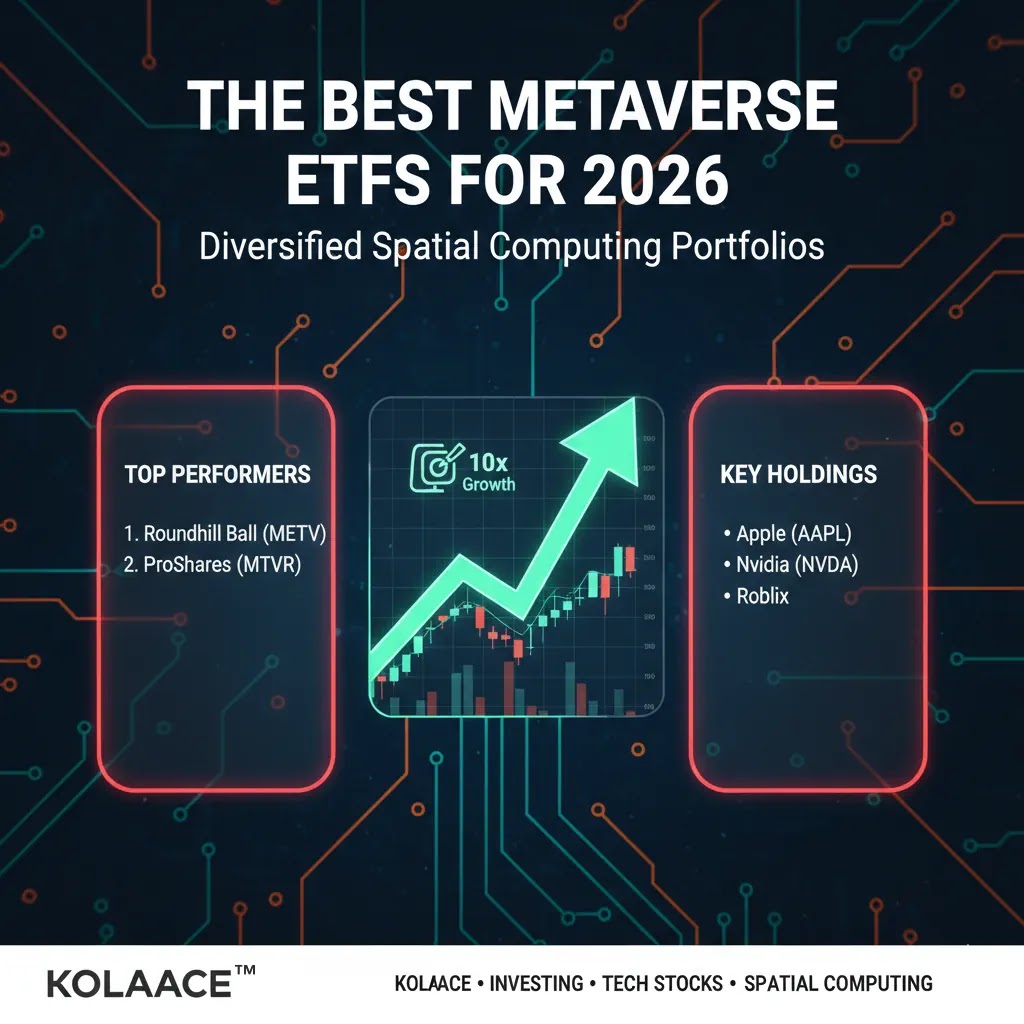
1. Roundhill Ball Metaverse ETF (METV)
This is one of the most direct ways to invest in the metaverse theme. It focuses on companies actively building virtual ecosystems and supporting technologies.
- Balanced exposure across hardware, software, and platforms
- Includes companies involved in spatial computing growth
- Moderate expense ratio compared to niche ETFs
In practical terms, METV works well for investors who want targeted exposure without manually tracking multiple stocks.
Global Metaverse Market Growth Trend
Growth supported by enterprise adoption, virtual collaboration, and AI integration.
2. MTVR ETF
This ETF leans more towards gaming and entertainment. It benefits from user engagement trends rather than enterprise adoption.
- Higher growth potential but more volatility
- Strong focus on gaming platforms
- Less diversified compared to broader ETFs
3. FTEC ETF
This is not a pure metaverse ETF, but it plays an important role in a balanced portfolio.
- Very low expense ratio
- Exposure to major tech companies driving infrastructure
- More stable compared to niche ETFs
ETF Comparison Table
| ETF | Expense Ratio | Best For |
|---|---|---|
| METV | Moderate | Focused metaverse exposure |
| MTVR | Higher | Gaming and entertainment growth |
| FTEC | Low | Stable tech based exposure |
Real World Portfolio Strategy
Instead of investing in a single ETF, many experienced investors combine them.
- Core holding in a stable ETF like FTEC
- Growth allocation in METV
- Optional high risk exposure in MTVR
This combination creates a balanced portfolio with both stability and growth potential.
Pros and Cons of Metaverse ETFs
Pros
- Diversified exposure across multiple sectors
- Lower risk compared to individual stocks
- Automatic rebalancing based on market trends
Cons
- Less control over individual stock selection
- Expense ratios can reduce long term returns
- Performance depends on overall sector growth
Who Should Invest and Who Should Avoid
Good fit for:
- Long term investors
- People interested in tech trends
- Investors who prefer diversified portfolios
Not suitable for:
- Short term traders
- Investors looking for guaranteed returns
- Those unfamiliar with market volatility
Final Takeaway
The metaverse opportunity is real, but the path is uncertain. Companies will rise and fall as technology evolves.
ETFs provide a practical way to stay invested in the trend without constantly tracking individual companies. A balanced approach with a mix of ETFs can help manage risk while capturing growth.
If you are entering this space in 2026, focus on diversification, cost efficiency, and long term strategy rather than short term hype.
Spatial Computing ETF FAQ