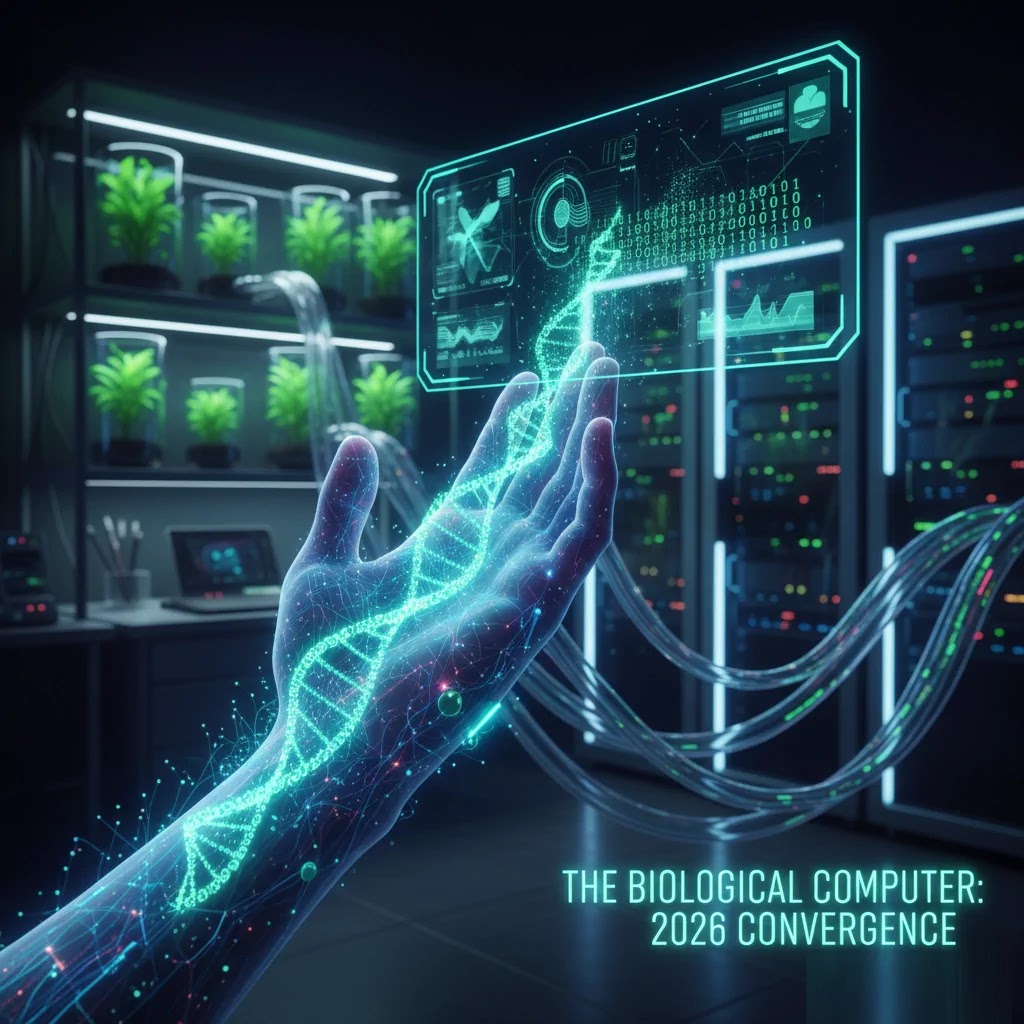
In 2026, biotechnology is no longer limited to pharmaceutical laboratories or university research centers. The biggest transformation is happening where biology meets software, automation, and artificial intelligence. This shift is known as Bio Digital Convergence, and it is rapidly becoming one of the most valuable technology sectors in the world.
The synthetic biology market has already crossed $20.47 billion, and growth is accelerating because companies are now treating living cells like programmable systems. Instead of manually testing thousands of biological combinations, researchers use Agentic AI to simulate outcomes before physical experiments even begin. This dramatically reduces cost, development time, and production waste.
What makes this trend important is that it is moving beyond theory. Real businesses are already using synthetic biology to manufacture medicines, improve food production, create eco friendly materials, and develop smarter healthcare monitoring systems.
For investors, startups, healthcare companies, and even governments, this transition represents more than a scientific breakthrough. It represents the beginning of a programmable bio economy where data, automation, and living organisms work together in real time.
1. AI Driven Genomic Programming Is Reshaping Biotechnology
One of the biggest developments in 2026 is the rise of Foundational Biological Models, often called FBMs. These systems work similarly to large language AI models, but instead of processing human language, they analyze genetic structures, proteins, and cellular behavior.
Researchers can now input biological goals into AI systems and receive optimized DNA sequence recommendations within hours instead of months. This changes how biotech products are developed across multiple industries.
Why This Matters in the Real World
Traditional biotechnology development often required years of trial and error. In practical terms, companies spent enormous amounts of money testing biological reactions manually. In 2026, AI assisted genomic design is reducing much of that inefficiency.
- Drug discovery pipelines are becoming faster
- Industrial enzymes are being optimized with lower energy consumption
- Biofuel production is becoming more commercially practical
- Lab grown materials are reducing industrial waste
- Custom microbes are improving agricultural productivity
A strong example is clean manufacturing. Several companies are engineering microbes that naturally produce industrial chemicals without depending heavily on petroleum based supply chains. This directly supports newer clean energy bioprocessing ecosystems.
For smaller biotech startups, this AI acceleration is especially valuable because it lowers research barriers. Teams with smaller budgets can now simulate biological outcomes digitally before investing heavily in physical infrastructure.
Practical Business Use Cases Emerging in 2026
- Food companies developing protein alternatives with improved nutrition
- Construction firms exploring self repairing biological materials
- Cosmetic brands using engineered natural compounds
- Healthcare firms creating personalized biological treatments
- Environmental companies building bacteria that absorb pollutants
Many analysts compare this stage of biotechnology to the early cloud computing era. The infrastructure is still developing, but the long term commercial potential is becoming difficult to ignore.
2. Neural Interfaces and Living Digital Systems Are Expanding Fast
Another major trend inside bio digital convergence is the growth of non invasive neural interfaces. In 2026, systems like NeuralSync are enabling communication between human neural signals and digital platforms without requiring surgical implants.
These interfaces can monitor brain activity patterns with very high precision and send data securely into Personal Data Vaults. The goal is not only medical treatment. The larger goal is predictive health management.
For example, systems can now identify stress patterns, sleep disruptions, and early neurological irregularities before major symptoms appear. In highly demanding work environments, this technology is already being explored to improve workplace safety and reduce burnout.
How This Could Affect Everyday Life
Bio digital systems are becoming increasingly practical because they combine continuous monitoring with AI based analysis. Instead of reacting after a health issue develops, systems may eventually detect risk signals early.
- Factories may use fatigue detection systems for worker safety
- Hospitals may predict patient complications earlier
- Students could receive adaptive learning environments based on focus levels
- Remote healthcare systems may improve rural medical access
- Smart wearables may become far more personalized
In developing economies, this could become especially important. Areas with limited access to specialist healthcare may benefit from AI supported biological diagnostics that operate through portable devices.
The Shift: Traditional Biotech vs. Bio Digital Systems (2026)
| Metric | Traditional Biotech | Bio Digital (2026) |
|---|---|---|
| Storage Density | ~1015 bits/m² (Flash) | ~1018 bits/mm³ (DNA Storage) |
| Design Lead Time | 18 to 24 Months | 3 to 6 Months (AI Driven) |
| Interface Security | Standard Biometrics | Quantum Bio Encryption |
3. Why Investors and Governments Are Watching the Bio Economy Closely
The synthetic biology sector is expected to grow from $20.47 billion in 2026 to nearly $95.02 billion by 2034. That growth projection is attracting interest from pharmaceutical companies, semiconductor firms, energy providers, and national governments.
The reason is simple. Bio digital convergence is not tied to one industry. It affects multiple sectors simultaneously.
Industries Likely to Benefit the Most
- Healthcare and precision medicine
- Agriculture and food security
- Industrial manufacturing
- Renewable energy systems
- Data storage technologies
- Environmental restoration
One particularly interesting area is biological data storage. DNA based storage systems are being explored because traditional data centers consume massive amounts of electricity and physical space. DNA storage has the potential to hold enormous amounts of information in microscopic form.
At the same time, biomanufacturing systems are increasingly supporting next generation energy networks linked with Space Based Solar Power infrastructure.
Governments are also funding research because synthetic biology is becoming strategically important for healthcare independence, food resilience, and industrial competitiveness.
Global Synthetic Biology Market Growth ($ Billions)
4. Advantages and Risks of Bio Digital Convergence
Key Advantages
- Faster medical and biological innovation cycles
- Reduced research and manufacturing waste
- More personalized healthcare solutions
- Potentially lower environmental impact
- Better automation in complex biological systems
Challenges and Concerns
- Data privacy risks involving biological information
- High regulatory uncertainty in several countries
- Ethical concerns regarding genetic manipulation
- Expensive infrastructure during early adoption phases
- Potential misuse of biological engineering tools
From an industry perspective, trust and regulation will become just as important as innovation itself. Companies that fail to handle biological data responsibly may face significant public and legal pressure in the future.
5. Who Should Follow This Industry Closely
Bio digital convergence may sound highly technical, but its impact will extend far beyond research laboratories.
This Sector May Be Important For:
- Biotech startups and healthcare innovators
- AI and semiconductor companies
- Investors focused on future technologies
- Medical device manufacturers
- Governments building biotech capabilities
- Students entering biotechnology and AI fields
This Sector May Not Yet Be Suitable For:
- Businesses seeking short term guaranteed returns
- Companies without strong data security systems
- Organizations unwilling to adapt to regulatory oversight
Like many emerging technologies, the industry still carries uncertainty. However, the direction of development is becoming increasingly clear.
6. Best Practices for Businesses Exploring Synthetic Biology
- Prioritize biological data privacy from the beginning
- Use AI tools carefully with human scientific oversight
- Focus on practical use cases instead of hype driven experiments
- Build partnerships with regulatory and research institutions
- Invest gradually rather than overexpanding too early
- Monitor ethical and legal developments continuously
Businesses entering this space successfully are usually combining deep scientific expertise with strong software and automation capabilities. That balance is becoming a competitive advantage in 2026.
Final Verdict
Bio digital convergence is transforming biology into a programmable technology platform. What once required years of laboratory experimentation can now be simulated, optimized, and scaled with AI assisted systems.
The most important shift is not just scientific capability. It is accessibility. Synthetic biology is becoming commercially practical for healthcare, manufacturing, agriculture, energy systems, and environmental restoration.
While regulation, ethics, and privacy challenges still exist, the long term direction appears strong. The future bio economy will likely depend on companies that can combine biological intelligence with digital precision efficiently and responsibly.
Stay updated with future biotechnology trends at KOLAACE Biotech.
Frequently Asked Questions
What is bio digital convergence?
Bio digital convergence refers to the integration of biological systems with digital technologies such as AI, automation, sensors, and advanced computing.
How is synthetic biology different from traditional biotechnology?
Traditional biotechnology often focuses on studying biology, while synthetic biology actively engineers and programs biological systems for specific outcomes.
Why is AI important in synthetic biology?
AI helps researchers analyze genetic data, predict outcomes, optimize DNA sequences, and reduce development time significantly.
Can synthetic biology help sustainability efforts?
Yes. Synthetic biology is being used to create cleaner manufacturing processes, eco friendly fuels, biodegradable materials, and improved agricultural systems.
What are the biggest risks in bio digital convergence?
The biggest concerns include biological data privacy, ethical regulation, cybersecurity risks, and misuse of advanced genetic engineering technologies.