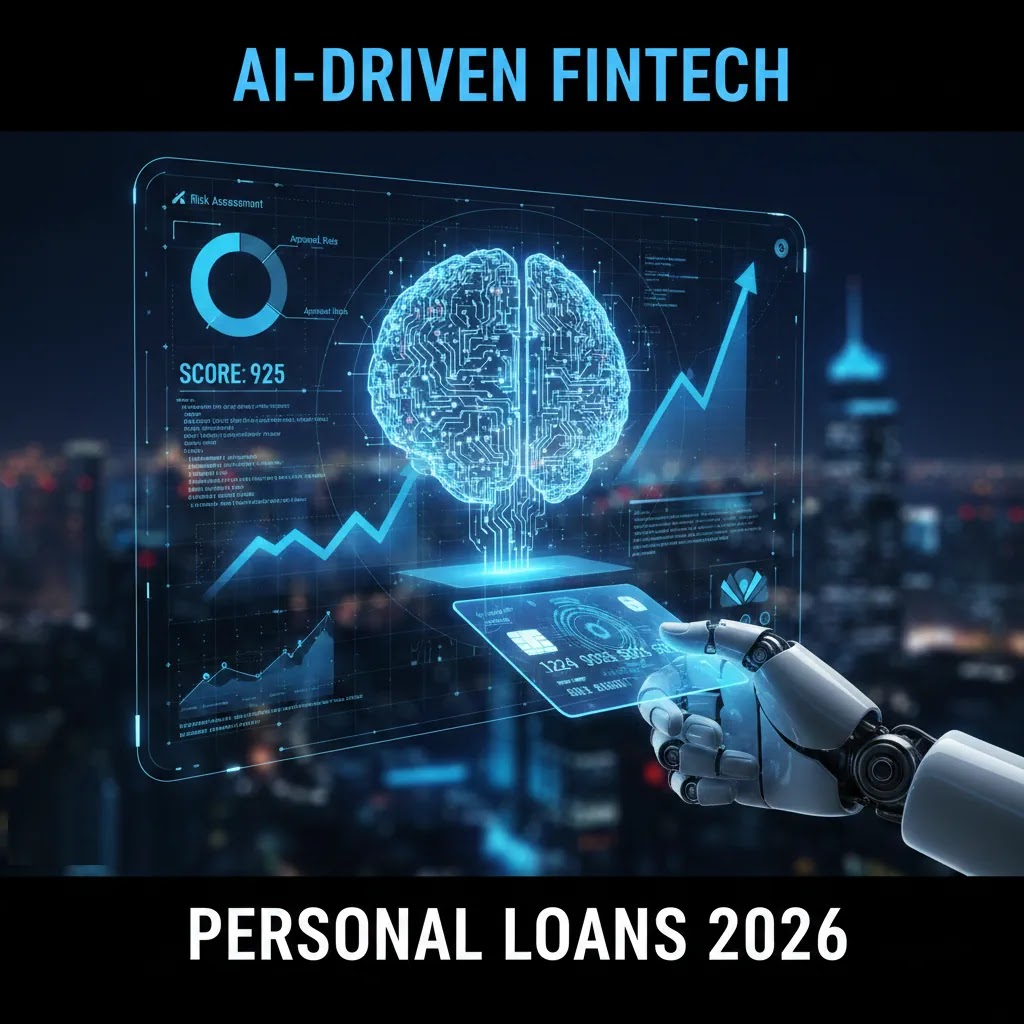
Getting approved for a personal loan used to depend heavily on a single number. If your credit score was low or your borrowing history was limited, most lenders rejected the application almost instantly. In 2026, that system is changing rapidly.
Modern fintech platforms now use AI-Driven Credit Scoring to evaluate borrowers more intelligently. Instead of relying only on traditional bureau reports, lenders analyze digital payment habits, cash flow patterns, bill payments, spending behavior, and business activity to understand real financial reliability.
This shift is especially important for freelancers, gig workers, small business owners, and first-time borrowers who were often excluded from traditional banking systems. AI lending models are helping fintech companies approve loans faster while reducing default risks through real-time data analysis.
At the same time, these systems are raising important questions about privacy, algorithm fairness, and responsible lending practices. Understanding how modern AI credit scoring works is now important for both borrowers and financial businesses.
AI vs. Traditional Credit Scoring in 2026
The difference between older lending systems and modern AI-driven underwriting is now very clear. Traditional models focused mainly on static financial history, while AI systems continuously evaluate changing financial behavior.
This gives lenders a more complete picture of borrower reliability and allows faster decision-making.
| Feature | Traditional Scoring | AI-Driven Scoring | Impact |
|---|---|---|---|
| Data Sources | Bureau/FICO Only | UPI, GST, Digital Footprint | Inclusion |
| Approval Time | 2 – 5 Business Days | Under 5 Minutes | Velocity |
| Default Risk | Reactive | 60-70% Better Accuracy | Profitability |
| Monitoring | Static (Monthly) | Real-Time Analysis | Agility |
Many fintech lenders now process loan applications in minutes because AI systems can instantly analyze thousands of financial signals at scale. This is significantly reducing operational delays and improving customer experience.
Industry Observation: In 2026, lending speed alone is no longer the competitive advantage. The real advantage comes from accurately identifying trustworthy borrowers who were previously ignored by traditional systems.
1. The Rise of Thin-File Inclusion
One of the biggest changes in AI-driven lending is the rise of “thin-file” inclusion. Thin-file borrowers are individuals with little or no formal credit history.
Traditional banks often rejected these applicants because they lacked sufficient borrowing records. AI systems now evaluate alternative financial signals to estimate repayment reliability more accurately.
What Data AI Systems Analyze
- UPI transaction consistency
- Utility bill payments
- GST business activity
- Digital wallet usage
- Subscription payment behavior
- Cash flow stability
- E-commerce purchase patterns
For example, a small retailer operating mostly through UPI payments may not have a strong formal credit history. However, daily transaction consistency, stable income flow, and regular supplier payments can still indicate financial discipline.
In practice, this allows fintech platforms to serve:
- Freelancers
- Gig economy workers
- First-time borrowers
- Micro business owners
- Rural entrepreneurs
- Self-employed professionals
AI-Driven Lending Market Growth ($ Billions)
From an inclusion perspective, this is one of the most important financial technology shifts of the decade because millions of financially active individuals can now access formal credit systems for the first time.
2. Real-Time Risk Monitoring
Traditional lending systems usually evaluate borrowers only once during loan approval. After that, risk assessment often becomes infrequent or delayed.
AI-driven credit systems work differently. In 2026, many fintech lenders monitor borrower behavior continuously to identify financial changes in real time.
How Real-Time Monitoring Works
AI systems can detect patterns such as:
- Income increases or declines
- Irregular payment behavior
- Changes in spending activity
- Sudden debt accumulation
- Business cash flow fluctuations
This allows lenders to adjust credit limits dynamically instead of waiting for monthly or quarterly reviews.
For example, if a borrower consistently receives higher monthly income for several months, the system may automatically offer:
- Higher credit limits
- Lower interest rates
- Pre-approved personal loans
- Flexible repayment structures
On the other hand, sudden financial stress indicators may trigger additional verification before new borrowing is approved.
This proactive approach helps lenders reduce bad debt while giving financially stable borrowers faster access to capital.
Strategic Note: In modern fintech ecosystems, data consistency has become nearly as valuable as traditional collateral. Continuous behavioral analysis is now shaping lending decisions in real time.
3. How AI is Changing Small Business Lending
Small businesses are among the biggest beneficiaries of AI-based credit scoring. Earlier, many lenders hesitated to approve loans for small enterprises because financial records were often inconsistent or incomplete.
AI systems now analyze operational data directly from digital business activity.
Common Signals Used in Business Lending
- GST filing patterns
- Invoice consistency
- Vendor payment history
- Inventory turnover
- Digital payment frequency
- Seasonal revenue trends
A local business with stable monthly sales but limited collateral may now qualify for working capital loans faster than before.
This is especially important for businesses operating online because digital transaction visibility provides lenders with more accurate operational insights.
Several fintech platforms also integrate directly with accounting software and payment gateways, allowing automated financial evaluation without extensive paperwork.
Advantages and Limitations of AI Credit Scoring
Advantages
- Faster loan approvals
- Improved financial inclusion
- Better fraud detection
- More personalized loan products
- Reduced operational costs for lenders
- Improved borrower risk prediction
Limitations
- Privacy concerns related to data collection
- Potential algorithm bias
- Heavy dependence on digital activity
- Regulatory uncertainty in some markets
- Difficulty explaining automated decisions
Responsible AI lending depends heavily on transparent algorithms, proper regulation, and ethical data usage practices.
Best Practices for Borrowers in 2026
Maintain Consistent Digital Transactions
Stable payment behavior and regular transaction activity improve AI-based borrower evaluation over time.
Keep Financial Records Organized
Fintech platforms increasingly connect with bank accounts, tax systems, and business records. Accurate financial documentation improves approval chances.
Avoid Frequent Missed Payments
Even small recurring missed payments can affect predictive risk models.
Monitor Data Permissions
Borrowers should understand what data lenders are accessing and how that information is being used.
Compare Loan Terms Carefully
Fast approvals do not always mean better loan conditions. Borrowers should still review interest rates, fees, and repayment structures carefully.
Who Benefits Most From AI-Driven Lending
Best Fit For
- First-time borrowers
- Freelancers and creators
- Gig economy workers
- Small business owners
- Digitally active consumers
- People needing faster approvals
May Not Be Ideal For
- People uncomfortable sharing financial data
- Borrowers with highly irregular digital activity
- Users preferring traditional manual banking reviews
As fintech regulation matures, AI-driven lending will likely become more transparent and standardized across markets.
Verdict: The Future of Borrowing
AI-driven credit scoring is changing how personal loans are approved, priced, and monitored. By analyzing real financial behavior instead of relying only on traditional bureau data, fintech companies are making credit access faster and more inclusive.
At the same time, this transformation increases the importance of ethical data practices, algorithm transparency, and responsible lending standards.
For borrowers, the biggest advantage is flexibility. Loan systems are becoming more adaptive to real-world financial behavior instead of fixed historical records.
At KOLAACE™, the focus remains on explaining how financial technology is reshaping modern borrowing so readers can make informed decisions in the fast-evolving digital economy.
Frequently Asked Questions
What is AI-driven credit scoring?
AI-driven credit scoring uses machine learning and behavioral data analysis to evaluate borrower risk more accurately than traditional credit models.
Can I get a loan without a traditional credit score in 2026?
Yes. Many fintech lenders now evaluate alternative financial signals such as digital payments, income consistency, and spending behavior.
How fast are AI-powered loan approvals?
Some fintech platforms can approve personal loans within minutes because AI systems automate risk evaluation and verification processes.
Is AI lending safe for borrowers?
AI lending can be safe when platforms follow strong data security practices and transparent policies. Borrowers should still review privacy permissions carefully.
What is the biggest benefit of AI-based lending?
The biggest advantage is improved financial inclusion because people with limited formal credit history can now access loans using alternative financial data.