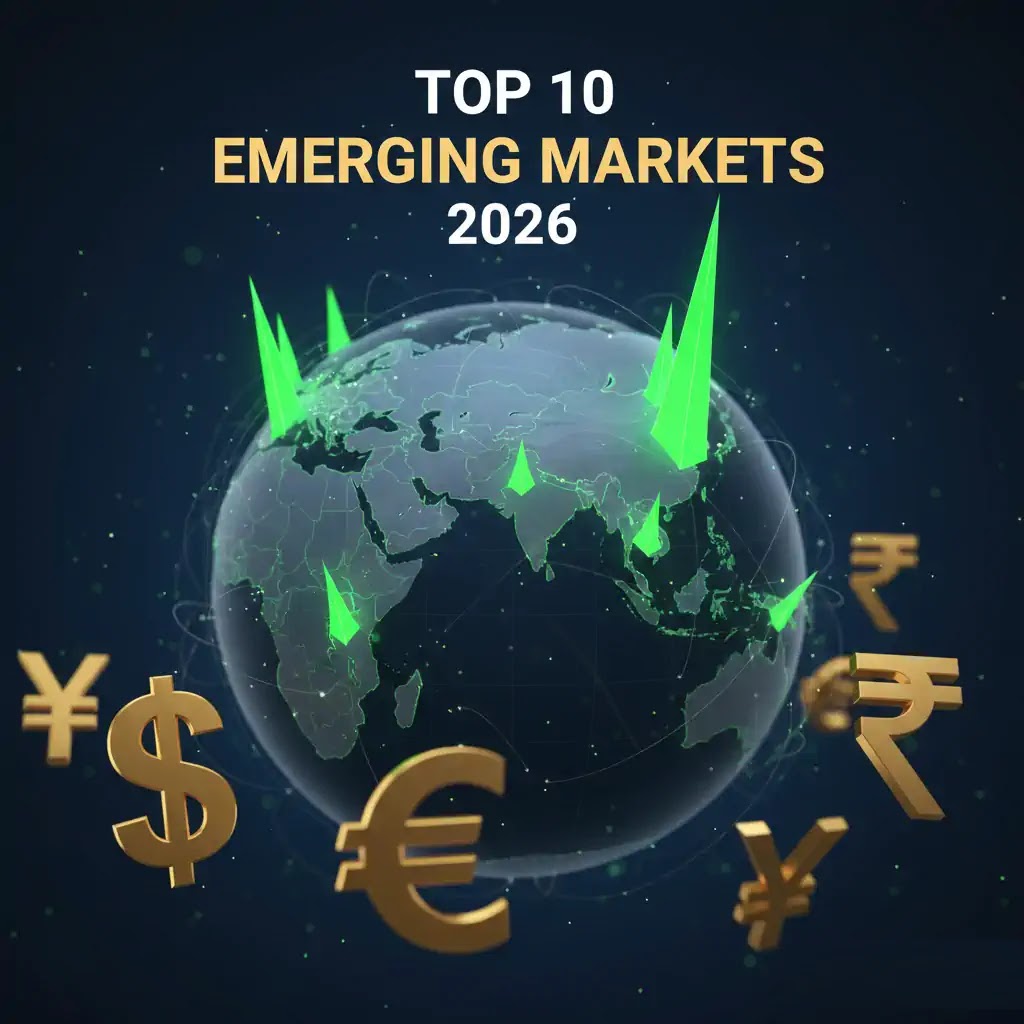
Global investing in 2026 is no longer only about chasing US technology stocks or waiting for interest rate cuts in developed economies. Investors are increasingly looking toward emerging markets where population growth, digital adoption, manufacturing expansion, and energy transitions are creating stronger long term momentum.
What makes this cycle different is that many emerging economies now have stronger digital infrastructure, younger workforces, and improving financial systems. Countries that were once considered risky are now becoming important centers for AI services, semiconductor production, clean energy, logistics, and industrial manufacturing.
For retail investors, business owners, and professionals building wealth through high income remote careers, understanding these regions early can help create a more diversified portfolio. This guide breaks down ten high growth emerging markets that deserve close attention in 2026.
2026 Emerging Market Potential Metrics
| Region | Primary Growth Driver | 2026 Strength |
|---|---|---|
| India | AI Services & Digital Finance | Strong Domestic Demand |
| Vietnam | Electronics Manufacturing | Export Expansion |
| Brazil | Renewable Energy | Commodity Advantage |
1. India: The Digital and AI Growth Engine
India remains one of the most closely watched emerging markets in 2026. The combination of strong domestic consumption, rapid digital payment adoption, AI startup growth, and infrastructure expansion continues to attract global capital.
What stands out in India is scale. Small businesses now accept QR payments even in smaller towns, logistics systems are improving rapidly, and cloud based services are growing beyond major metro cities. The maturing of the digital wallet ecosystem has also made financial transactions easier for millions of users.
Investors are especially focused on:
- AI and SaaS companies
- Digital banking infrastructure
- Industrial manufacturing corridors
- Renewable energy projects
- Defense and semiconductor initiatives
One important observation from analysts in 2026 is that India is no longer viewed only as a service economy. It is gradually becoming both a manufacturing and technology hub.
2. Vietnam: The Manufacturing Shift Winner
Vietnam continues benefiting from global supply chain diversification. Many electronics brands are reducing dependence on a single manufacturing region and expanding operations into Vietnam.
Industrial parks near Hanoi and Ho Chi Minh City are seeing heavy investment in:
- Consumer electronics assembly
- Smartphone manufacturing
- Semiconductor packaging
- Industrial automation
From an investor perspective, Vietnam offers an interesting mix of export driven growth and improving infrastructure. Many companies also see the country as a long term production base rather than a temporary alternative.
For younger investors and remote workers, Vietnam is also gaining popularity due to affordable living costs and growing startup communities.
3. Brazil: Renewable Energy and Commodity Strength
Brazil has positioned itself as one of the strongest clean energy stories among emerging markets. The country benefits from abundant natural resources and a power grid that already relies heavily on renewable energy.
In practical terms, this matters because global manufacturers increasingly prefer suppliers with lower carbon footprints. Brazil’s access to hydroelectric, solar, and wind power gives it a long term advantage in sectors linked to green manufacturing.
Areas attracting investor interest include:
- Green hydrogen projects
- Agriculture technology
- Biofuel expansion
- Mining and industrial metals
Brazil still faces currency and political volatility, so diversification remains important. However, many long term investors view temporary instability as part of the opportunity.
4. Mexico: The Nearshoring Capital
Mexico is one of the biggest beneficiaries of the nearshoring trend. Companies serving North America increasingly want manufacturing facilities closer to the United States to reduce shipping risks and delivery delays.
This has boosted demand for:
- Industrial real estate
- Automotive production
- EV supply chains
- Cross border logistics
Manufacturing hubs in northern Mexico are expanding rapidly. Warehouses, rail networks, and industrial parks are becoming major investment themes.
Many analysts believe Mexico could become one of the most strategically important industrial economies in the Western Hemisphere during the next decade.
5. Indonesia: The EV Battery Resource Giant
Indonesia holds some of the world’s largest nickel reserves, which are critical for electric vehicle battery production. Instead of exporting only raw materials, the country is increasingly encouraging local processing and manufacturing.
This shift is important because it keeps more economic value inside the country. Industrial development around battery supply chains is creating jobs and attracting foreign partnerships.
Investors are closely watching:
- Battery manufacturing facilities
- Industrial metals processing
- Electric vehicle infrastructure
- Port and transport upgrades
EM Foreign Direct Investment (FDI) Inflow ($ Billions)
6. South Korea: The Semiconductor Powerhouse
South Korea continues to play a major role in the global AI boom. Advanced memory chips and semiconductor technologies developed in Korea are essential for data centers, AI infrastructure, and cloud computing systems.
Unlike some emerging markets that depend heavily on commodities, South Korea offers exposure to high value technology manufacturing.
Investors often focus on:
- Semiconductor suppliers
- AI hardware ecosystems
- Advanced robotics
- Battery technology
Although the sector can be cyclical, long term demand for AI computing continues supporting the industry.
7. Saudi Arabia: Infrastructure and Diversification Growth
Saudi Arabia is transforming its economy through large scale infrastructure and diversification projects. The country is investing heavily in tourism, logistics, renewable energy, and smart city development.
For investors, the key opportunity is understanding that Saudi Arabia is attempting to reduce long term dependence on oil revenues.
Key growth sectors include:
- Smart city construction
- Green hydrogen
- Tourism infrastructure
- Digital services
Large projects often move slower than expected, but the scale of capital investment remains significant.
8. Poland: Europe’s Strategic Logistics Hub
Poland has quietly become one of the most important logistics and industrial centers in Europe. Its geographic position allows companies to serve both Western and Eastern Europe efficiently.
Warehousing demand, transport infrastructure, and technology outsourcing are expanding steadily. Poland also benefits from a skilled workforce and improving digital infrastructure.
Investors interested in industrial real estate and logistics operations are watching the region closely.
9. Chile: The Lithium and ESG Opportunity
Chile remains one of the world’s most important lithium suppliers. Since lithium is a critical component in EV batteries and renewable energy storage, demand continues rising.
What makes Chile particularly attractive is the push toward more environmentally responsible extraction methods. Investors focused on ESG standards often monitor how mining companies manage water usage and sustainability practices.
In commodity driven markets, operational discipline matters just as much as resource ownership.
10. Taiwan: The Advanced Chip Leader
Taiwan remains central to the global semiconductor ecosystem. Advanced chip manufacturing is critical for smartphones, AI systems, cloud infrastructure, and autonomous technologies.
Many investors understand that even with geopolitical risks, global technology supply chains still depend heavily on Taiwanese manufacturing capabilities.
Rather than investing only in major chip manufacturers directly, some investors also explore supply chain businesses connected to equipment, packaging, and AI infrastructure.
Best Practices Before Investing in Emerging Markets
Emerging markets can offer strong growth, but they also require patience and risk management. Based on long term market behavior, experienced investors usually follow a few practical rules:
- Diversify across multiple countries instead of concentrating in one region
- Focus on sectors with long term structural demand
- Watch currency risks carefully
- Use staggered investing instead of lump sum entries
- Track political and regulatory developments regularly
Many investors make the mistake of chasing short term hype. In reality, the strongest returns often come from holding quality assets through multiple economic cycles.
Pros and Risks of Emerging Market Investing
Potential Advantages
- Higher long term growth potential
- Younger populations and expanding middle classes
- Rapid technology adoption
- Manufacturing and infrastructure expansion
Potential Risks
- Currency fluctuations
- Political instability
- Regulatory uncertainty
- Commodity price dependence in some economies
Understanding both sides is important. Emerging markets can improve portfolio diversification, but they should still fit your overall financial goals and risk tolerance.
Frequently Asked Questions
Are emerging markets still risky in 2026?
Yes, emerging markets still carry risks such as currency volatility and political changes. However, many economies now have stronger financial systems and digital infrastructure compared to previous decades.
Which sector is attracting the most investment in emerging markets?
AI infrastructure, semiconductors, renewable energy, EV supply chains, and digital finance are among the fastest growing sectors in 2026.
Should beginners invest in emerging markets?
Beginners can consider limited exposure through diversified funds or ETFs instead of investing heavily in a single country. Diversification helps reduce risk.
Why are investors moving capital into emerging economies?
Many developed economies face slower population growth and higher debt levels. Emerging markets often offer stronger demographic growth and expanding consumer demand.
Can small investors benefit from emerging market growth?
Yes. Even smaller investors can gain exposure through international mutual funds, ETFs, or carefully researched individual companies connected to long term growth sectors.
Strategy Verdict
The biggest investing trend of 2026 is not just artificial intelligence or clean energy. It is the global redistribution of growth. Emerging economies are becoming central players in manufacturing, technology, digital finance, and infrastructure.
For investors willing to research carefully and think long term, these regions can provide meaningful diversification and exposure to industries shaping the next decade. Managing investments across multiple regions also requires emotional discipline, which is why many experienced professionals prioritize routines that improve focus, including daily mindfulness habits.
For more future focused finance and technology insights, visit the KOLAACE™ homepage.