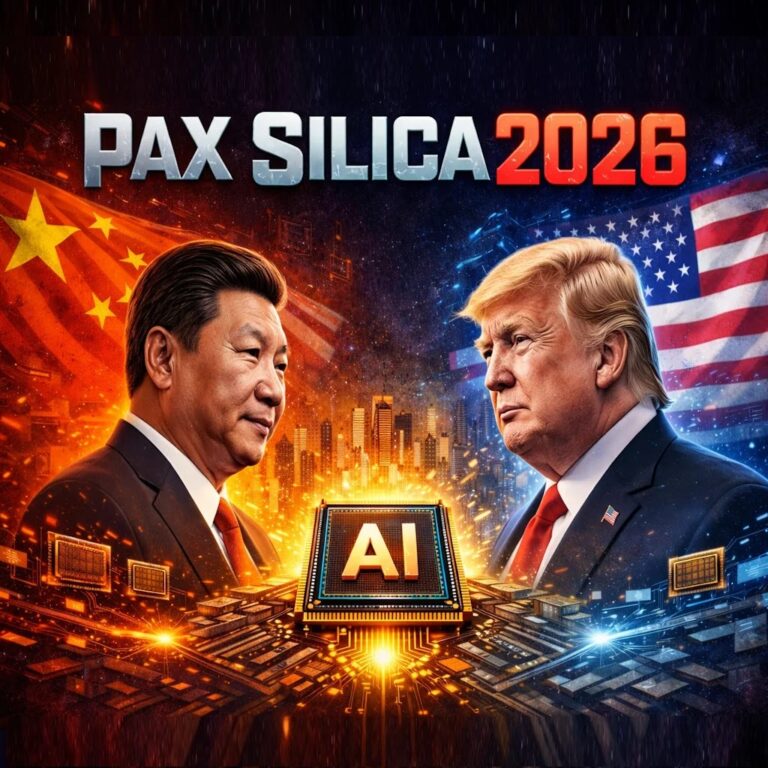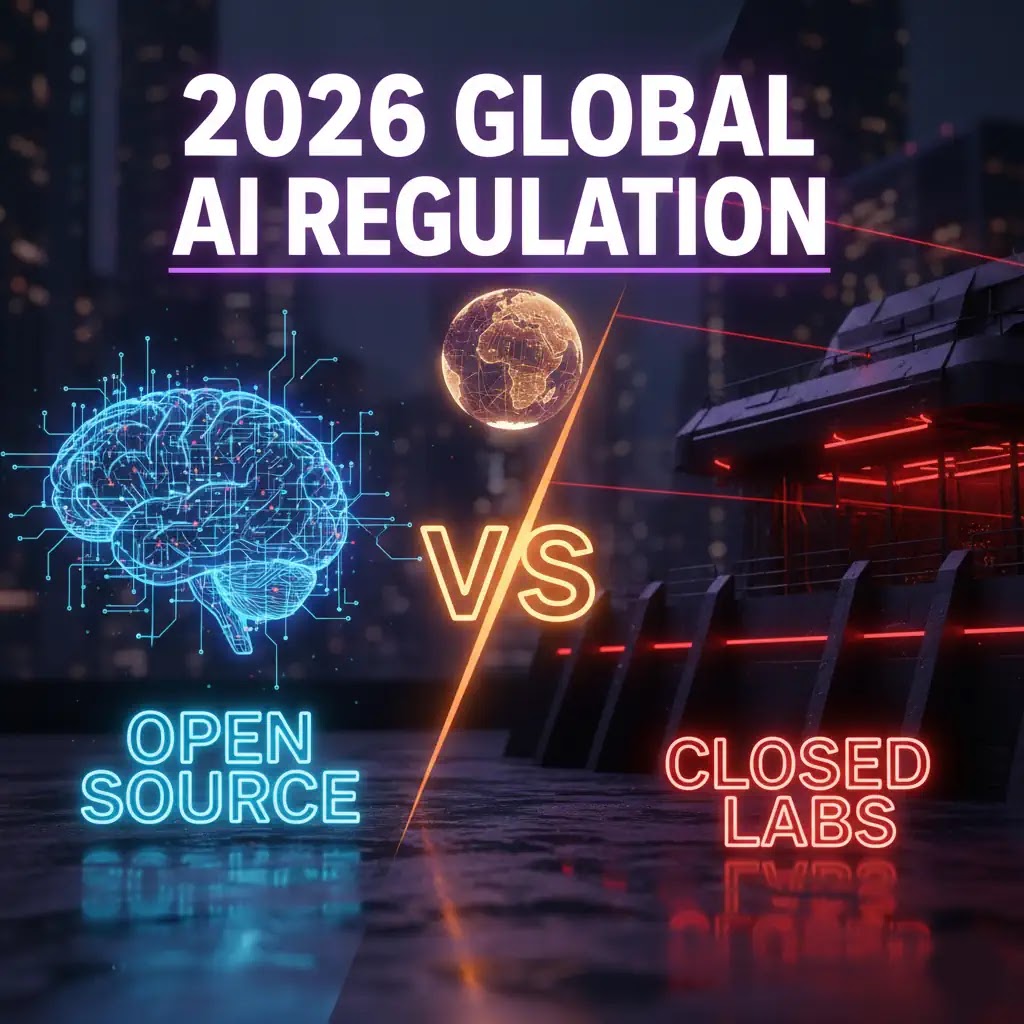
As of February 22, 2026, the global AI arms race has moved beyond computational power and into the realm of governance. The central battleground is the very nature of AI itself: should the foundational models that underpin society be developed in transparent, community-driven Open Source labs, or should they remain under the strict, proprietary control of a handful of powerful Closed Labs like Google DeepMind, OpenAI, and Meta?
This isn’t just an academic debate; it’s a geopolitical fault line. The EU AI Act, fully operational by mid-2026, is attempting to set a global precedent, while the US and China are locked in a struggle to define “responsible” AI through competing national security frameworks. The stakes are immense: control over AI means control over information, innovation, and ultimately, power.
I. The Ideological Divide: Transparency vs. Control
The core of the conflict lies in fundamental principles. Proponents of Open Source AI, led by entities like Meta’s LLaMa 3 (released in early 2026) and academic consortiums, argue that AI models powerful enough to influence elections or design bioweapons should be auditable by the public. They believe that transparency fosters rapid innovation, democratizes access, and allows for collective safety oversight.
Conversely, Closed Labs, heavily funded by venture capital and national defense contracts, argue for proprietary control. Their rationale centers on safety, intellectual property, and preventing rogue actors from weaponizing advanced AI. They maintain that the risks associated with fully open-sourcing models of “frontier intelligence” are too great, leading to an inevitable “bad actor” scenario.
Key Arguments in the AI Regulation War:
- Open Source Proponents: Transparency prevents bias, accelerates safety research, and enables broader economic participation.
- Closed Lab Proponents: Proprietary control is essential for managing catastrophic risks, protecting national security, and incentivizing private investment.
- Hybrid Approaches: Proposals for “auditable openness” or tiered access based on safety evaluations are gaining traction.
II. Regulatory Frameworks: The Global Chessboard
The year 2026 is seeing a convergence of regulatory initiatives, but not necessarily harmony:
- The EU AI Act (Fully Implemented Q2 2026): This groundbreaking legislation classifies AI systems by risk (unacceptable, high, limited, minimal) and imposes stringent requirements for high-risk applications. It largely favors transparency and human oversight, but its “one-size-fits-all” approach is criticized by some closed-source developers.
- US Executive Order (Updated H1 2026): Building on the 2023 executive order, the US approach is more fragmented, focusing on voluntary commitments, red-teaming, and a sector-specific regulatory approach. There’s a strong emphasis on maintaining a competitive edge against China, often aligning with the interests of large AI corporations.
- China’s AI Governance (National Strategy): China’s strategy blends state control with rapid innovation. While promoting open-source development for domestic use, it maintains strict oversight and censorship of public-facing AI applications. The primary goal is AI supremacy, often at the expense of privacy and individual autonomy.
Global AI Regulation Landscape (2026)
| Jurisdiction | Primary Stance | Key Focus |
|---|---|---|
| European Union | Risk-Based Transparency | Human Rights, Consumer Safety |
| United States | Voluntary & Sector-Specific | Innovation, National Security |
| China | State-Controlled Development | AI Supremacy, Social Stability |
III. The “Frontier Model” Dilemma: Beyond Human Comprehension?
A significant driver of the closed-lab argument is the concept of “Frontier Models”—AI systems whose capabilities are so advanced that their behavior cannot be fully predicted, even by their creators. As models approach AGI (Artificial General Intelligence), the argument for keeping them locked down and rigorously tested internally becomes more compelling for some.
Public Trust in AI Governance (2024 vs 2026)
*Measured trust in safe & ethical AI development (Global Index).*
IV. Conclusion: The Long Road to AI Governance
The 2026 Global AI Regulation debate is far from over. What is clear, however, is that the era of unfettered AI development is ending. Whether the world converges on a common framework—one that balances innovation with safety, and accessibility with control—will define the coming decades. The battle for **Open Source vs. Closed Labs** isn’t just about code; it’s about the very operating system of human civilization. KOLAACE™ will continue to provide real-time analysis as these crucial policies are forged.