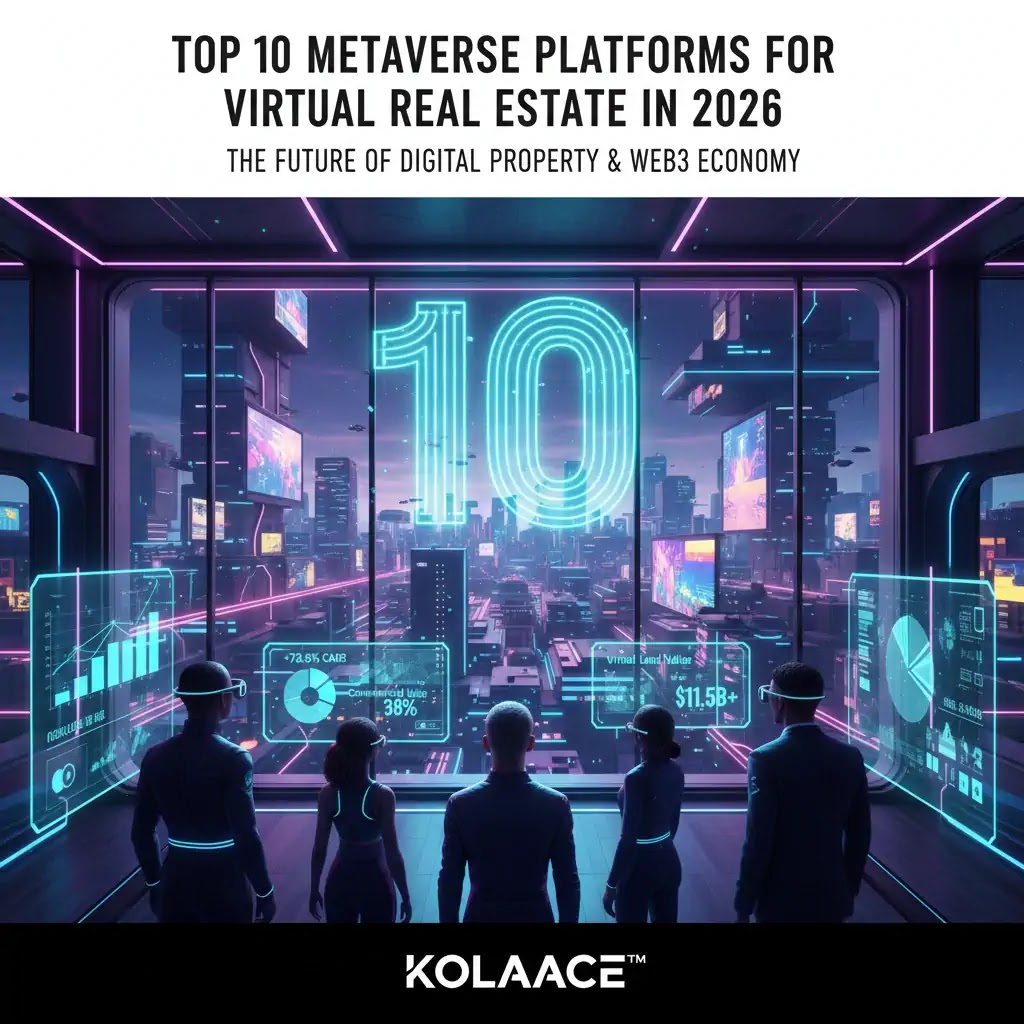
The virtual land economy is no longer experimental. In 2026, it has matured into a structured digital asset class where ownership, utility, and engagement decide value. From global brands launching virtual stores to independent creators building income streams, metaverse real estate has become a serious consideration for investors and builders.
Unlike early hype cycles, today’s metaverse platforms are driven by real usage, community activity, and creator economies. Whether you are exploring digital assets for diversification or studying future internet infrastructure, understanding these platforms is essential before entering the space.
Metaverse Land Value: 2024 vs. 2026
| Platform Metric | 2024 Average | 2026 Projection |
|---|---|---|
| Entry Price (Parcel) | $1,200 – $3,500 | $5,800 – $15,000 |
| Monthly Active Users | ~450,000 | 2.4 Million+ |
| Commercial Use Rate | 12% | 38% (Verified) |
1. Decentraland: The Governance Leader
Decentraland continues to stand out due to its decentralized governance model. Landowners actively participate in decision making through DAO voting, which directly impacts policies and platform development.
It is widely used by brands for virtual events, exhibitions, and branded experiences. Businesses prefer it because ownership is transparent and community driven.
2. The Sandbox: The Creator’s Hub
The Sandbox remains a strong creator focused ecosystem where users can design, publish, and monetize interactive experiences. Its Game Maker tool allows non technical users to build without coding knowledge.
Many freelancers and digital artists use it as a secondary income source by creating assets and renting virtual land spaces.
3. Roblox: The Mass-Market Giant
Roblox has evolved into a large scale social creation platform with massive user engagement. By 2026, it supports advanced virtual commerce, brand integrations, and immersive retail experiences.
Virtual Real Estate Market Size (USD Billion)
4. Somnium Space: The VR Specialist
Somnium Space focuses on full VR immersion with high quality environments and cross chain interoperability. It appeals to advanced users who prefer realistic virtual presence.
5. Otherside (Yuga Labs): The NFT Ecosystem
Otherside blends gaming, NFTs, and social interaction. Land ownership provides access to exclusive experiences, making it a premium ecosystem for collectors and gamers.
6. Upland: The Digital Twin Layer
Upland mirrors real world geography, allowing users to buy and trade virtual versions of actual cities. This makes it easier for beginners to understand digital property ownership.
7. Bloktopia: The Virtual Skyscraper
Bloktopia is structured as a 21 floor digital skyscraper that focuses on crypto education, advertising, and virtual events. It is often used as a learning and marketing hub.
8. Illuvium: The Game-Fi Powerhouse
Illuvium integrates gaming mechanics with land based resource collection. Players can earn rewards by engaging with ecosystem activities, making it attractive for GameFi investors.
9. Spatial: The Professional Metaverse
Spatial is widely used for professional presentations, NFT galleries, and virtual meetings. It is popular among designers, architects, and creative professionals for showcasing 3D work.
10. Horizon Worlds (Meta): The Social Gateway
Horizon Worlds serves as an entry point into the metaverse for mainstream users. Backed by Meta, it focuses on social interaction, virtual events, and accessible digital experiences.
How to Choose the Right Metaverse Platform
Selecting the right platform depends on your goal. Some platforms are better for investment, while others are ideal for creation or social engagement.
- If you want investment potential, choose platforms with active land trading and brand adoption.
- If you are a creator, prioritize tools like Sandbox or Spatial.
- If you are a beginner, start with user friendly ecosystems like Roblox or Upland.
Risks of Virtual Real Estate Investment
While the opportunity is strong, risks still exist. Prices can be volatile, and not all platforms maintain long term user engagement.
- Market speculation can lead to sudden price drops
- Platform dependency risk if a project loses users
- Limited liquidity compared to traditional real estate
Step by Step Guide to Buying Virtual Land
Entering the metaverse real estate market requires a structured approach.
- Create a Web3 wallet compatible with the platform
- Fund your wallet with supported cryptocurrency
- Visit official marketplace of the platform
- Select land based on location and utility
- Complete purchase and verify ownership on blockchain
Best Practices for Metaverse Investors
Successful investors in this space focus on long term utility rather than short term hype.
- Research platform activity before buying
- Prefer locations with high user traffic
- Diversify across multiple metaverse ecosystems
- Track community growth and developer updates
Frequently Asked Questions
Is metaverse real estate still profitable in 2026?
Yes, but profitability depends on platform selection, timing, and utility of the land rather than speculation alone.
Do I need technical knowledge to invest?
Basic knowledge of crypto wallets is enough. Most platforms have simplified onboarding systems in 2026.
Which platform is best for beginners?
Roblox and Upland are considered beginner friendly due to simple interfaces and lower entry barriers.
Can virtual land generate passive income?
Yes, through advertising, events, rentals, and digital asset monetization depending on the platform.
2026 Digital Estate Verdict
Metaverse real estate is shifting from speculation to structured digital infrastructure. Value is now driven by usage, engagement, and ecosystem strength rather than hype. Investors who focus on utility based platforms and long term adoption trends are better positioned for sustainable growth.
Before making any investment decisions, always evaluate risk, platform stability, and real user activity to avoid speculative traps.