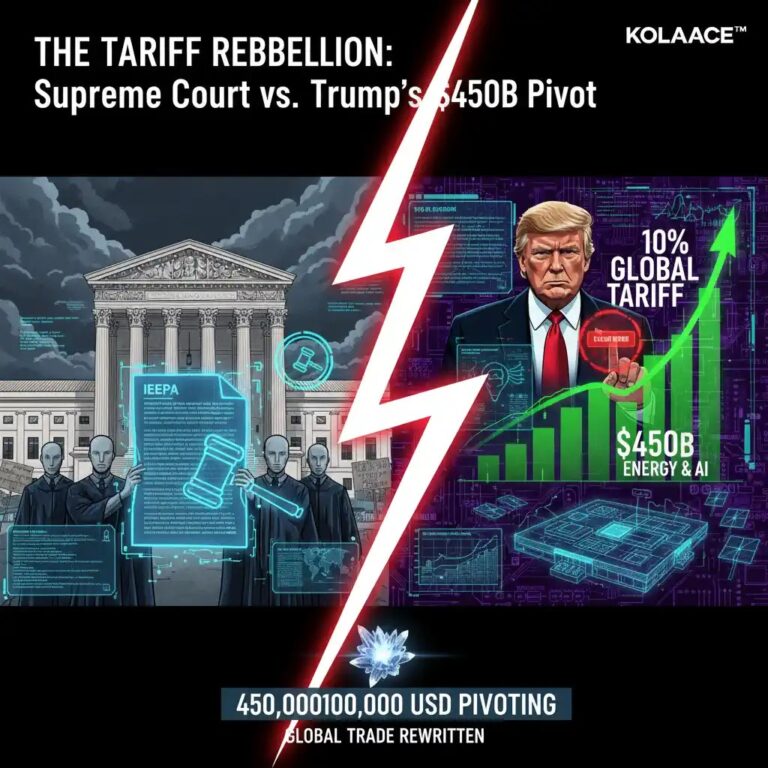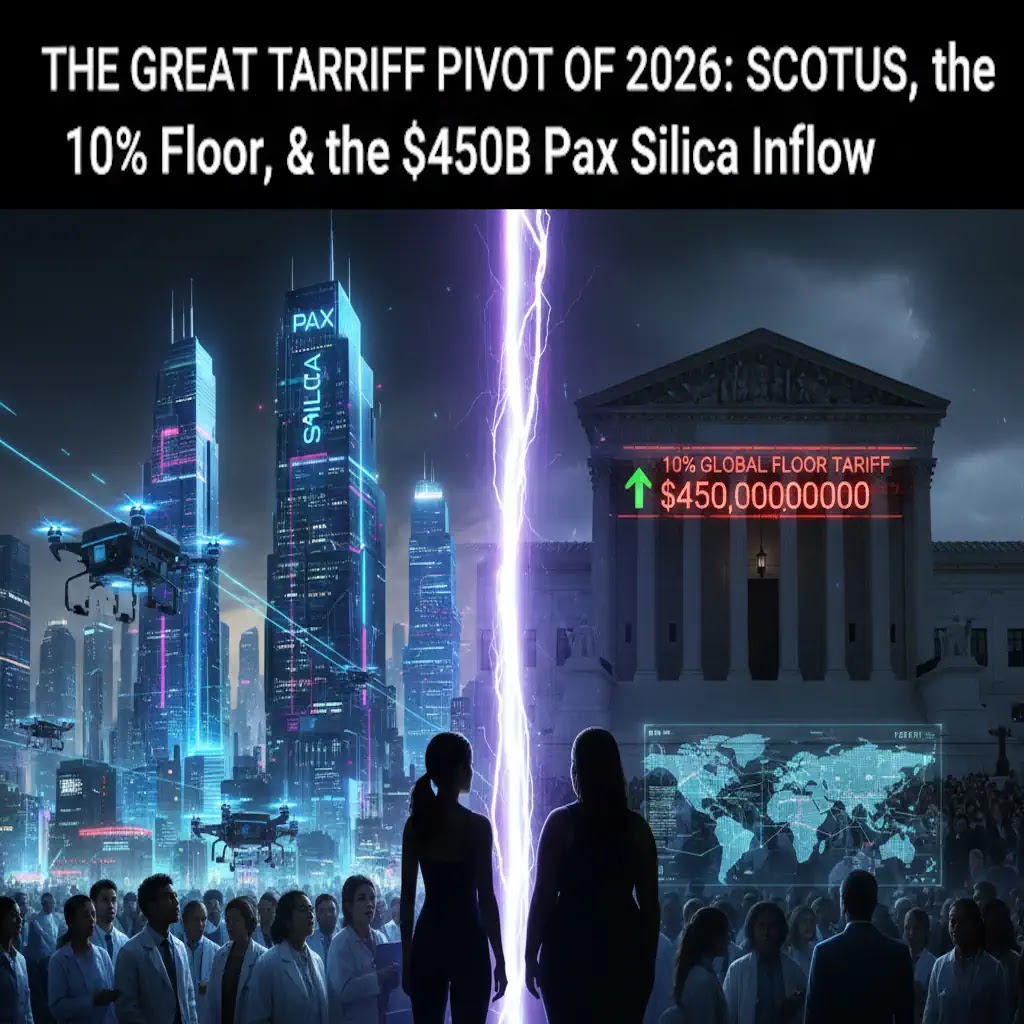
On February 21, 2026, the global economic order experienced a tectonic shift. In a historic 6-3 ruling in the case of Learning Resources, Inc. v. Trump, the United States Supreme Court issued a stinging rebuke of the administration’s “Trade by Emergency” strategy. The court declared that the International Emergency Economic Powers Act (IEEPA)—the very foundation of the 2025-2026 reciprocal tariffs—does not grant the President the power to levy taxes or duties. By invoking the Major Questions Doctrine, the Court effectively transferred the steering wheel of American trade back to Congress, triggering what is now being called the “Great Tariff Pivot.”
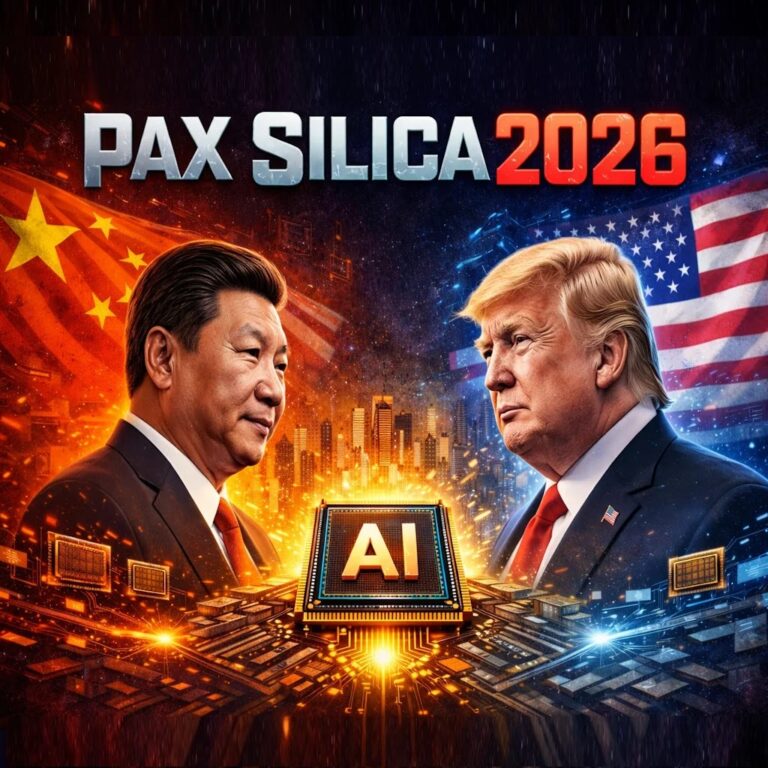
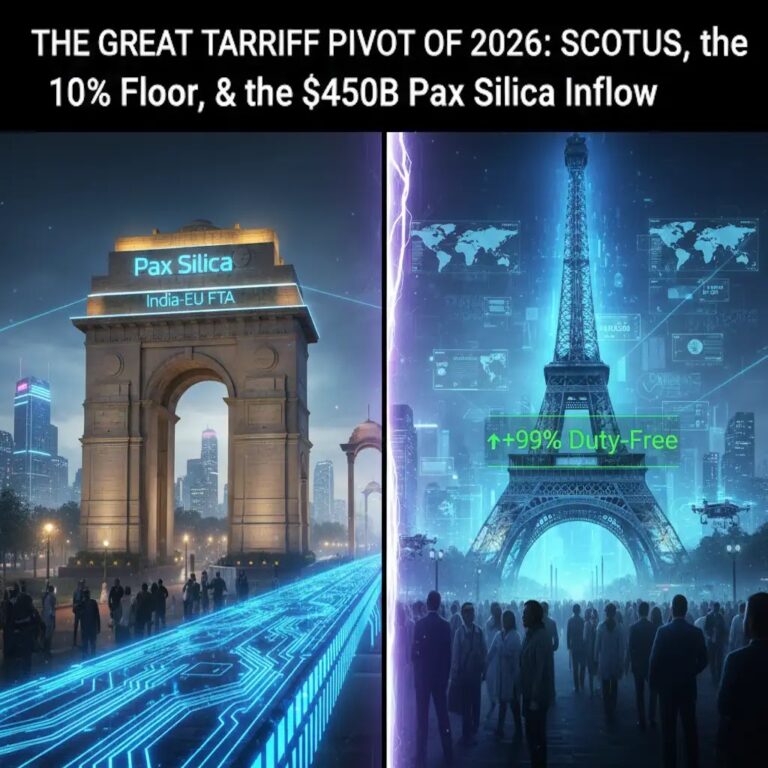
However, the expected relief for global markets was short-lived. Within hours of the ruling, President Trump immediately signed a new Executive Order. Invoking Section 122 of the Trade Act of 1974, the administration has imposed a 10% Global Floor Tariff. This “Plan B” move ensures that while the extreme 50% duties may be dead, a new, uniform wall of protectionism has risen. For the KOLAACE™ reader, this is the definitive guide to the $450 billion capital migration into the Pax Silica corridor.
I. The Constitutional Reckoning: Why IEEPA Fell
The Supreme Court’s majority opinion, led by Chief Justice Roberts, focused on the strict interpretation of the word “regulate.” The court ruled that “National Emergencies” cannot be used as a permanent bypass for Congressional authority over trade. This ruling effectively nullifies the 25-50% targeted levies previously placed on “non-aligned” nations. However, the President’s immediate signature on a 10% global floor ensures that the “Wall of Tariffs” remains, albeit at a lower, uniform height.
The Legal Fallout:
- The $175 Billion Refund Mess: Analysts estimate that the US Treasury may now be liable for up to $175 billion in refunds to importers who paid the “unlawful” IEEPA duties over the last 14 months.
- Customs in Crisis: US Customs and Border Protection (CBP) is currently facing a massive backlog of refund claims.
- The Congressional Vacuum: With the President’s emergency powers clipped, the focus now shifts to the 2026 Midterm elections.
II. Market Growth: The $450B Pax Silica Inflow
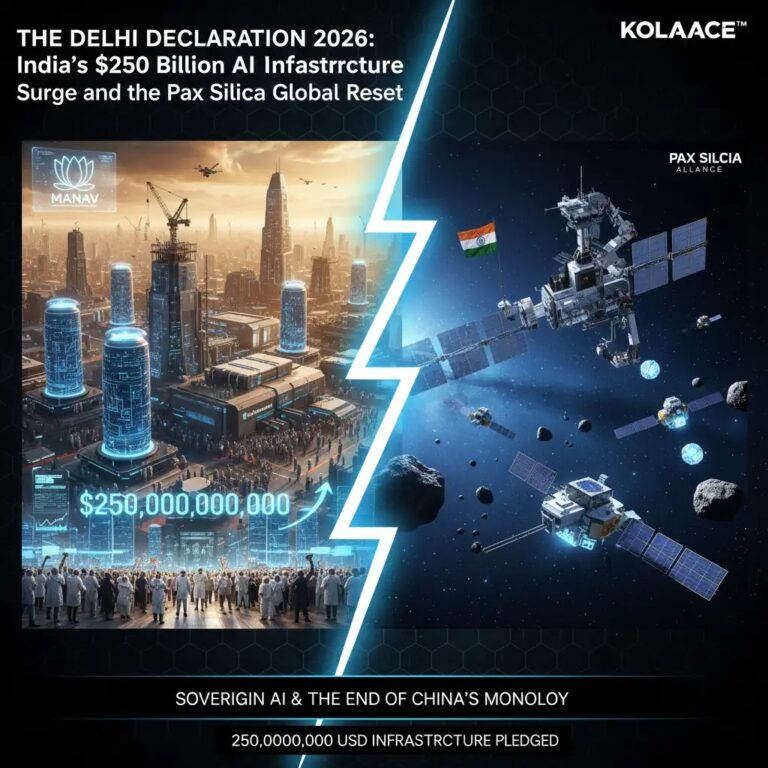
The chaos in the courtrooms has created a “Flight to Quality” in the technology sector. As targeted tariffs on China remain under Section 301, the uniform 10% floor for US allies has made the India-US Semiconductor Corridor the most attractive investment play of the decade. This was further solidified during the recent India AI Impact Summit 2026.
Capital Migration Projection: Semiconductor & AI (Billions USD)
*Projections showing massive capital flight toward secure AI corridors post-ruling.*
III. Entity Comparison: The New Trade Winners
The “10% Global Floor” creates a predictable environment for countries that have already signed the Delhi Declaration. Below is the KOLAACE™ authority table for the 2026 outlook.
| Economic Entity | Tariff Status (Post-Feb 21) | Strategic Outlook |
|---|---|---|
| India (Pax Silica Member) | 10% (Reduced from 25%) | Tariffs dropped; Semiconductor boom (HCL-Foxconn) accelerated. |
| European Union | 10% (Stability) | Luxury goods see relief from previous targeted levies. |
| China (Non-Aligned) | 50%+ (Section 301) | Capital flight continues toward Southeast Asia hubs. |
IV. Conclusion: The 15-Day Ultimatum
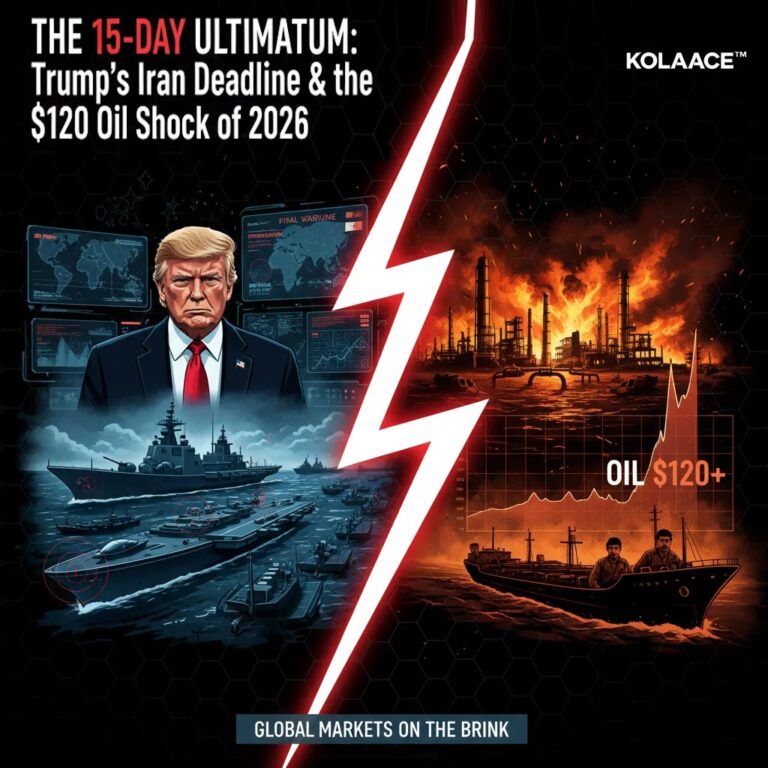
The Supreme Court ruling of February 21, 2026, marks the end of “Chaos Tariffs” and the beginning of Managed Protectionism. However, while the trade war rules are rewritten, the geopolitical tension in the Middle East remains a wildcard. As the 10-day ultimatum to Iran looms, the intersection of legal battles and naval movements in the Gulf will dictate the market’s next move.
Stay tuned as we track the “Tariff Refund” lawsuits and the rollout of the HCL-Foxconn project in Uttar Pradesh.