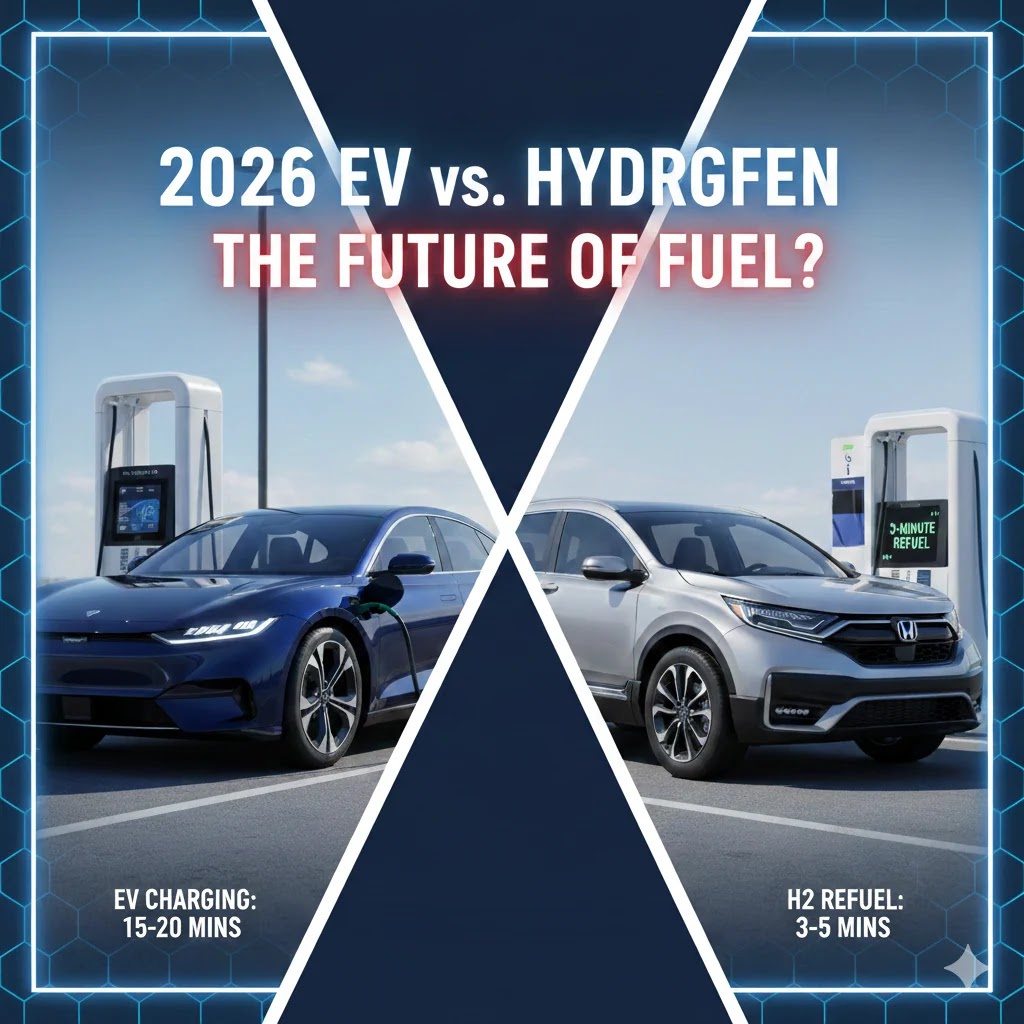
EV vs Hydrogen Fuel Cell 2026: The Future of Zero-Emission Mobility
By February 2026, the global automotive industry is no longer debating “EV vs gasoline.” The conversation has evolved into EV vs Hydrogen Fuel Cell Vehicles (FCEV). While AI-optimized charging networks have strengthened electric vehicle infrastructure, the launch of the 2026 Honda CR-V e:FCEV has reignited serious discussion around hydrogen mobility.
This transition is closely aligned with the edge infrastructure shift, where hydrogen refueling stations are increasingly integrated into decentralized smart grids. The result is a hybrid energy ecosystem combining battery storage and hydrogen generation for enhanced resilience.
So in 2026, which technology truly offers better long-term value — battery electric vehicles (EVs) or hydrogen fuel cell vehicles?
EV vs Hydrogen: 2026 Performance & Refueling Comparison
| Feature | Standard 2026 EV | Honda e:FCEV (2026) |
|---|---|---|
| Refuel Time | 18–25 Minutes (DC Fast) | 3–5 Minutes |
| Range (Zero Emission) | 300–450 Miles | 270 Miles (EPA) |
| Secondary Mode | Battery Only | 29-Mile Plug-in EV Mode |
| Ideal Use Case | Urban / Home Charging | High-Utilization / Fleets |
2026 Market Analysis: Infrastructure Growth
Comparative growth of refueling units between 2025 (Grey) and 2026 (Blue).
Cost of Ownership in 2026
Battery EVs benefit from expanding home charging ecosystems and lower per-mile energy costs. However, hydrogen vehicles reduce downtime significantly, making them attractive for commercial fleets and high-utilization drivers.
Fleet operators seeking secure energy solutions are increasingly exploring hydrogen due to centralized refueling efficiency and logistics optimization.
“In 2026, the real luxury is not how fast your car accelerates — it’s how quickly you can refuel and continue your journey.”
EV vs Hydrogen: Which Is Better in 2026?
For urban drivers with access to home charging, a battery electric vehicle remains the most practical option. However, hydrogen vehicles like the Honda CR-V e:FCEV offer unmatched refueling speed and operational efficiency for commercial use.
The Verdict: Utility vs Infrastructure
Battery EVs dominate residential use cases. Hydrogen excels where uptime and speed are critical. The winner in 2026 depends not on technology superiority — but on infrastructure availability and your specific driving profile.
Frequently Asked Questions (FAQ)
Hydrogen offers faster refueling (3-5 mins), but EVs have significantly broader infrastructure and lower operating costs for most residential drivers.
It is primarily a hydrogen fuel cell vehicle (FCEV), but it includes a 29-mile plug-in battery mode for short electric-only commutes.
Yes, they emit only water vapor. However, their total environmental impact depends on whether the hydrogen was produced via green electrolysis or carbon-intensive methods.