Real estate management is becoming increasingly data driven in 2026. Property owners are no longer relying only on spreadsheets, yearly inspections, or delayed maintenance reports. Buildings are now being monitored through intelligent digital systems that continuously track performance, operating costs, energy usage, and structural efficiency.
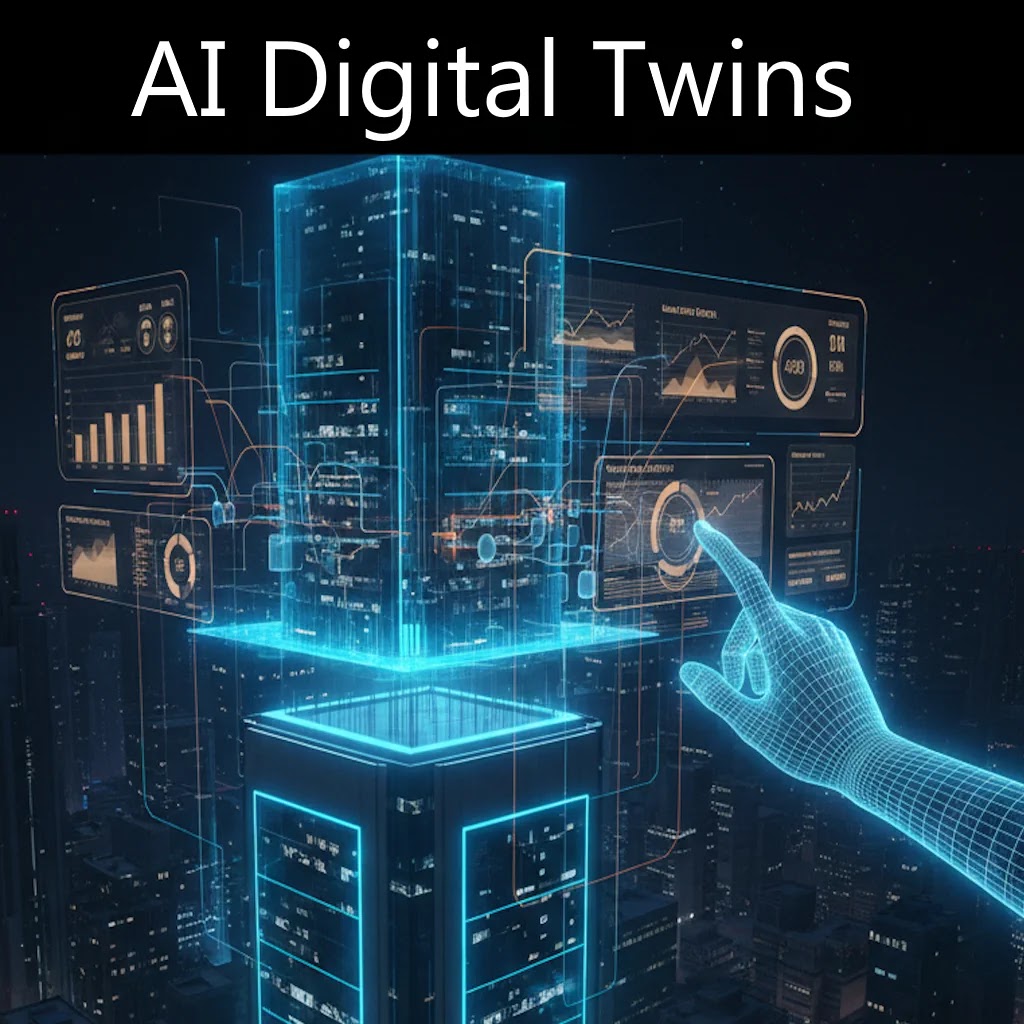
This transformation is powered by AI Digital Twins, virtual models that mirror real world buildings in real time. These systems combine artificial intelligence, IoT sensors, predictive analytics, and building management software into one connected operational layer.
For investors, developers, and facility managers, the shift is significant because modern real estate is no longer treated as a static asset. It is becoming a continuously optimized digital ecosystem.
At KOLAACE™, we are observing that digital twin adoption is accelerating fastest in commercial towers, smart warehouses, mixed use developments, and institutional real estate portfolios where operational efficiency directly affects long term returns.
As these systems evolve, they are also becoming increasingly connected with tokenized RWA assets, allowing investors to monitor property performance with a level of transparency that was difficult to achieve only a few years ago.
Market Velocity: The Digital Twin Surge
The digital twin market is expanding rapidly because property operators are under pressure to reduce costs, improve sustainability, and increase asset reliability.
In 2026, many large real estate firms already use AI powered monitoring systems to manage:
- HVAC efficiency
- Power consumption
- Elevator performance
- Security systems
- Water usage
- Occupancy patterns
- Predictive maintenance schedules
Earlier building management systems mainly collected data. Modern digital twins actively interpret that data and generate operational recommendations automatically.
For example, if occupancy levels drop during certain hours, AI systems may reduce lighting and cooling usage dynamically to lower operating costs without affecting tenant comfort.
Institutional Digital Twin Adoption Rate (%)
Industry Shift: Investors increasingly prefer properties with measurable operational intelligence because transparent performance data improves long term risk assessment.
How AI Digital Twins Actually Work
Many people assume digital twins are only visual 3D building models. In reality, the technology functions as a continuously updated operational intelligence system.
1. Real Time Sensor Integration
Sensors installed across the property collect data related to temperature, humidity, occupancy, energy consumption, equipment performance, and structural conditions.
2. Cloud Based Data Processing
The information is transmitted to centralized AI platforms that analyze patterns and identify inefficiencies.
3. Predictive Modeling
Machine learning systems compare current performance against historical trends to forecast future maintenance needs or operational risks.
4. Automated Recommendations
The platform generates alerts and optimization suggestions automatically. Some advanced systems can even trigger operational adjustments without manual intervention.
In practical property management environments, the biggest value often comes from early issue detection. Identifying equipment stress before failure can prevent costly downtime and tenant disruption.
Predictive Maintenance: Protecting Your ROI
Predictive maintenance has become one of the strongest business cases for digital twins because reactive repairs are expensive and operationally disruptive.
Traditional facility management often responds after systems fail. AI Digital Twins monitor equipment continuously and identify abnormal behavior before breakdowns occur.
For example, a smart building may detect:
- Unusual elevator vibration patterns
- HVAC efficiency decline
- Electrical load instability
- Water leakage indicators
- Temperature irregularities in server rooms
Facility teams can then schedule maintenance before tenants experience major disruption.
| Efficiency Metric | Legacy FM (2024) | AI Digital Twin (2026) |
|---|---|---|
| Energy Savings | 5% to 8% | Up to 30% Reduction |
| Operating Costs | Reactive and inconsistent | Improved long term cost efficiency |
| Asset Lifespan | Fixed maintenance schedules | Extended through AI driven monitoring |
| Downtime Risk | Unexpected equipment failure | Early warning based intervention |
Strategic Insight: In 2026, buildings with strong operational transparency are increasingly viewed as lower risk assets by institutional investors and large tenants.
Real World Use Cases Across Real Estate
Commercial Office Towers
Large office buildings use digital twins to optimize climate control, monitor occupancy efficiency, and reduce operational waste.
Shopping Malls and Retail Spaces
Retail operators analyze foot traffic movement and cooling patterns to improve visitor comfort while reducing unnecessary energy consumption.
Industrial Warehouses
Smart warehouses integrate AI Digital Twins with robotics and logistics systems to improve inventory flow and operational coordination.
Residential Communities
Housing societies increasingly use simplified digital twin systems for water monitoring, energy optimization, and predictive maintenance planning.
Hospitals and Data Centers
Critical infrastructure properties depend heavily on uptime reliability, making predictive monitoring especially valuable.
In many real world deployments, operators discover that operational savings accumulate gradually through hundreds of small efficiency improvements rather than one dramatic change.
Advantages and Limitations of AI Digital Twins
Key Advantages
- Improved operational visibility
- Lower maintenance costs over time
- Better energy efficiency management
- Reduced equipment downtime
- Enhanced long term asset planning
- Improved sustainability tracking
- More transparent investor reporting
Current Limitations
- High initial deployment costs for older buildings
- Sensor installation complexity
- Data integration challenges
- Cybersecurity concerns
- Dependence on reliable connectivity infrastructure
- Training requirements for facility teams
While the technology is advancing quickly, the strongest results usually come from phased implementation instead of attempting complete automation immediately.
Best Practices for Property Owners and Investors
Start With High Cost Systems
HVAC, elevators, and power systems usually provide the fastest measurable return on investment when connected to digital monitoring tools.
Focus on Data Quality
AI systems depend heavily on accurate sensor input. Poor quality data can reduce predictive accuracy significantly.
Train Facility Teams Properly
Technology adoption succeeds faster when operational staff understand how to interpret AI recommendations correctly.
Use Phased Deployment Strategies
Many successful property operators begin with one building section before expanding across the entire portfolio.
Prioritize Cybersecurity
Connected infrastructure systems should always include strong network security and access control protections.
Who Should Use AI Digital Twins
Best Fit For:
- Commercial property owners
- Large residential communities
- Industrial warehouse operators
- Facility management firms
- Institutional real estate investors
- Smart city infrastructure projects
Possibly Less Suitable For:
- Very small standalone properties with limited infrastructure
- Owners unwilling to invest in sensor systems
- Properties lacking reliable digital connectivity
- Projects with minimal long term operational planning
As implementation costs gradually decrease, adoption is expected to expand into mid sized residential and mixed use developments as well.
Verdict: The Era of Precision Property
AI Digital Twins are becoming a foundational layer in how modern buildings are operated, maintained, and evaluated. The combination of predictive analytics, real time monitoring, and operational automation is changing how property performance is measured.
For investors, the long term value goes beyond technology trends. Buildings with strong operational intelligence may achieve better efficiency, lower maintenance risk, and stronger tenant confidence over time.
At KOLAACE™, we view AI Digital Twins as one of the most important infrastructure upgrades shaping real estate asset management in 2026 and beyond.
The strongest competitive advantage will likely belong to property operators who adopt data driven management systems early while maintaining practical operational oversight.
Frequently Asked Questions
What is an AI Digital Twin in real estate?
An AI Digital Twin is a virtual model of a real property that continuously updates using live operational data from sensors and building systems.
How do digital twins reduce operating costs?
They identify inefficiencies early, optimize energy usage, and help prevent expensive equipment failures through predictive maintenance.
Are AI Digital Twins only for large commercial buildings?
No. While adoption started with large facilities, smaller residential and mixed use developments are increasingly exploring simplified versions.
What are the biggest implementation challenges?
Sensor integration, cybersecurity, infrastructure costs, and staff training are among the most common challenges.
Why are investors interested in digital twin technology?
Because transparent operational data helps improve asset visibility, risk analysis, maintenance planning, and long term property performance evaluation.