Most people still focus only on GPU cores when choosing a graphics card. But in 2026, that approach is outdated. The real bottleneck in performance, pricing, and availability is memory. Whether you are building a gaming PC, running AI models, or setting up a workstation, memory technology now decides how far your system can go.
This is why the competition between Samsung, SK Hynix, and Micron has become one of the most important battles in the tech industry. The outcome directly affects GPU prices, AI infrastructure costs, and even cloud service performance. If you have recently checked GPU prices in India, you have probably already felt the impact.
1. Why GPU Memory Matters More Than Ever
Modern workloads are no longer simple. Gaming uses high-resolution textures and ray tracing, while AI models require massive data transfer every second. This creates two major demands:
- High bandwidth for fast data movement
- Low latency for real-time responsiveness
Traditional memory struggles to keep up, which is why newer standards like GDDR7 and HBM4 are becoming essential. In simple terms:
- GDDR7 is used in gaming GPUs
- HBM4 is used in AI data centers and advanced computing
From practical experience, users upgrading from older GPUs often notice that memory bandwidth improvements feel more impactful than raw core upgrades. Faster memory reduces stuttering, improves frame consistency, and speeds up rendering tasks.
2. The State of the Market: 2026 Market Share
The balance of power has shifted due to the AI boom. While Samsung still dominates total DRAM production, SK Hynix has taken a clear lead in high-value HBM memory.
Market Growth: HBM Market Share (Q1 2026)
HBM demand from AI companies has reshaped the competitive landscape in 2026.
From an industry perspective, this shift is logical. AI companies are willing to pay premium prices for HBM, which has pushed manufacturers to prioritize high-margin production over consumer memory.
3. Technology Comparison: GDDR7 vs HBM4
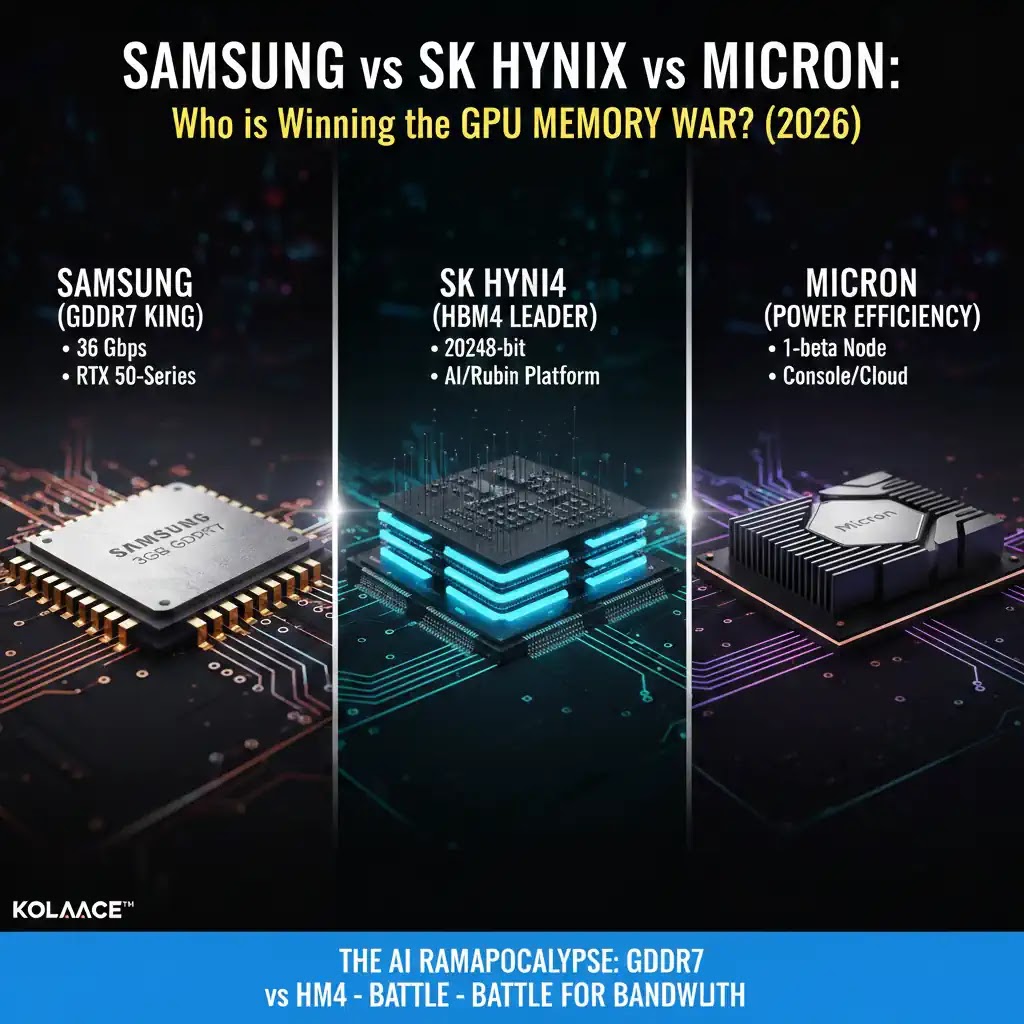
Each company is competing on both consumer and enterprise fronts. Understanding this difference is critical before forming any opinion.
| Feature | Samsung | SK Hynix | Micron |
|---|---|---|---|
| GDDR7 Status | Mass Production | Advanced Sampling | Mass Production |
| HBM4 Focus | Scaling Production | Market Leader | Delayed Entry |
| Strength | Capacity and scale | Performance leadership | Power efficiency |
In practical terms:
- If you care about availability and pricing, Samsung has an advantage
- If you care about cutting-edge performance, SK Hynix leads
- If you prioritize efficiency and long-term innovation, Micron is worth watching
4. Real World Use Cases
Gaming PCs
For gamers, GDDR7 availability matters more than peak specs. A slightly slower but widely available memory solution often results in better pricing and easier upgrades.
AI and Machine Learning
HBM4 is essential here. Companies training large models cannot compromise on bandwidth, which is why SK Hynix dominates this space.
Small Businesses and Creators
If you run a rendering studio or content business, memory stability is more important than peak speed. Systems using stable supply chains tend to perform more consistently over time.
5. Pros and Cons of Each Player
Samsung
- Strong manufacturing scale
- Better availability in consumer market
- Can stabilize prices faster
SK Hynix
- Leader in HBM technology
- Preferred by major AI companies
- Higher performance ceiling
Micron
- Focus on efficiency and innovation
- Strong long-term roadmap
- Currently behind in HBM race
6. Who Should Care About This
This topic is not just for engineers. It directly impacts:
- Gamers planning high-end builds
- Developers working with AI tools
- Investors tracking semiconductor trends
- Small businesses using GPU servers
If you fall into any of these categories, understanding memory trends helps you make smarter decisions.
7. Best Practices Before Buying or Investing
- Check memory type, not just GPU model
- Avoid buying during supply shortages
- Track AI demand trends, they affect pricing
- Focus on real-world performance, not marketing numbers
8. Final Takeaway
The GPU memory war is not about a single winner. Each company is leading in a different area. Samsung dominates scale, SK Hynix leads in high-performance memory, and Micron is building a strong future position.
For most users, the smart approach is simple. Focus on availability, stability, and real-world performance instead of chasing headline speeds. Memory will continue to shape the future of computing, and understanding it gives you a clear advantage.
Frequently Asked Questions