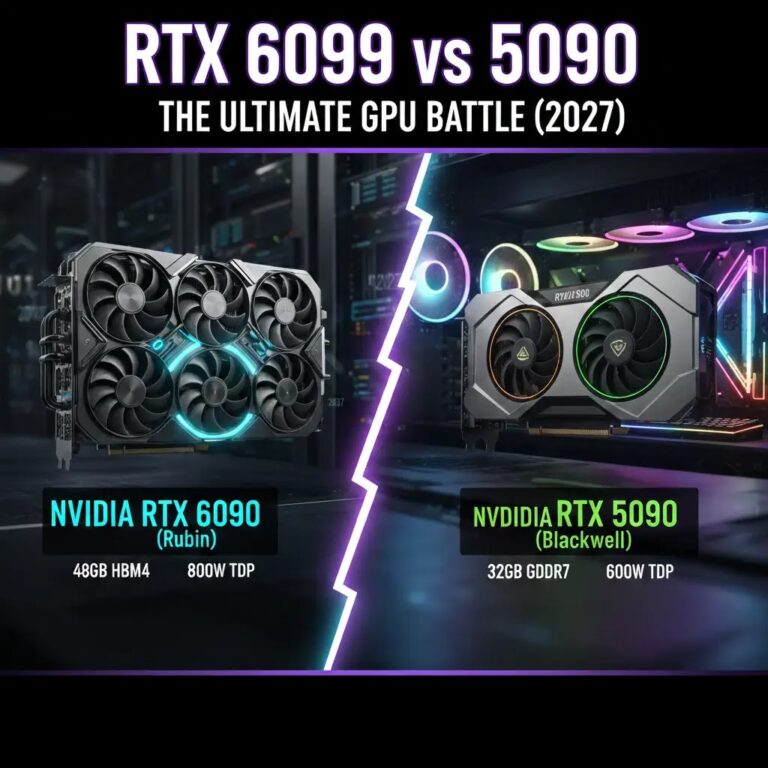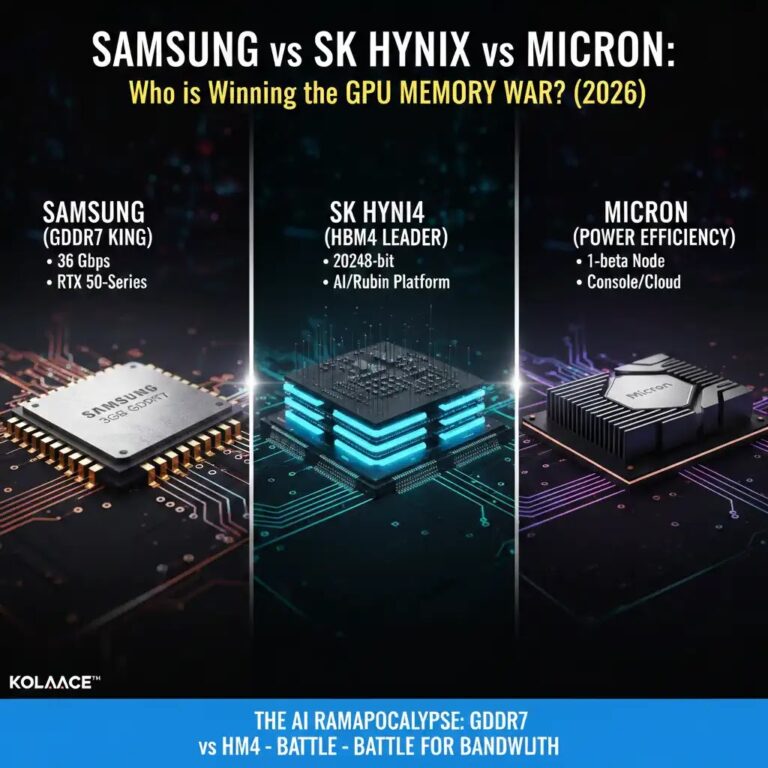
If you have ever faced sudden FPS drops in a high end game or slow rendering in an AI tool, the problem is often not the GPU core. It is the memory feeding it. This is where the real battle is happening. Not just faster GPUs, but faster memory systems.
As we move into the next generation, two technologies are competing to define performance. GDDR7, which is practical and widely used, and HBM4, which is extremely fast but expensive. Understanding this difference helps you make smarter upgrade decisions instead of just chasing GPU model numbers.
I. What Is GPU Memory and Why It Matters
GPU memory, also called VRAM, stores textures, game assets, and AI data. When bandwidth is low, the GPU waits for data. This creates stuttering, frame drops, and slow processing.
In real testing, even powerful GPUs show limited performance if memory cannot keep up. This is why newer memory technologies are becoming just as important as raw compute power.
- Higher bandwidth means faster data transfer
- Lower latency improves responsiveness
- Better efficiency reduces heat and power usage
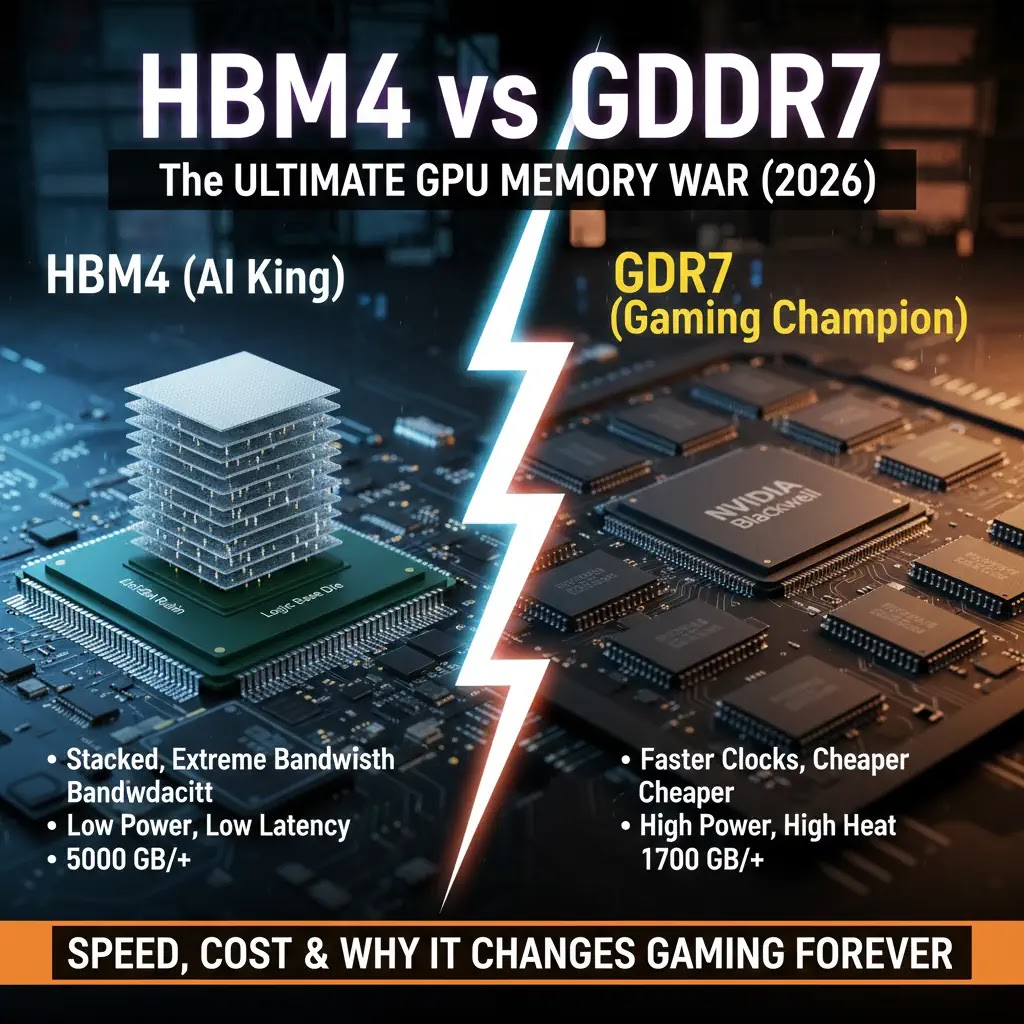
II. HBM4 vs GDDR7: Core Differences Explained
The difference is not just speed. It is architecture. GDDR7 sits around the GPU on the board. HBM4 is stacked directly on the GPU die, which reduces distance and improves efficiency.
| Feature | GDDR7 | HBM4 |
|---|---|---|
| Design | External memory chips | Stacked memory on GPU |
| Bandwidth | Up to 2 TB per second | Up to 10 plus TB per second |
| Cost | Affordable | Very expensive |
| Use Case | Gaming GPUs | AI and data center |
III. Why GDDR7 Is Still the Best Choice for Gamers
From practical experience, most games today do not fully use extreme bandwidth. What matters more is balanced performance. GDDR7 delivers high speed while keeping costs reasonable.
This is why most consumer GPUs continue using GDDR memory. It offers the best balance between performance, heat, and price.
- Works well for 1080p, 1440p, and 4K gaming
- Lower cost keeps GPU prices reasonable
- Easier to manufacture at scale
Memory Bandwidth Evolution
HBM4 offers extreme bandwidth but targets specialized workloads.
IV. Where HBM4 Actually Makes Sense
HBM4 is not designed for everyday gaming. It is built for workloads where massive data transfer is required continuously.
- AI model training and inference
- Scientific simulations
- Large scale data processing
In these cases, the cost is justified because performance gains are significant. For normal gaming, the benefit is minimal compared to the price increase.
V. Real World Impact on PC Builders
This competition affects more than just high end systems. Memory manufacturing resources are limited. When companies focus on premium technologies like HBM4, supply of standard memory can tighten.
This can increase prices of GPUs and even system RAM. Many users in budget markets have already experienced this effect during past hardware cycles.
- High end GPUs become more expensive
- Mid range builds see slower price drops
- Upgrade cycles become longer
VI. Pros and Cons Comparison
GDDR7 Advantages
- Cost effective
- Widely available
- Good enough for most gaming scenarios
GDDR7 Limitations
- Lower bandwidth compared to HBM4
- Higher power consumption at peak speeds
HBM4 Advantages
- Extremely high bandwidth
- Better efficiency
- Lower latency
HBM4 Limitations
- Very expensive
- Complex manufacturing
- Limited to high end systems
VII. Who Should Care About This
- Gamers planning high end GPU upgrades
- Content creators working with large files
- Developers using AI workloads
Who Can Ignore It
- Casual gamers
- Office users
- Cloud dependent workflows
VIII. Best Practices Before Upgrading
- Focus on total system balance, not just GPU specs
- Check real benchmarks instead of marketing numbers
- Upgrade only when your workload demands it
Final Takeaway
HBM4 represents the future of extreme performance, while GDDR7 remains the practical choice for most users today. Understanding this difference helps you avoid overspending and build a system that actually fits your needs.
Frequently Asked Questions