Residential Solid-State Batteries 2026: The Future of Home Energy Storage
By February 2026, the global energy landscape has reached a tipping point. Homeowners are no longer satisfied with traditional backup power systems. They are actively seeking energy sovereignty — the ability to generate, store, and control electricity independently.
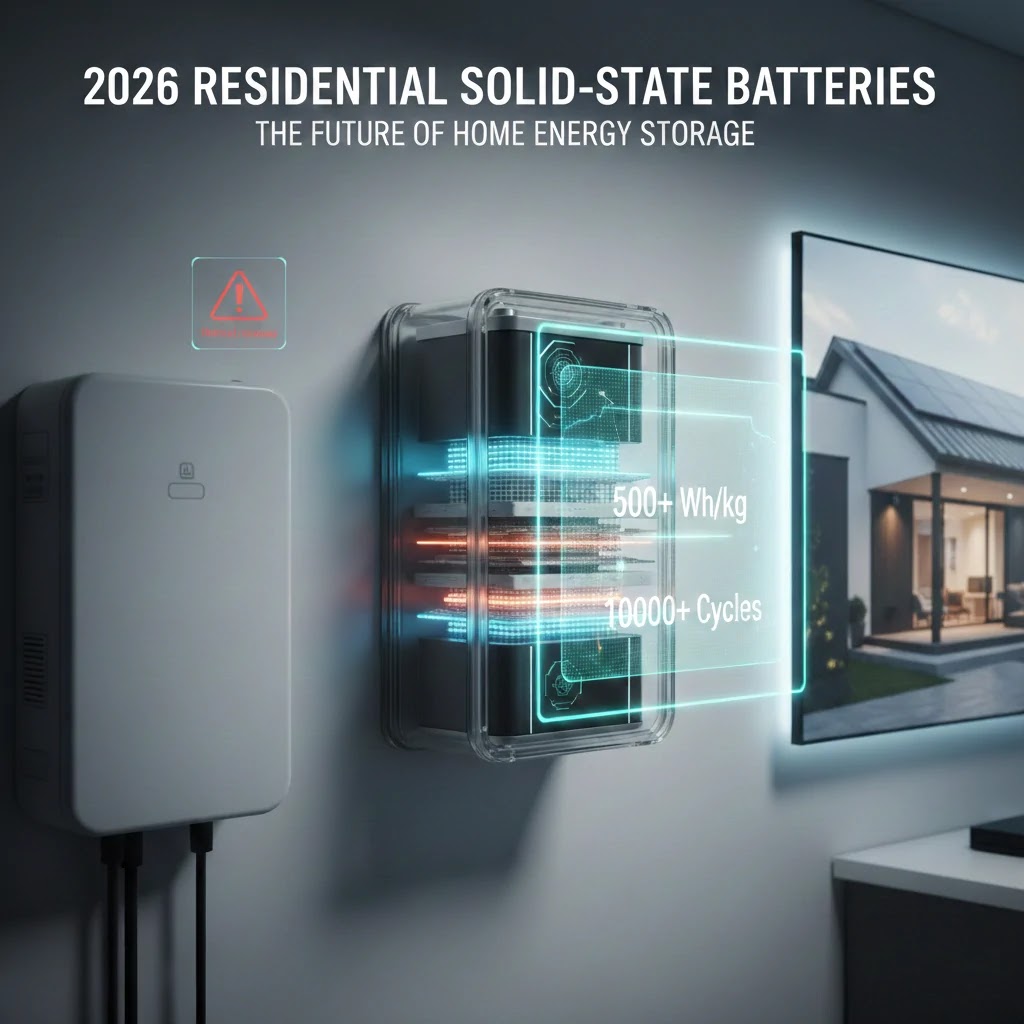
The catalyst for this shift is the commercial arrival of Residential Solid-State Batteries (SSBs). Unlike conventional lithium-ion packs that rely on liquid electrolytes, solid-state systems use a stable ceramic or polymer electrolyte. This structural change dramatically improves safety, longevity, and energy density.
As rooftop solar adoption rises and smart-grid automation expands, solid-state home batteries are becoming a central pillar of next-generation residential infrastructure.
2026 Storage Face-Off: Solid-State vs Lithium-Ion
| Performance Metric | Lithium-Ion (Legacy) | Solid-State (2026) |
|---|---|---|
| Energy Density | 200–250 Wh/kg | 450–550+ Wh/kg |
| Life Cycles | 2,500–4,000 Cycles | 8,000–12,000+ Cycles |
| Charging Speed | 4–8 Hours | Under 1 Hour* |
| Fire Risk | Thermal runaway possible | Significantly reduced |
*Charging speed depends on system configuration and inverter capacity.
Market Growth: Residential Storage Expansion
Global demand for home battery systems (MW/h) across North America, Europe, and Asia-Pacific.
Why Solid-State Batteries Matter for Homeowners
1. Higher Energy Density
More watt-hours per kilogram means smaller footprint systems. In dense urban housing, storage capacity per square meter is critical.
2. Longer Lifespan
With potentially 8,000–12,000 cycles, solid-state systems can exceed a 15-year operational lifespan under proper management.
3. Improved Safety Profile
Solid electrolytes reduce flammability risk, making indoor installation more viable compared to legacy lithium-ion systems.
4. Better Solar ROI
Higher cycle durability allows homeowners to maximize time-of-use arbitrage and self-consumption strategies.
Installation & Cost Considerations in 2026
- System Cost: Solid-state batteries currently command a premium over lithium-ion systems due to manufacturing scale.
- Inverter Compatibility: Ensure hybrid inverter support for next-generation chemistry.
- Grid Regulations: Local net-metering and storage interconnection policies influence ROI.
- Maintenance: Solid-state systems typically require less thermal management infrastructure.
“In 2026, energy density is the new floor space. The more power you can store per kilogram, the more resilient your home becomes.”
Strategic Verdict for 2026
For homeowners prioritizing long-term energy resilience, solid-state batteries represent a forward-looking investment. While upfront costs remain higher than legacy lithium-ion systems, the extended lifecycle and safety position SSBs as the premium residential storage technology of the decade.
Frequently Asked Questions
Limited commercial models are entering select markets, with broader rollout expected as manufacturing scales and costs decrease.
Yes. Solid electrolytes significantly reduce fire risk and eliminate the leakage issues associated with liquid electrolyte systems.
Over a long lifecycle horizon (10+ years), higher durability and significantly higher cycle life improve the total cost of ownership compared to legacy systems.