How AI Will Run Businesses in 2026–2030
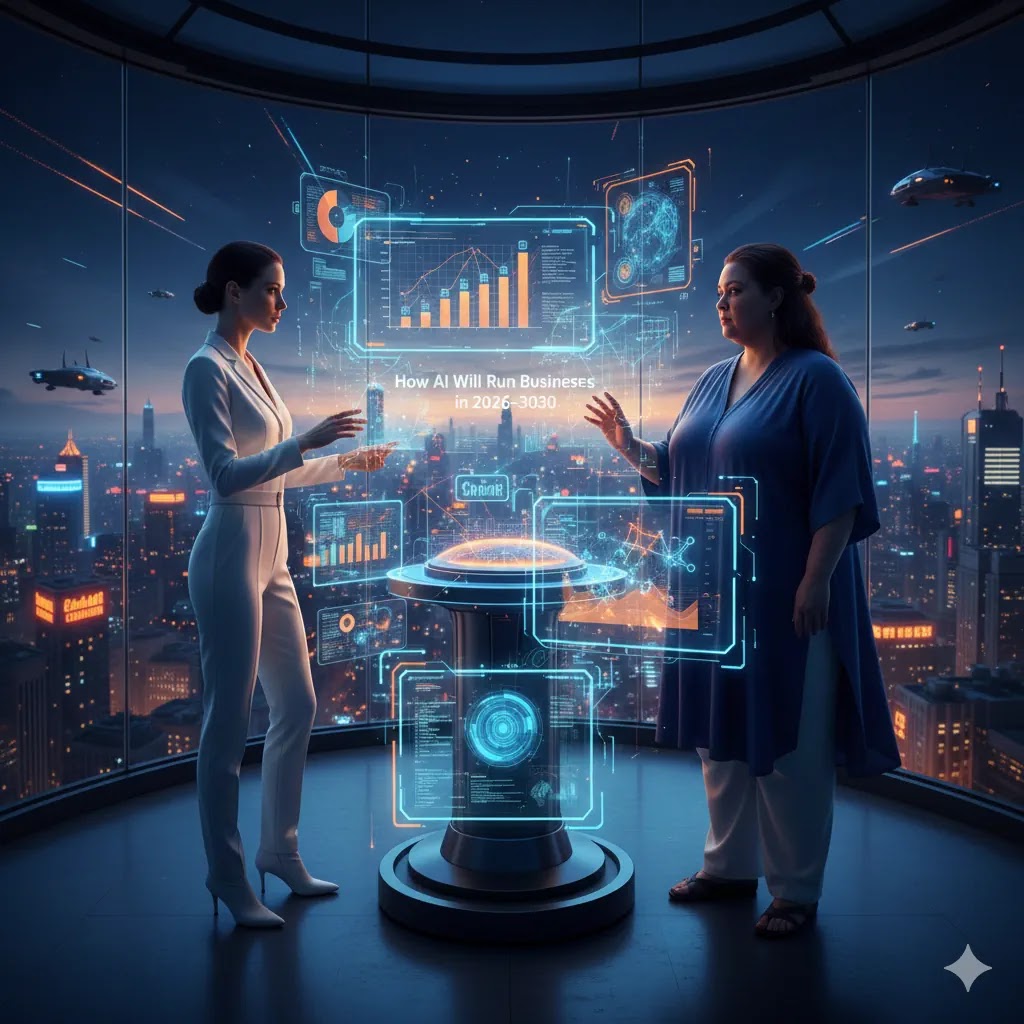
Between 2026 and 2030, businesses will transition from human-managed organizations to AI-orchestrated operating systems. This shift marks the beginning of the AI Operating System Era — where automation, autonomous agents, and intelligent infrastructure replace traditional management layers.
As explored in our analysis of Agentic AI systems, AI is no longer a tool — it is becoming the executive layer of modern enterprises.
1. The Rise of the AI Operating System
An AI Operating System (AI-OS) is a unified architecture that controls strategy, operations, marketing, analytics, customer engagement, and financial management through autonomous intelligence.
Core Components of AI-OS
- Strategic AI Decision Engines
- Autonomous Marketing Agents
- Predictive Financial Systems
- Self-Optimizing Sales Funnels
- Operational Workflow Automation
- Cloud-based Intelligence Scaling
Instead of managers making daily micro-decisions, AI systems will monitor KPIs in real time, adjust pricing dynamically, allocate marketing budgets, and optimize supply chains automatically.
2. Autonomous Decision-Making Systems
From 2026 onward, companies will rely heavily on autonomous systems capable of making context-aware decisions without human intervention.
| Department | AI Function |
|---|---|
| Marketing | Ad optimization & content generation |
| Finance | Cash flow forecasting & fraud detection |
| Customer Service | AI chat & autonomous support systems |
| Operations | Supply chain optimization |
Businesses that integrate full-stack automation, similar to strategies discussed in our AI Business Blueprint, will outperform traditional competitors.
Market Growth: AI-OS Adoption 2026-2030
Percentage of Global Enterprises running on a unified AI Operating System.
3. AI-Driven Workforce Transformation
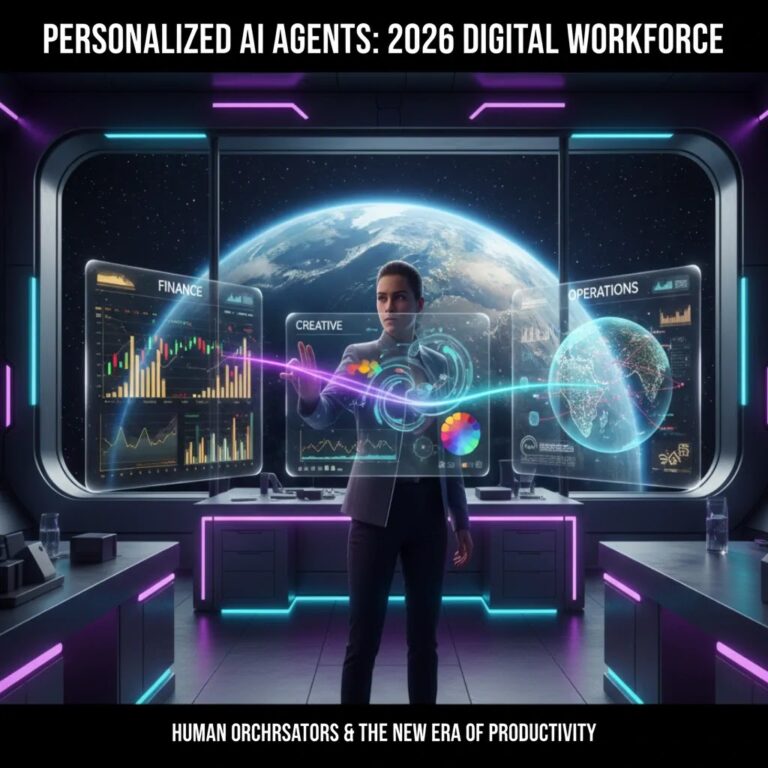
The workforce between 2026–2030 will become hybrid:
- Human Strategists
- AI Analysts
- Autonomous Process Managers
- Digital Twin Operators
Employees will shift from execution roles to supervision, creativity, and ethical oversight. This aligns with broader trends in AI-human integration explored in our Bio-Digital Integration research.
4. Predictive & Self-Healing Enterprises
By 2030, businesses will anticipate risks before they happen. AI systems will detect:
- Market downturn signals
- Supply chain disruptions
- Customer churn probability
- Operational inefficiencies
This results in self-healing enterprises capable of autonomous correction.
5. The Solo-Corp Revolution
AI will empower individuals to build billion-dollar infrastructure with minimal human staff. The rise of the Solo-Corp mirrors the transformation of AI-native entrepreneurship discussed in our AI systems strategy articles.
Final Strategic Outlook
Between 2026 and 2030, AI will not assist businesses — it will run them. Founders who design AI Operating Systems early will dominate the next decade. Build systems. Automate intelligently. Scale infinitely.
Frequently Asked Questions
What is the AI Operating System Era?
The AI Operating System Era refers to the 2026–2030 period when businesses operate through unified AI systems that automate strategy, marketing, finance, operations, and customer engagement with minimal human intervention.
How will AI run businesses between 2026 and 2030?
AI will manage pricing, forecasting, marketing optimization, financial risk monitoring, workflow automation, and decision intelligence using autonomous agents.
Will AI replace CEOs and managers?
AI will automate operational layers, but human leaders will remain essential for vision, ethics, innovation, and overall governance.
What is a self-healing enterprise?
A self-healing enterprise uses predictive AI to detect risks and automatically correct inefficiencies before financial or operational damage occurs.
Can a solo founder run a company using AI?
Yes. With AI Operating Systems and automation stacks, solo founders can build scalable businesses without large teams.