As of February 22, 2026, the smartphone industry has officially transitioned from the “Generative Era” to the “Agentic Era.” No longer are we impressed by a phone that can summarize an email; we now demand a phone that can reply to that email, schedule the follow-up meeting, and book the Uber—all without us opening a single app.
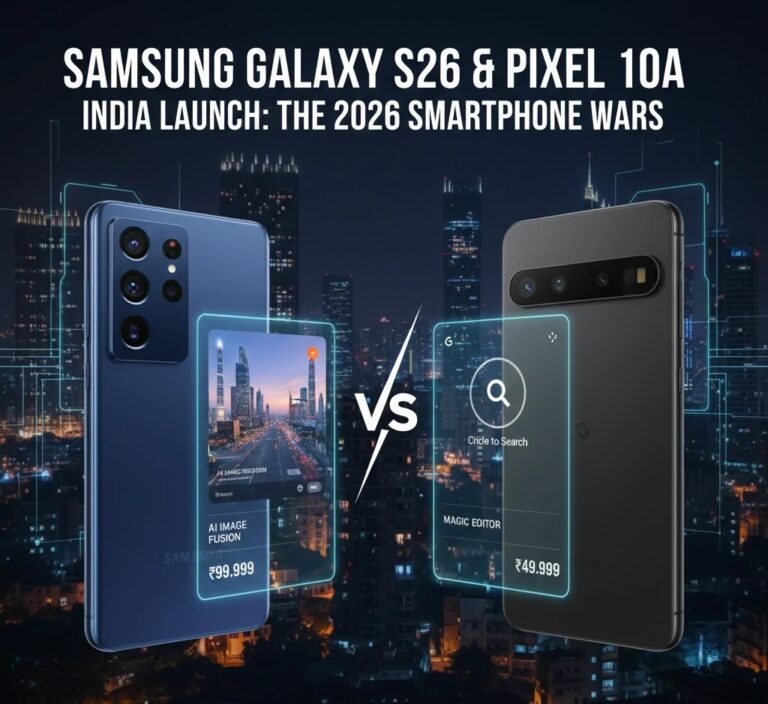
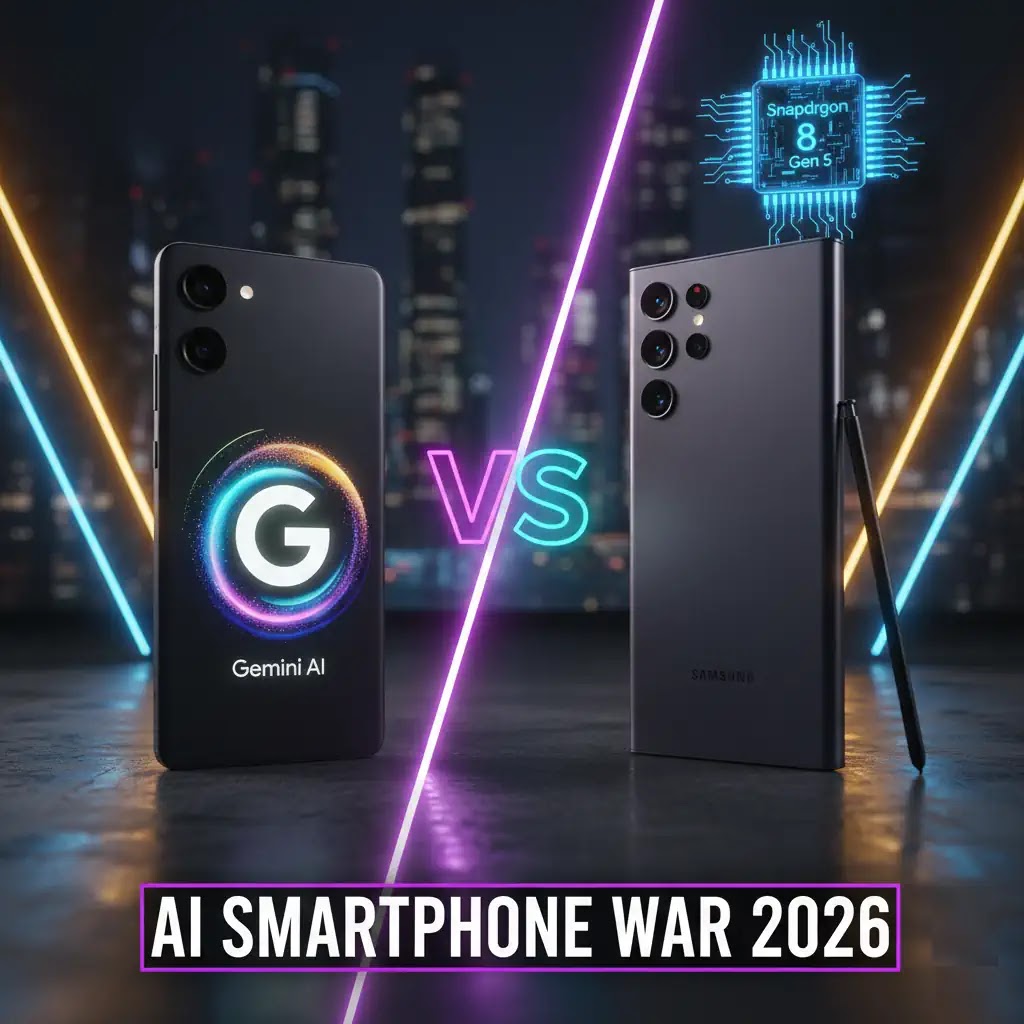
In this high-stakes landscape, two titans stand at the summit: the Google Pixel 11 Pro and the Samsung Galaxy S26 Ultra. While Google bets on deep “Small Language Model” (SLM) integration with the Tensor G6, Samsung is utilizing the raw, unbridled power of the Snapdragon 8 Elite Gen 5 to create a hardware-first AI beast.
I. The Silicon Duel: Tensor G6 (2nm) vs. Snapdragon 8 Gen 5
For the first time, the gap between Google and Qualcomm is narrowing. The Tensor G6, built on TSMC’s cutting-edge 2nm node, is designed specifically for Gemini Live 2.0. It’s not about benchmark scores; it’s about the TPU (Tensor Processing Unit) throughput. Conversely, the Snapdragon 8 Elite Gen 5 is breaking records with its 4.6GHz Oryon cores, making the S26 Ultra the fastest gaming and multitasking machine on the planet.
Head-to-Head: Flagship AI Specs
| Feature | Google Pixel 11 Pro | Samsung Galaxy S26 Ultra |
|---|---|---|
| Chipset | Tensor G6 (2nm Optimized) | Snapdragon 8 Gen 5 (Raw Power) |
| AI Specialty | Predictive Intent (Agentic) | Multi-Modal Vision & Action |
| Security | Titan M3 (Post-Quantum) | Knox Vault 2.0 |
II. Market Growth: The Explosion of AI-First Shipments
Global data from early 2026 shows a massive pivot. While standard smartphone shipments have stabilized, AI-integrated handsets are seeing a CAGR of 15.5%. Consumers are willing to pay the “AI Tax” for devices that offer tangible time-saving benefits.
AI Smartphone Market Share (2026 Forecast)
*Projected global market share for AI-centric premium smartphones.*
III. Key Features: Vision over Voice
The most impressive leap in 2026 is Multimodal Vision. If your espresso machine breaks, you no longer Google the symptoms. You point your S26 Ultra or Pixel 11 at the machine. The AI identifies the model, “listens” to the mechanical grinding sound, and suggests a specific fix or automatically orders the replacement part from Amazon.
What to Expect:
- Google Pixel 11: Introduction of the Titan M3 chip, hardened for post-quantum cryptography to protect your AI agent’s credentials.
- Samsung S26 Ultra: A 6.9-inch 144Hz Dynamic AMOLED display with a peak brightness of 2,600 nits and an “anti-reflective armor” that makes the screen look like paper.
IV. Conclusion: Which One Should You Buy?
If you live in the Google ecosystem and want a phone that acts as a proactive digital twin, the Pixel 11 Pro is unbeatable. However, if you need a “Beast” that can handle 8K video editing, pro-level gaming, and hardware-heavy multitasking, the Samsung Galaxy S26 Ultra remains the gold standard. 2026 isn’t just a hardware refresh—it’s the year your phone finally becomes your partner.