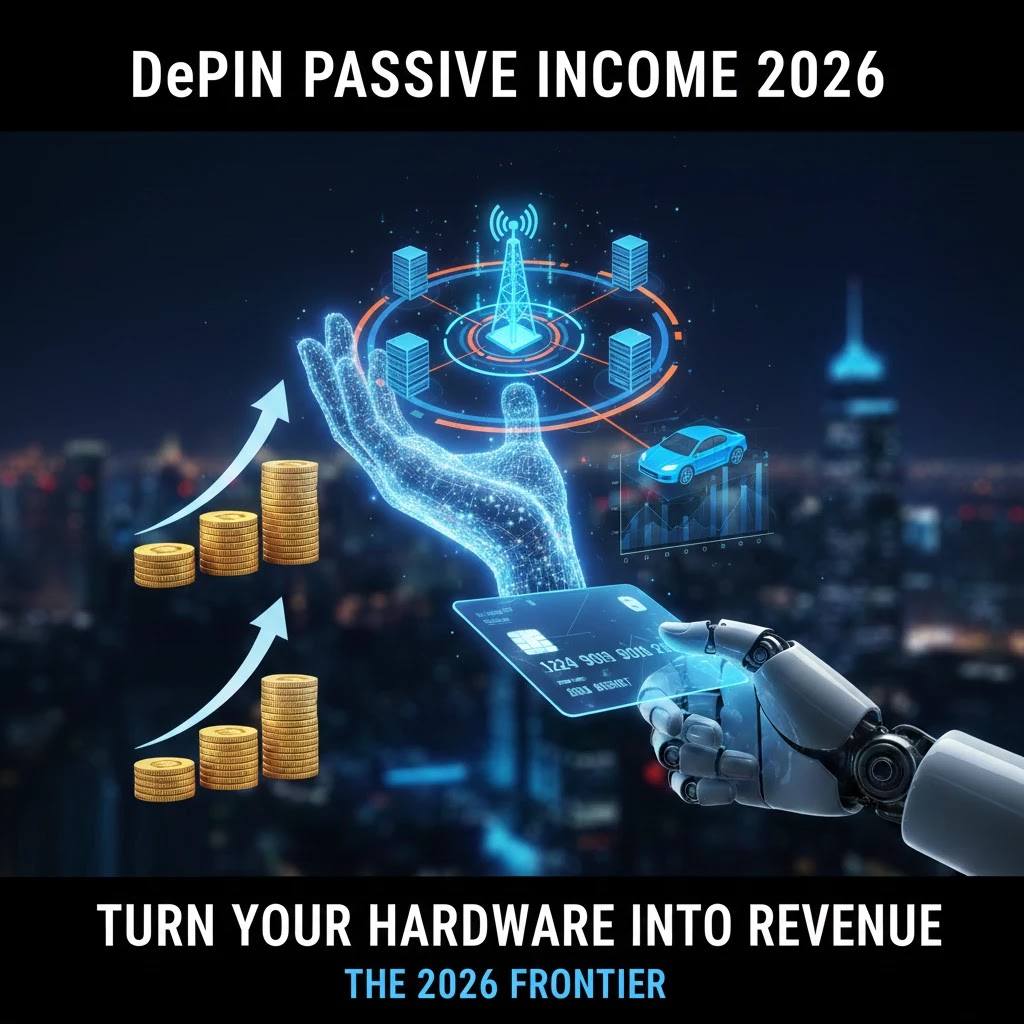

In 2026, the concept of “mining” has evolved far beyond Bitcoin. The new gold rush is DePIN (Decentralized Physical Infrastructure Networks). For digital entrepreneurs, this represents the ultimate frontier of passive income: earning rewards by providing tangible, real-world utility—like internet bandwidth, storage, or GPU power—instead of just speculative trading. This shift is a key component of the broader movement toward AI-powered wealth management, where physical assets and digital rewards converge into a single, automated strategy.
The DePIN Economic Revolution (2026)
Traditional infrastructure is built top-down by massive corporations. DePIN flips this model, allowing you to “be the telco” or “be the data center.” This decentralized approach significantly lowers the barrier to entry for high-yield fintech investment models, where your hardware becomes a direct source of cash flow.
| Sector | 2026 Leading Project | Income Type |
|---|---|---|
| Wireless (5G/Wi-Fi) | Uplink / Helium | Connectivity Tokens |
| Compute (AI/GPU) | Render / io.net | Compute Credits |
| Storage | Filecoin / Storj | Data Hosting Fees |
1. Wireless Networks: The “Uplink” Growth
By 2026, projects like Uplink have surpassed 5 million registered routers worldwide. Instead of waiting for a telecom giant to install a tower, you can now provide verifiable connectivity and earn revenue. This creates a resilient web, essential for protecting your operations against the risks discussed in our analysis of cybersecurity insurance for digital assets.
2. Decentralized Compute and AI Hunger
The hunger for AI processing power in 2026 is insatiable. Platforms like io.net and Render allow you to rent out idle GPU power to researchers and developers globally. This creates a “silent” income stream that requires zero manual intervention once the hardware is synced—a perfect example of scalable financial intelligence.
Market Insight: DePIN isn’t just a crypto trend; it’s the physical layer of the decentralized internet. In 2026, owning hardware that provides utility is more profitable than owning speculative digital tokens.
3. The “Buy-and-Burn” Sustainability Model
A major breakthrough in 2026 is the widespread adoption of “buy-and-burn” tokenomics. DePIN projects use real revenue from service fees to buy back and destroy their own tokens, creating deflationary pressure that rewards long-term infrastructure providers. This ensures the network remains profitable even during broader market volatility.
Verdict: The New Infrastructure Class
DePIN is turning everyday devices into income-generating assets. At KOLAACE™, we believe that understanding these decentralized networks is the key to unlocking true financial freedom in the 2026 digital economy.