Most people today track steps, but very few truly understand their health data. That is the real problem. You may wear a smartwatch daily, but still miss early signs of fatigue, stress, or recovery issues. In 2026, AI health wearables are solving this gap by turning raw data into clear decisions you can act on.
Instead of just showing numbers, modern wearables now interpret patterns. They tell you when to rest, when to push harder, and when something might be wrong. This shift is powered by Edge AI processing, where data is analyzed directly on your device for faster and more private insights.
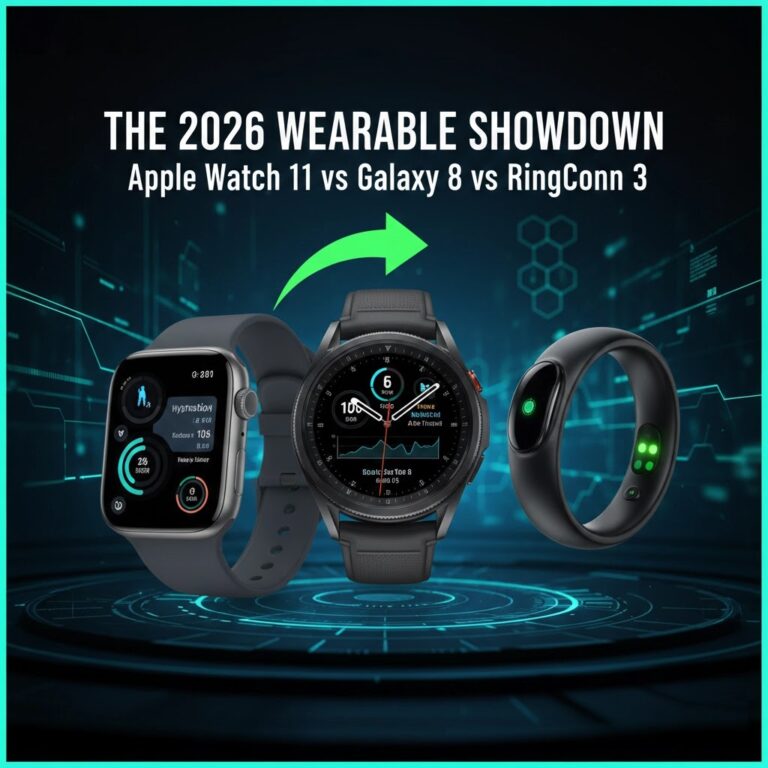
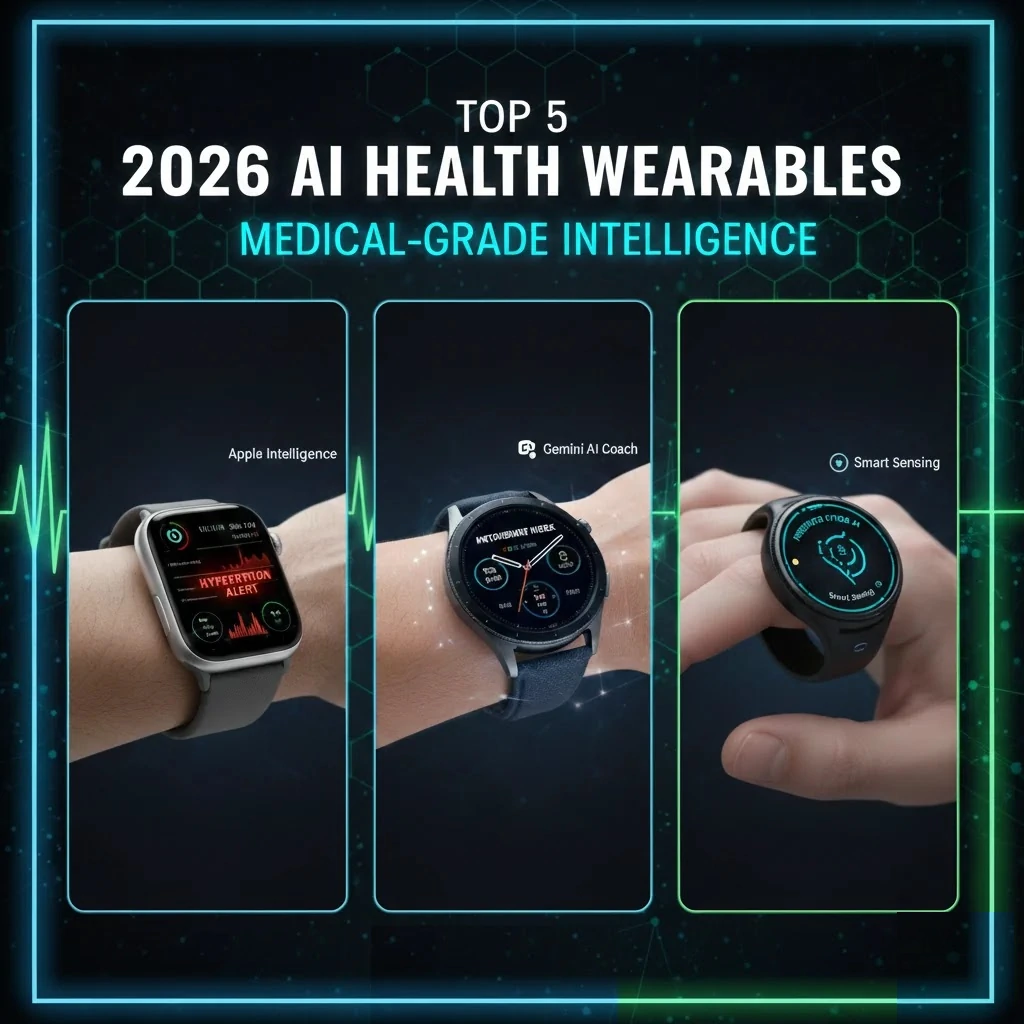
If you are confused between the latest devices, this guide breaks down the real differences between Apple Watch Series 11, Galaxy Watch 8, and Oura Ring 4 based on practical usage, not just specs.
What Makes AI Health Wearables Different in 2026
Earlier wearables focused on counting steps and calories. Now, they focus on prediction and prevention. This means:
- Detecting stress patterns before burnout
- Identifying poor sleep recovery trends
- Tracking heart rhythm irregularities
- Providing daily recommendations based on your body condition
For example, instead of just showing your heart rate, the device can alert you if your resting heart rate trend is rising over several days. This kind of insight is far more useful than raw data.
Practical Insight
Many users notice that when they follow wearable suggestions, such as adjusting sleep time or hydration, their energy levels improve within a week. This shows that small data driven decisions can have real impact.
2026 Flagship Wearable Comparison
| Feature | Apple Watch Series 11 | Galaxy Watch 8 | Oura Ring 4 |
|---|---|---|---|
| Health Focus | Clinical level monitoring | Balanced health tracking | Sleep and recovery focus |
| Battery Life | Up to 36 hours | Up to 40 hours | Up to 8 days |
| Best For | Health alerts and ECG tracking | Android users and fitness balance | Minimal tracking with deep insights |
Step by Step: How to Choose the Right Wearable
1. Define Your Goal
If your goal is medical level tracking, go for advanced watches. If you care more about sleep and recovery, a ring may be enough.
2. Check Your Ecosystem
Apple Watch works best with iPhones, while Galaxy Watch is optimized for Android. Choosing the wrong ecosystem reduces functionality.
3. Evaluate Comfort
Watches are more visible and interactive. Rings are lightweight and less distracting, especially during sleep.
4. Look at Battery Needs
If you do not want daily charging, longer battery devices like rings are more practical.
5. Focus on Insights, Not Features
The best device is the one that gives clear, actionable advice, not just more data points.
Real World Use Cases
For working professionals
Wearables help manage stress by tracking heart rate variability and suggesting recovery periods during busy schedules.
For fitness enthusiasts
They optimize workouts by analyzing fatigue and preventing overtraining.
For small business owners
Many entrepreneurs use wearables to maintain consistent energy levels. Better sleep tracking leads to improved decision making and productivity.
For older adults
Health alerts like irregular heart rhythms can provide early warnings, making these devices valuable for preventive care.
Pros and Cons
Apple Watch Series 11
- Strong health monitoring features
- Reliable alerts and ECG tracking
- Requires frequent charging
Galaxy Watch 8
- Balanced features for fitness and health
- Good integration with Android devices
- Some features limited by region
Oura Ring 4
- Excellent sleep tracking
- Long battery life
- No display for real time interaction
Best Practices for Using AI Wearables
- Wear consistently for accurate trend analysis
- Do not rely on single day data, focus on patterns
- Sync regularly to keep insights updated
- Use recommendations gradually, not all at once
Conclusion
AI health wearables in 2026 are no longer optional gadgets. They are becoming essential tools for managing daily health. The real value comes from how they guide your decisions, not just what they measure.
If you want a complete health monitoring system, go with a smartwatch. If you prefer simplicity with strong insights, a smart ring is a powerful alternative. Choose based on your lifestyle, not just features.
Frequently Asked Questions (FAQ)
Most beginners find smartwatches easier because they provide visual feedback and guided insights.
No, they are support tools that help detect patterns early but should not replace professional medical advice.
Accuracy has improved significantly, especially for heart rate and sleep tracking, but results should be viewed as guidance, not diagnosis.
With improvements in biometric data security, most devices now process sensitive data locally, reducing privacy risks.
Expert Verdict
After analyzing real usage patterns, smartwatches are better for active monitoring, while smart rings are better for passive tracking. The right choice depends on how involved you want to be with your health data.
“The best wearable is the one you actually use daily, not the one with the most features.”