Wearable technology in 2026 is no longer limited to counting steps or showing notifications. These devices now function as personal health companions, recovery trackers, productivity assistants, and AI powered wellness systems. Buyers are spending more money on wearables than ever before, but many still struggle to choose the right device for their actual lifestyle.
After testing multiple wearable categories over extended daily use, one pattern becomes obvious. The best wearable is rarely the one with the longest feature list. The real value comes from comfort, battery reliability, ecosystem integration, and whether the device naturally fits into your daily routine.
At KOLAACE™, we noticed that professionals, fitness enthusiasts, creators, remote workers, and even students now expect wearables to provide meaningful insights instead of overwhelming dashboards filled with unused metrics.
The rapid growth of AI powered health analysis is also connected to broader changes happening across connected ecosystems, including AI integrated digital ecosystems and secure edge processing systems.
Privacy has become another major deciding factor. Since modern wearables continuously collect sensitive biometric information, users increasingly care about local processing and secure cloud synchronization. This concern closely connects with modern cybersecurity protection strategies designed for AI connected devices.
Table of Contents
Quick Comparison Table
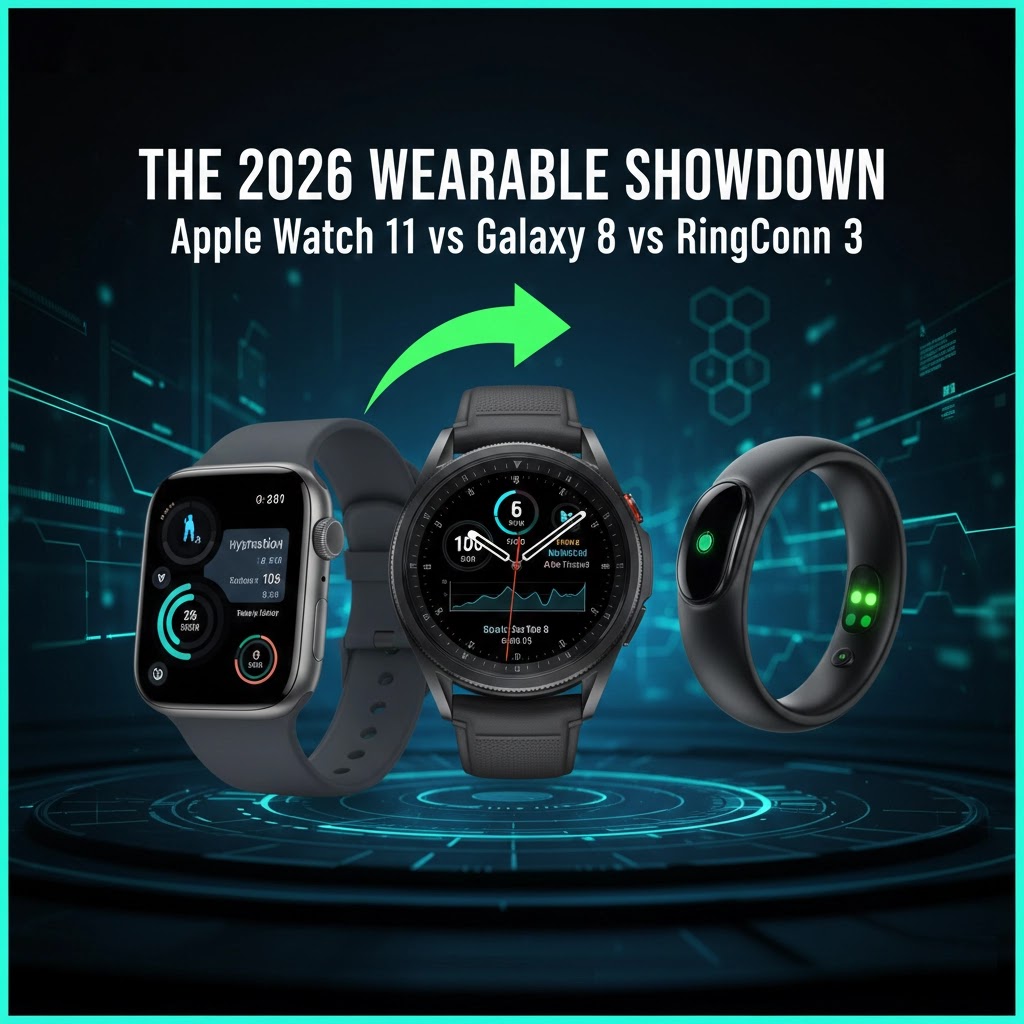
After evaluating long term comfort, sleep tracking consistency, AI health analysis, battery endurance, ecosystem flexibility, and real daily usability, these differences stand out most clearly between the three devices.
| Metric | Apple Watch Series 11 | Galaxy Watch 8 | RingConn Gen 3 |
|---|---|---|---|
| AI Assistant | Siri Pro with On Device AI | Galaxy AI 2.0 | Passive Wellness AI |
| Battery Life | 38 Hours | 50 Hours | 12 Days |
| Core Strength | Productivity and Ecosystem | Advanced Health Monitoring | Sleep and Recovery Tracking |
| Health Focus | Hydration and Sweat Analysis | Glucose Trend Monitoring | Stress and HRV Tracking |
| Comfort During Sleep | Moderate | Moderate | Excellent |
| Best For | iPhone Users | Android Power Users | Minimal Lifestyle Users |
| Price Category | Premium | High End | Mid Premium |
One important insight from extended testing is that most users rarely use every advanced feature available on modern smartwatches. Buyers who mainly care about sleep quality and recovery often prefer simpler wearables. On the other hand, users deeply connected to productivity apps, messaging, and calendars benefit far more from full smartwatch ecosystems.
Why Smart Rings Are Growing Fast in 2026
The wearable market in 2026 is shifting toward low distraction health technology. Many users are actively reducing screen exposure and notification overload. This trend explains why smart rings are becoming one of the fastest growing wearable categories.
Unlike traditional smartwatches, smart rings focus heavily on passive tracking. They quietly collect health metrics in the background without demanding constant attention from the user.
In practical testing, this changes user behavior significantly. People often remove watches during sleep, charging sessions, meetings, or workouts. Smart rings are easier to wear continuously, which improves long term data accuracy.
According to KOLAACE™ Analytics, adoption growth is especially strong among:
- Remote workers experiencing screen fatigue
- Professionals who prefer minimal distractions
- Users focused on sleep optimization
- Fitness users prioritizing recovery tracking
- Travelers who dislike daily charging routines
- People interested in lightweight wearable technology
Another important factor is comfort. During overnight testing, lightweight rings often feel far less intrusive compared to large smartwatch designs. This improves consistency in HRV monitoring, sleep stage tracking, and recovery analysis.
“The next phase of wearable technology is becoming quieter, smarter, and less visually distracting while still collecting deeper health insights.”
AI and the 2026 Biometric Technology Wave
Hardware improvements remain important, but the biggest transformation in wearable technology is happening inside AI analysis systems. Modern wearables now interpret behavioral patterns instead of simply displaying raw numbers.
These devices increasingly analyze trends related to stress, recovery, sleep quality, hydration, cardiovascular signals, and long term wellness patterns. This makes wearables more proactive and useful in everyday life.
Apple Watch Series 11
The Apple Watch Series 11 continues to focus heavily on ecosystem integration and polished user experience. Its updated S11 SiP improves local AI processing, allowing more health analysis to happen directly on the device.
This local processing approach reduces cloud dependency and improves privacy for users who are uncomfortable sharing sensitive biometric information externally.
One practical feature that stood out during testing was hydration and sweat analysis. Athletes, gym users, runners, cyclists, and outdoor workers can use these insights to better understand dehydration trends during intense activity.
Apple also maintains one of the smoothest productivity ecosystems available in wearable technology. Calendar syncing, notification handling, workout integration, and app continuity feel extremely refined for iPhone users.
However, the ecosystem advantage becomes less meaningful for Android users because many features depend heavily on Apple’s connected device environment.
Samsung Galaxy Watch 8
Samsung is aggressively expanding advanced wellness tracking in 2026. The Galaxy Watch 8 focuses strongly on AI driven health insights, customization, and Android flexibility.
One of the most discussed features is glucose trend monitoring support. While it is not a replacement for certified medical devices, it provides useful wellness insights for users interested in metabolic health awareness.
Samsung also benefits from modern edge computing infrastructure, allowing more biometric analysis to happen locally on the watch. This reduces unnecessary cloud communication and improves response speed.
In extended daily usage, Samsung delivers excellent flexibility for Android power users who want customization, stronger battery performance, and deeper wellness dashboards.
The main downside is complexity. Casual users may find the health interface overloaded with metrics they rarely use.
RingConn Gen 3
RingConn Gen 3 takes a very different approach compared to traditional smartwatches. Instead of replacing a smartphone, it focuses entirely on passive wellness tracking.
The strongest advantage is consistency. With battery life extending up to 12 days, users can maintain uninterrupted health tracking without frequent charging interruptions.
During long term testing, sleep tracking and HRV analysis were particularly impressive. Many smartwatch users unintentionally lose overnight data because their watch is charging beside the bed. Smart rings solve this problem naturally.
RingConn Gen 3 also feels significantly lighter during sleep. Users who dislike bulky wearables often adapt to smart rings much faster.
For recovery focused users, meditation enthusiasts, stress management users, and people trying to reduce screen distractions, RingConn delivers excellent long term usability.
Real World Usage Experience
For Fitness Enthusiasts
The Apple Watch Series 11 remains one of the smoothest fitness experiences available. Workout animations, GPS reliability, app quality, and guided activity systems feel polished and stable.
Samsung performs exceptionally well for users who want more advanced wellness metrics, broader customization, and stronger Android integration.
RingConn is not designed for interactive workouts, but it performs strongly in recovery tracking, resting heart rate analysis, and long term sleep quality monitoring.
For Professionals and Productivity Users
Professionals who depend on reminders, notifications, calls, calendar syncing, and task management will likely prefer Apple or Samsung over a smart ring.
Apple provides the cleanest ecosystem synchronization for iPhone users, while Samsung offers greater flexibility for Android based workflows.
For Sleep and Recovery Tracking
This is where RingConn Gen 3 becomes highly competitive. Its lightweight design and extended battery life create a far more comfortable overnight tracking experience.
Users focused on recovery optimization, stress reduction, and sleep consistency may actually gain more value from a smart ring than a traditional smartwatch.
For Travelers and Busy Users
Battery management becomes extremely important for travelers and professionals working long schedules. Smartwatches still require relatively frequent charging, while smart rings can operate for days with minimal maintenance.
Many users underestimate how quickly charging fatigue affects long term wearable usage habits.
Pros and Cons
Apple Watch Series 11 Pros
- Excellent ecosystem integration
- Strong productivity tools
- Advanced hydration tracking
- Premium app ecosystem
- Fast and polished user interface
Apple Watch Series 11 Cons
- Works best mainly with iPhone
- Battery still requires regular charging
- Premium pricing may not suit all budgets
Galaxy Watch 8 Pros
- Strong Android compatibility
- Advanced AI wellness analysis
- Better battery endurance than Apple
- Excellent customization options
- Detailed health dashboards
Galaxy Watch 8 Cons
- Some features work best with Samsung phones
- Interface can feel overwhelming for casual users
- App optimization varies between Android brands
RingConn Gen 3 Pros
- Exceptional battery life
- Comfortable for overnight wear
- Minimal distraction experience
- Strong recovery and stress tracking
- Very lightweight design
RingConn Gen 3 Cons
- No large interactive display
- Limited productivity features
- Less suitable for app focused users
Who Should Buy Which Wearable
Choose Apple Watch Series 11 If:
- You already use iPhone daily
- You want strong productivity integration
- You value premium app support
- You prefer a refined ecosystem experience
Choose Galaxy Watch 8 If:
- You use Android devices regularly
- You want deeper wellness analytics
- You enjoy advanced customization
- You need stronger battery efficiency
Choose RingConn Gen 3 If:
- You prioritize sleep and recovery tracking
- You dislike frequent charging
- You want low distraction technology
- You prefer lightweight wearable comfort
Who Should Avoid Smart Rings
- Users who depend heavily on notifications
- People wanting smartwatch apps and messaging
- Buyers expecting a full productivity device
Best Practices for Wearable Users
Regardless of which wearable you choose, these habits improve long term tracking quality and overall value:
- Wear the device consistently for accurate trend analysis
- Focus on long term patterns instead of daily fluctuations
- Enable all available privacy protections
- Keep firmware and health apps updated
- Use wearable insights as guidance, not medical diagnosis
- Prioritize comfort over raw specifications
Many users buy expensive wearables filled with features they never actually use. In reality, the best device is the one that comfortably fits your daily routine and encourages consistent usage.
“Consistency matters more than specifications in wearable technology. Accurate long term health trends only appear when users wear devices regularly.”
The Final Verdict
The Apple Watch Series 11 remains one of the strongest premium smartwatch experiences for users deeply invested in the Apple ecosystem.
The Galaxy Watch 8 stands out for Android users who want advanced health analytics, AI driven wellness insights, and broader customization flexibility.
RingConn Gen 3 represents a different philosophy entirely. It focuses on silent, long term, low maintenance health tracking without adding more digital distractions.
In 2026, choosing the right wearable is less about buying the device with the most features. The smarter decision is choosing technology that naturally supports your lifestyle, comfort, and health priorities.
Frequently Asked Questions
Which wearable has the best battery life in 2026?
RingConn Gen 3 offers the strongest battery performance among these devices, lasting up to 12 days depending on tracking settings and usage habits.
Is the Apple Watch Series 11 better than Galaxy Watch 8?
The better choice depends heavily on your smartphone ecosystem. Apple Watch Series 11 is ideal for iPhone users, while Galaxy Watch 8 works better for Android users.
Are smart rings more accurate for sleep tracking?
Many users experience better sleep tracking consistency with smart rings because they are lighter and more comfortable during overnight wear.
Can wearable devices replace medical equipment?
No. Wearables are useful for wellness tracking and early trend awareness, but they should never replace professional medical diagnosis or certified healthcare equipment.
Are wearable devices safe for personal data privacy?
Most premium brands now process more health data locally on devices, but users should still enable privacy settings, use strong passwords, and regularly update software.
Should casual users buy a smartwatch or smart ring?
Casual users focused mainly on sleep, stress, and recovery may prefer smart rings, while users needing productivity features and notifications may benefit more from smartwatches.