Most people still think faster internet only means quicker downloads or smoother streaming. That idea is already outdated in 2026. The real conversation around 6G and the Tactile Internet is about something much bigger. Businesses, hospitals, factories, smart cities, and remote work platforms now need networks that react almost instantly. Even a tiny delay can create serious problems when robots, AI systems, or medical devices depend on real time communication.
By February 2026, the telecom industry has started moving beyond mature 5G infrastructure into early stage 6G deployment testing. Analysts estimate the sector value at nearly $10.05 billion, mainly driven by industrial automation, defense systems, advanced robotics, and immersive digital experiences. Unlike 5G, which mainly connected devices, 6G is being designed to support human level interaction speed through ultra low latency networks and intelligent edge computing.
One major reason this matters is the rise of Agentic AI-driven networks. AI systems now exchange huge amounts of data every second. Traditional cloud architecture struggles when decisions must happen instantly. 6G aims to solve this bottleneck through terahertz communication, AI optimized routing, and sub millisecond responsiveness.
What Makes 6G Different From 5G?
Many articles describe 6G as simply “faster 5G,” but that explanation misses the real shift happening in wireless technology. The biggest improvement is not only speed. It is the combination of speed, intelligence, and ultra low latency working together.
Current 5G networks already perform well for video streaming, gaming, and IoT devices. However, applications like remote robotic surgery, autonomous transport systems, industrial robotics, and holographic communication need response times close to real human reflexes.
That is where 6G enters the picture.
- Target speed: Up to 1 Tbps in ideal conditions
- Latency goal: Below 0.1 milliseconds
- AI integration: Networks manage traffic automatically
- Terahertz spectrum: Higher frequency wireless communication
- Energy optimization: Smarter low power devices
In practical terms, this means machines can coordinate almost instantly without noticeable delay. That changes industries where timing matters.
Real World Example
In a manufacturing plant using industrial robotics, even a 2 or 3 millisecond delay can affect synchronization between machines. With 6G testing environments, factories are experimenting with systems where robotic arms adjust movements in real time using AI powered feedback loops. This improves production precision while reducing errors.
The Tactile Internet Explained
The phrase Tactile Internet sounds futuristic, but the idea is straightforward. It refers to networks capable of transmitting touch, movement, and physical interaction digitally with extremely low delay.
Today, people can already send audio and video instantly. The next step is transmitting physical sensation and real time control. This becomes possible only when network latency becomes nearly invisible.
Several industries are actively testing tactile applications:
- Remote surgery using robotic instruments
- Industrial equipment control from distant locations
- Military and defense simulations
- Advanced VR and AR experiences
- Smart warehouse automation
- Driverless logistics systems
For example, a specialist surgeon in one country could guide robotic tools operating in another city with near instant response. Earlier networks introduced small but dangerous delays. 6G aims to reduce that risk significantly.
The same technology may also support future vertical city infrastructure, where traffic systems, emergency response units, elevators, drones, and energy grids coordinate continuously through intelligent networks.
Terahertz Networks and Neuromorphic Hardware
6G performance depends heavily on new hardware. Existing mobile infrastructure cannot efficiently support terahertz communication at scale. That is why chipmakers and telecom companies are investing heavily in advanced transceivers and AI optimized processors.
One of the most interesting developments involves Neuromorphic Computing. These processors are designed to work more like the human brain, helping devices process signals quickly while consuming less energy.
This matters because 6G networks will generate enormous amounts of data. Standard processing methods would increase energy usage dramatically. Neuromorphic chips can reduce unnecessary processing and improve efficiency.
Why This Combination Matters
- Lower energy consumption for smart devices
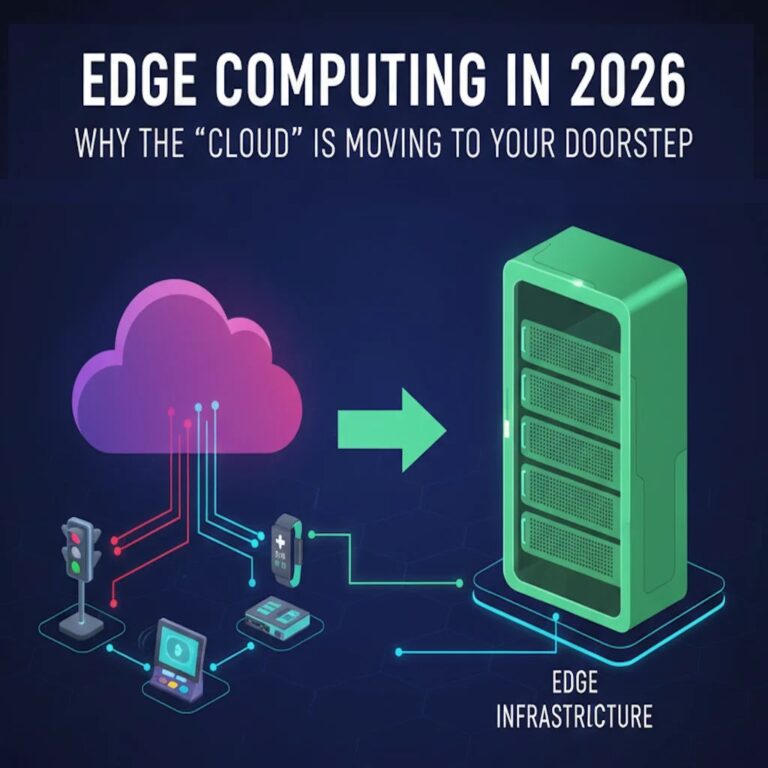
- Faster AI decision making at the network edge
- Improved battery performance
- Better support for autonomous systems
- Reduced network congestion
Some research labs are also experimenting with passive wireless systems that harvest tiny amounts of ambient energy from surrounding radio waves. While still early, this could eventually support ultra low power sensors in smart cities and industrial environments.
Network Evolution: 5G vs. 6G (2026 Analysis)
| Metric | 5G (Mature) | 6G (2026 Prototype) |
|---|---|---|
| Peak Data Rate | 20 Gbps | 1,000 Gbps (1 Tbps) |
| End-to-End Latency | 1 to 5 ms | < 0.1 ms |
| Security Architecture | Standard Encryption | Quantum-Safe (PQC) |
How Businesses Could Benefit From 6G
Small businesses often assume technologies like 6G only matter for telecom giants. In reality, the long term business impact could be significant across many industries.
Retail and E Commerce
Advanced AR shopping experiences may become smoother and more realistic. Customers could interact with digital products in real time before purchasing.
Healthcare Clinics
Smaller healthcare providers may gain access to remote specialist systems, AI diagnostics, and connected medical devices with better reliability.
Manufacturing
Factories can reduce downtime using predictive AI systems connected through ultra fast industrial networks.
Education Platforms
Immersive virtual classrooms and real time simulations may improve online learning quality, especially for technical training.
Logistics and Warehousing
Autonomous inventory tracking systems and smart robotics become more efficient when devices communicate instantly.
Pros and Limitations of 6G Technology
Potential Advantages
- Near real time communication
- Massive improvement in AI network efficiency
- Better support for smart cities and automation
- More advanced remote work infrastructure
- Improved healthcare connectivity
- Higher bandwidth for immersive experiences
Current Challenges
- Extremely high infrastructure costs
- Limited terahertz signal range
- Power efficiency concerns
- Complex global regulation
- Security and privacy risks
- Slow commercial rollout outside major cities
One important reality is that 6G adoption will not happen overnight. Many countries are still improving 5G coverage. Full consumer level deployment may take several more years.
Why Investors and Governments Are Paying Attention
Although the 6G market is estimated at around $10.05 billion in 2026, forecasts suggest much larger long term growth potential. Governments see 6G as strategic national infrastructure, similar to previous internet revolutions.
Countries investing heavily in 6G research aim to secure advantages in defense, AI development, advanced manufacturing, and digital commerce.
Private companies are also exploring how future wireless systems could connect seamlessly with Biometric Data Vaults, smart identity systems, and decentralized AI ecosystems.
Several telecom vendors are already conducting early trials involving:
- Satellite integrated communication
- AI controlled radio optimization
- Holographic communication systems
- Smart transportation networks
- Digital twins for infrastructure monitoring
6G Global Market Valuation ($ Billions)
Best Practices for Businesses Preparing for 6G
Companies do not need to wait for full 6G deployment to prepare strategically. Businesses already investing in digital infrastructure will likely adapt faster later.
- Upgrade cloud and edge computing systems gradually
- Train teams on AI integrated workflows
- Strengthen cybersecurity for connected devices
- Adopt scalable IoT infrastructure
- Monitor telecom and AI industry standards
- Focus on low latency applications with real business value
Organizations that understand network intelligence early may gain operational advantages once advanced wireless ecosystems mature.
Frequently Asked Questions
Is 6G available for consumers in 2026?
Not fully. Most 6G activity in 2026 is still in the research, testing, and prototype phase. Limited industrial and government trials are happening in selected regions.
What is the biggest difference between 5G and 6G?
The biggest difference is ultra low latency combined with AI optimized networking. 6G focuses more on real time interaction than only faster internet speed.
Will 6G replace WiFi?
Probably not completely. WiFi and mobile networks will likely continue working together depending on use case, environment, and infrastructure requirements.
Why is the Tactile Internet important?
It enables real time remote interaction for robotics, healthcare, manufacturing, and immersive communication systems where even tiny delays matter.
Should small businesses care about 6G right now?
Yes, especially businesses investing in AI, IoT devices, automation, or smart infrastructure. Understanding future connectivity trends early can help with long term planning.
Final Verdict
6G is not simply another mobile upgrade. It represents a major shift toward intelligent, real time digital interaction. The combination of ultra low latency, AI driven infrastructure, and tactile communication could reshape industries ranging from healthcare to logistics. While large scale deployment is still developing, businesses and professionals that understand the direction of wireless technology early may be better prepared for the next phase of the digital economy. To explore more future technology analysis and emerging infrastructure trends, visit the KOLAACE™ Homepage.