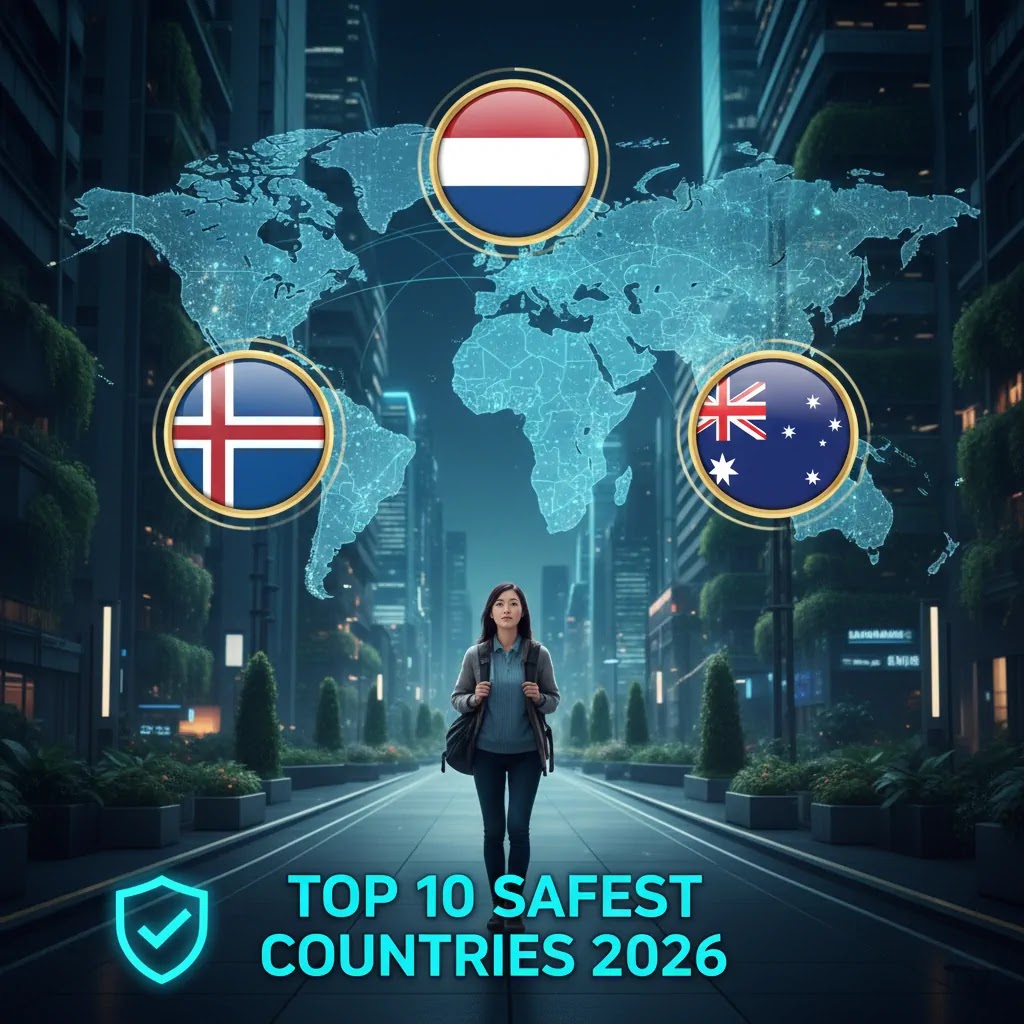
Planning an international trip in 2026 involves much more than comparing hotel prices or famous attractions. Travelers now pay close attention to healthcare readiness, public transport safety, digital fraud protection, emergency response systems, and political stability before booking flights. A destination may look beautiful online, but poor infrastructure or weak security systems can quickly turn a vacation into a stressful experience.
That is why the safest countries to travel in 2026 are receiving massive attention from tourists, solo travelers, families, digital nomads, and business professionals. Countries that invest heavily in public safety, clean transport systems, and smart technology are now dominating global travel rankings. Just like people depend on quantum encryption for financial security, modern travelers want destinations where both physical and digital safety are taken seriously.
One important shift seen in 2026 is that travelers no longer measure safety only by crime statistics. Internet safety, emergency medical access, women traveler safety, natural disaster preparedness, and even public hygiene now play a major role in destination selection.
Top 10 Safest Countries to Visit in 2026
This list combines insights from the 2026 Global Peace Index, Berkshire Hathaway Travel Protection rankings, traveler experience reports, and infrastructure analysis. The countries below consistently perform well across healthcare, public security, transportation reliability, and traveler confidence.
- The Netherlands
The Netherlands has emerged as one of the strongest travel safety performers in 2026. Clean public transport, strong healthcare systems, cycling friendly cities, and efficient emergency services make it highly attractive for tourists. Amsterdam, Rotterdam, and Utrecht maintain excellent safety standards even during late evening hours. - Australia
Australia remains one of the safest long distance travel destinations because of strict border control systems, reliable healthcare, and low violent crime rates. Cities like Sydney and Melbourne are highly organized, while regional tourism infrastructure continues to improve. - Austria
Austria combines cultural tourism with stable public systems. Travelers often highlight Vienna for clean transportation, safe streets, and strong law enforcement presence. Mountain tourism areas also maintain excellent emergency rescue support. - Iceland
Iceland continues to rank among the world’s most peaceful countries. Crime remains extremely low, and solo travelers frequently describe it as one of the easiest countries to navigate safely. Weather awareness is still important because conditions can change quickly in remote regions. - Canada
Canada offers strong healthcare, traveler friendly cities, and welcoming multicultural communities. Toronto, Vancouver, and Calgary continue to perform well for public safety and transportation reliability. - New Zealand
Travelers choosing nature focused tourism often prefer New Zealand because of its calm environment and organized tourism systems. Hiking trails, transport routes, and emergency communication systems are managed very efficiently. - United Arab Emirates
Cities like Dubai and Abu Dhabi are now recognized for advanced surveillance systems, strict law enforcement, and highly secure public spaces. Digital payment systems and airport security are especially advanced compared to many global destinations. - Switzerland
Switzerland remains highly trusted for transport precision, mountain tourism safety, and political neutrality. Train systems are reliable, and tourism infrastructure is extremely well maintained. - Japan
Japan continues to impress travelers with cleanliness, discipline, and social order. Lost wallets or phones are often returned intact, which many visitors still find surprising. Public transportation remains one of the safest in the world. - Ireland
Ireland completes the list with its stable environment, welcoming local culture, and growing tourism infrastructure. Many first time solo travelers consider it an easy and comfortable European destination.
Why These Countries Rank Higher in 2026
During recent travel trend analysis, one pattern became very clear. The safest countries are not always the richest countries. Instead, the highest ranking destinations usually focus on three important areas:
- Reliable healthcare access, especially for tourists
- Efficient emergency response systems, including transport and disaster management
- Digital and financial protection, reducing scams and cyber risks
For example, several European countries now use AI assisted transport monitoring to reduce public incidents in metro stations and tourist zones. Airports in Japan and the UAE have also improved biometric verification systems, reducing long immigration delays and improving passenger flow.
Families traveling with children often prioritize destinations where healthcare support is easy to access. Remote workers and digital nomads, on the other hand, focus more on internet safety, public workspace security, and stable transport networks.
| Country | 2025 Rank | 2026 Rank | Primary Safety Strength |
|---|---|---|---|
| Netherlands | 14th | 1st (▲ 13) | Healthcare & Public Infrastructure |
| Austria | N/A | 3rd (New) | Social Stability & Transport |
| UAE | 18th | 7th (▲ 11) | Urban Security & Surveillance |
| Japan | 9th | Top 10 Stable | Public Discipline & Cleanliness |
Best Safe Destinations Based on Travel Style
Not every traveler has the same priorities. A destination that feels perfect for a solo traveler may not be ideal for a family or remote worker. Here is how experienced travelers are choosing safe countries in 2026.
For Solo Travelers
- Iceland for peaceful environments
- Japan for safe public transportation
- Ireland for friendly local interaction
For Families
- Canada for healthcare access
- Australia for organized tourism infrastructure
- Netherlands for public transport and clean cities
For Remote Workers
- Portugal and Netherlands for digital infrastructure
- UAE for secure business environments
- Japan for reliability and urban convenience
Many remote professionals also combine safe travel destinations with affordable living hubs. That is why guides related to affordable countries for remote workers are becoming increasingly popular among digital nomads.
Practical Travel Safety Tips for 2026
Even the safest country cannot fully protect travelers who ignore basic precautions. Experienced travelers usually follow a few consistent habits that reduce risk significantly.
- Use eSIM or secure roaming plans instead of unknown public WiFi networks
- Store passport copies digitally and offline
- Keep emergency contact information available in local language if possible
- Avoid displaying expensive devices openly in crowded tourist areas
- Use biometric or multi factor authentication for banking apps
- Check weather alerts before mountain or island travel
One common issue seen in tourist heavy locations is digital theft rather than physical theft. Fake QR code payment scams and unsecured public charging stations have become more common in crowded travel zones. Travelers who depend heavily on smartphones should also review basic digital privacy tools and encrypted cloud backups.
Travelers managing international finances often rely on secure systems similar to personal biometric data vaults to protect banking access and identity information during trips.
Pros and Cons of Traveling to Ultra Safe Countries
Advantages
- Lower travel stress and fewer safety concerns
- Reliable transportation and healthcare systems
- Better support for solo travelers and families
- Cleaner public spaces and organized tourism infrastructure
- Improved digital payment security
Possible Drawbacks
- Higher accommodation costs in premium destinations
- Strict local rules and heavy fines in some countries
- Tourist hotspots may still experience petty theft
- Advanced surveillance systems may feel restrictive for some travelers
Experienced travelers often balance safety with budget planning. Some highly secure destinations can become expensive during peak travel seasons, especially Switzerland, Iceland, and parts of Australia.
Travel Safety Index: Trend Growth
Frequently Asked Questions
Which country is considered the safest for tourists in 2026?
The Netherlands is widely ranked among the safest travel destinations in 2026 because of strong healthcare systems, public safety infrastructure, and reliable transport networks.
Is Japan safe for solo travelers?
Yes. Japan remains one of the best destinations for solo travelers because of low crime, organized transport systems, and strong public discipline.
Are safe countries always expensive to visit?
Not always. Countries like Ireland and parts of Austria can still be manageable with smart budgeting, especially outside peak tourist seasons.
What matters more in 2026, physical safety or digital safety?
Both matter equally. Travelers now face digital scams, payment fraud, and data theft more frequently than before, so online safety has become essential.
How can travelers improve safety during international trips?
Using secure payment methods, keeping digital backups of documents, avoiding risky public networks, and monitoring local alerts can significantly improve travel safety.
Travel Verdict
Safe travel in 2026 is no longer only about avoiding dangerous places. Modern travelers want destinations with reliable healthcare, clean transport, stable infrastructure, strong digital protection, and efficient emergency systems. Countries like the Netherlands, Japan, Canada, and Iceland continue to lead because they combine security with a high quality travel experience.
If your goal is stress free international travel, choosing destinations with proven safety systems can make a major difference. Research carefully, stay digitally protected, and plan according to your travel style. For more detailed travel, technology, and remote lifestyle insights, visit the KOLAACE™ Homepage.