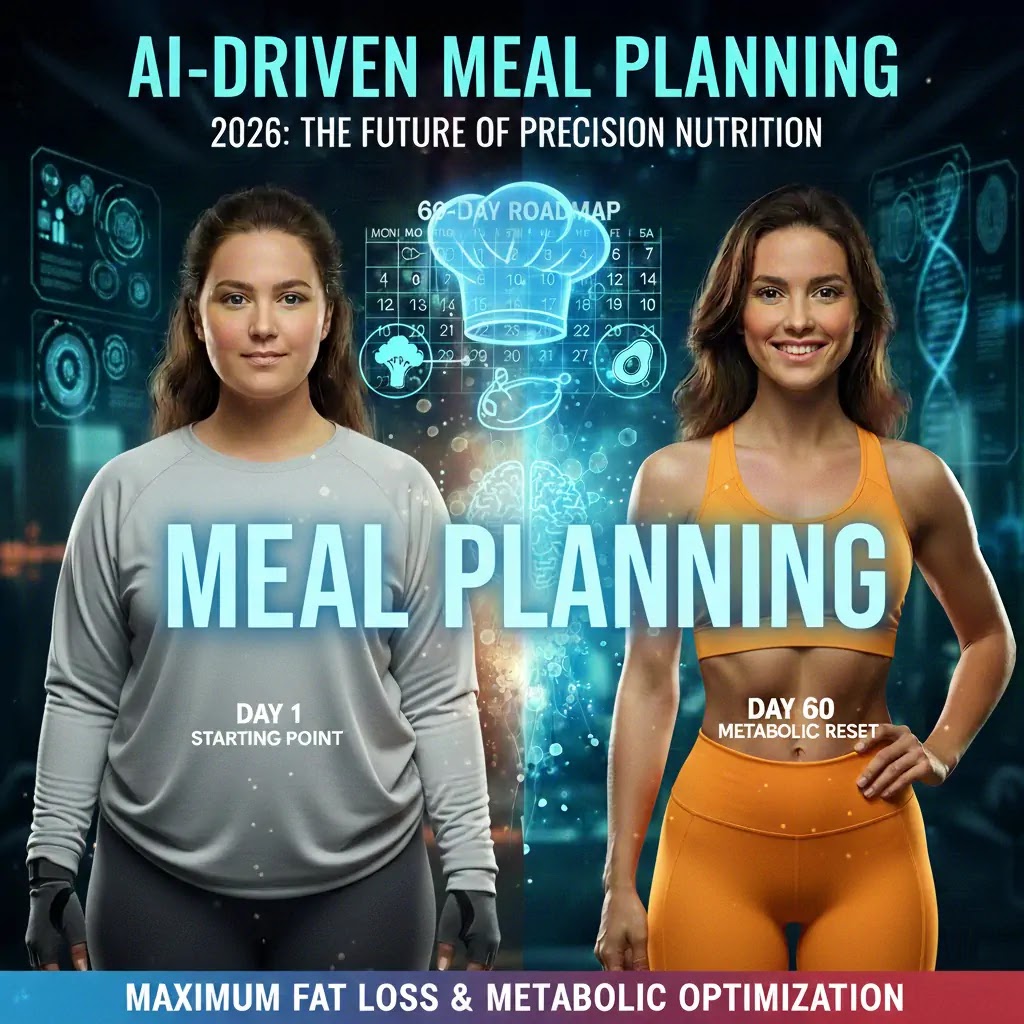
Most people do not fail at fat loss because of lack of effort. They fail because their diet does not match their real lifestyle. Fixed meal plans ignore your sleep, stress, work schedule, and daily activity. This mismatch leads to cravings, low energy, and slow fat loss.
AI driven meal planning in 2026 solves this problem by adapting your nutrition daily. Instead of forcing your body to follow a rigid diet, it adjusts food intake based on how your body actually responds.
If you feel stuck despite dieting, or your weight fluctuates without clear reason, your nutrition strategy may not be personalized enough.
What is AI Meal Planning in 2026?
AI meal planning is a system that continuously adjusts your calories, macronutrients, and meal timing using real time data. Unlike traditional diet charts, it does not stay fixed. It evolves daily.
These systems typically use:
- Activity data such as steps and workouts
- Sleep duration and recovery quality
- Heart rate and stress patterns
- Weight and body composition trends
This allows the system to create a nutrition plan that fits your current condition, not just a theoretical target.
How AI Personalizes Your Diet Step by Step
- Step 1: Collects baseline data from your lifestyle and body metrics
- Step 2: Calculates calorie needs based on real activity, not estimates
- Step 3: Adjusts protein, carbs, and fats dynamically
- Step 4: Monitors progress and corrects errors automatically
- Step 5: Adapts meal timing based on energy and hunger patterns
For example, if you sleep poorly, the system may slightly reduce carbs and increase protein to stabilize energy. If you train hard, it increases recovery nutrition.
Practical Benefits for Fat Loss
- Better Adherence: Plans feel natural, so you follow them longer
- Stable Energy: Fewer crashes during the day
- Reduced Cravings: Smart carb timing helps control hunger
- Muscle Protection: Protein stays optimized during fat loss
- Plateau Prevention: Automatic adjustments avoid stagnation
In practice, users often report fewer binge eating episodes and more consistent weight loss compared to strict diets.
Real World Use Cases
Busy professionals: Someone working long hours cannot track calories daily. AI handles planning automatically, reducing mental load.
Small business owners: Shop owners or entrepreneurs often eat irregular meals. AI adjusts intake based on unpredictable schedules, helping maintain energy and focus.
Fitness beginners: New users avoid confusion about macros and portion sizes, as the system guides them step by step.
People with plateau: Those stuck with belly fat benefit from continuous micro adjustments instead of drastic diet changes.
Manual Dieting vs AI Meal Planning
| Factor | Manual Diet | AI Nutrition System |
|---|---|---|
| Accuracy | Based on guesswork | Data driven |
| Flexibility | Fixed plan | Dynamic adjustments |
| Time Investment | High | Minimal |
| Long Term Sustainability | Low | High |
Pros and Limitations
- Highly personalized nutrition
- Reduces decision fatigue
- Improves consistency
- Works with real life schedules
- Requires accurate data input
- May take time to adapt initially
- Over reliance on tech without basic knowledge can be limiting
Who Should Use and Who Should Avoid
Best for:
- People struggling with consistency
- Those with irregular schedules
- Anyone aiming for sustainable fat loss
Not ideal for:
- People looking for instant results without effort
- Users unwilling to track basic habits
Best Practices for Maximum Results
- Track sleep and activity honestly
- Follow suggested protein intake consistently
- Avoid frequent manual overrides
- Combine with strength training and walking
- Review weekly trends instead of daily weight
Even simple habits like home cooked meals, fixed meal timing, and reducing processed food can amplify AI based recommendations.
Final Takeaway
AI meal planning is not just about automation. It is about alignment between your lifestyle and your nutrition. When your diet adapts to your real life instead of forcing rigid rules, fat loss becomes more stable and predictable.
The real advantage is consistency. When consistency improves, results follow naturally.
Frequently Asked Questions
Yes. It improves adherence, calorie accuracy, and nutrient balance, which supports gradual fat loss.
Is it better than traditional dieting?
It is more adaptive and sustainable because it adjusts based on your daily routine instead of fixed rules.
Do I still need exercise?
Yes. Nutrition and exercise work together. AI improves diet efficiency, but physical activity remains essential.
How long before results appear?
Most people notice improved energy and reduced cravings within 2 to 3 weeks, with visible fat loss over time.