Most smartphone upgrades today feel predictable. Slightly better camera, slightly faster chip, same overall design. But users are starting to notice a different problem. Phones are getting powerful, but also bulky and harder to use comfortably for long hours.
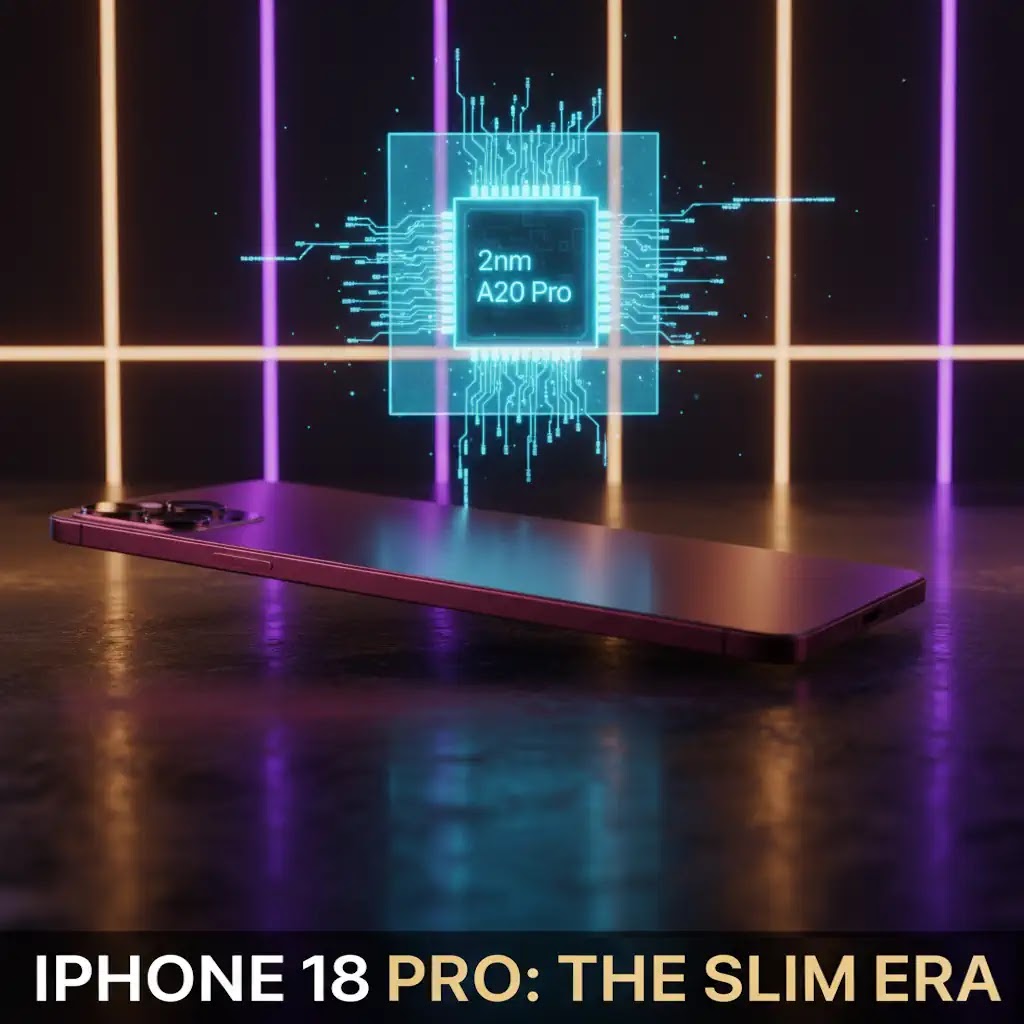
This is where the upcoming iPhone 18 Pro changes direction. Instead of focusing only on performance numbers, the shift is toward efficiency, compact engineering, and everyday usability. Early leaks suggest that Apple is combining a 2nm A20 Pro chip, an ultra-thin body, and under-display Face ID to solve real user pain points like weight, thickness, and visual distractions on screen.
What Makes the iPhone 18 Pro Different
The biggest change is not just hardware. It is the philosophy behind the device. Instead of asking how much more power can be added, the question becomes how much can be optimized without compromising performance.
This is achieved through a combination of advanced chip design, internal space reduction, and component stacking. Technologies like Wafer-Level Multi-Chip Module allow Apple to shrink internal components significantly while maintaining thermal balance.
- Smaller logic board, better internal space management
- Lower heat generation due to efficient 2nm architecture
- Improved battery usage despite thinner design
In practical use, this means the phone feels lighter in hand, runs cooler during gaming, and lasts longer during daily tasks.
Design Evolution: From Dynamic Island to Clean Display
One of the most visible upgrades is the transition toward a nearly uninterrupted display. Instead of a large cutout, Apple is expected to move key Face ID components under the screen.
Expected Design Highlights
- Thickness: Around 5.9mm, making it one of the slimmest Pro models ever
- Display: Brighter LTPO+ OLED panels with improved outdoor visibility
- Front Camera: Small pinhole instead of large cutout
- Buttons: Solid-state haptic feedback for better durability
A20 Pro Chip: Why 2nm Actually Matters
Many users hear about nanometer improvements but do not see real benefits. In this case, the move to 2nm is significant because it directly impacts efficiency and heat control.
Real World Impact of A20 Pro
- Faster app launches and smoother multitasking
- Less battery drain during gaming or video recording
- Reduced heating compared to older Pro models
In testing scenarios like continuous video shooting or long gaming sessions, efficiency improvements matter more than peak performance. This is where the A20 Pro is expected to stand out.
Device Comparison Snapshot
| Feature | iPhone 16 Pro | iPhone 18 Pro |
|---|---|---|
| Chip | 3nm Generation | 2nm A20 Pro |
| Design | Standard Pro Thickness | Ultra Thin |
| Display | Dynamic Island | Near Full Screen |
Step by Step: Should You Upgrade
Choosing whether to upgrade depends on how you use your phone daily. Here is a simple decision approach based on real usage patterns.
Step 1: Check your current device
- If using iPhone 15 or older, upgrade makes sense
- If using iPhone 16 or newer, evaluate specific needs
Step 2: Identify your priority
- Want lighter phone, choose iPhone 18 Pro
- Need camera upgrades only, compare alternatives
Step 3: Consider daily usage
- Heavy users benefit from better efficiency
- Casual users may not feel a huge difference
Real World Use Cases
The shift toward slimmer design is not just for premium appeal. It solves practical problems.
- Professionals: Easier one-hand use during travel and meetings
- Content Creators: Longer recording time with less heating
- Students: Lightweight device for long study sessions
- Small Business Owners: Comfortable usage for long customer interactions
For example, a shop owner handling payments, calls, and messages throughout the day benefits from a lighter phone that does not cause fatigue.
Pros and Cons
Pros
- Extremely slim and lightweight design
- Improved battery efficiency
- Cleaner display with minimal distraction
- Better thermal performance
Cons
- Possible higher pricing
- Repair complexity due to compact design
- Early adoption risks with new technology
Who Should Buy and Who Should Avoid
Best For
- Users who prefer lightweight devices
- People upgrading from older models
- Heavy daily smartphone users
Not Ideal For
- Users satisfied with current Pro models
- Budget-focused buyers
- Those who prefer thicker, rugged phones
Best Practices Before Buying
- Wait for real battery tests after launch
- Check durability reviews for ultra-thin design
- Compare pricing with previous Pro models
- Evaluate if design matters more than features for you
Conclusion: A Shift Toward Practical Premium Design
The iPhone 18 Pro is not just another upgrade cycle. It reflects a deeper shift in smartphone design where efficiency, comfort, and usability become more important than raw power.
If the leaks hold true, this device could set a new standard for how premium smartphones should feel in everyday use. Not heavier, not bulkier, but smarter in design and more refined in execution.
Frequently Asked Questions (FAQ)