For years, crypto investors focused mainly on market volatility, exchange hacks, and wallet phishing scams. In 2026, another concern has entered the conversation, quantum computing. While practical quantum attacks on Bitcoin and Ethereum are not happening daily yet, cybersecurity researchers are warning that preparation can no longer be delayed.
The biggest concern is not necessarily what quantum computers can do today. It is what attackers are collecting right now for the future. Sensitive encrypted data, wallet information, and digital signatures can already be harvested and stored with the expectation that future quantum systems may eventually decrypt them.
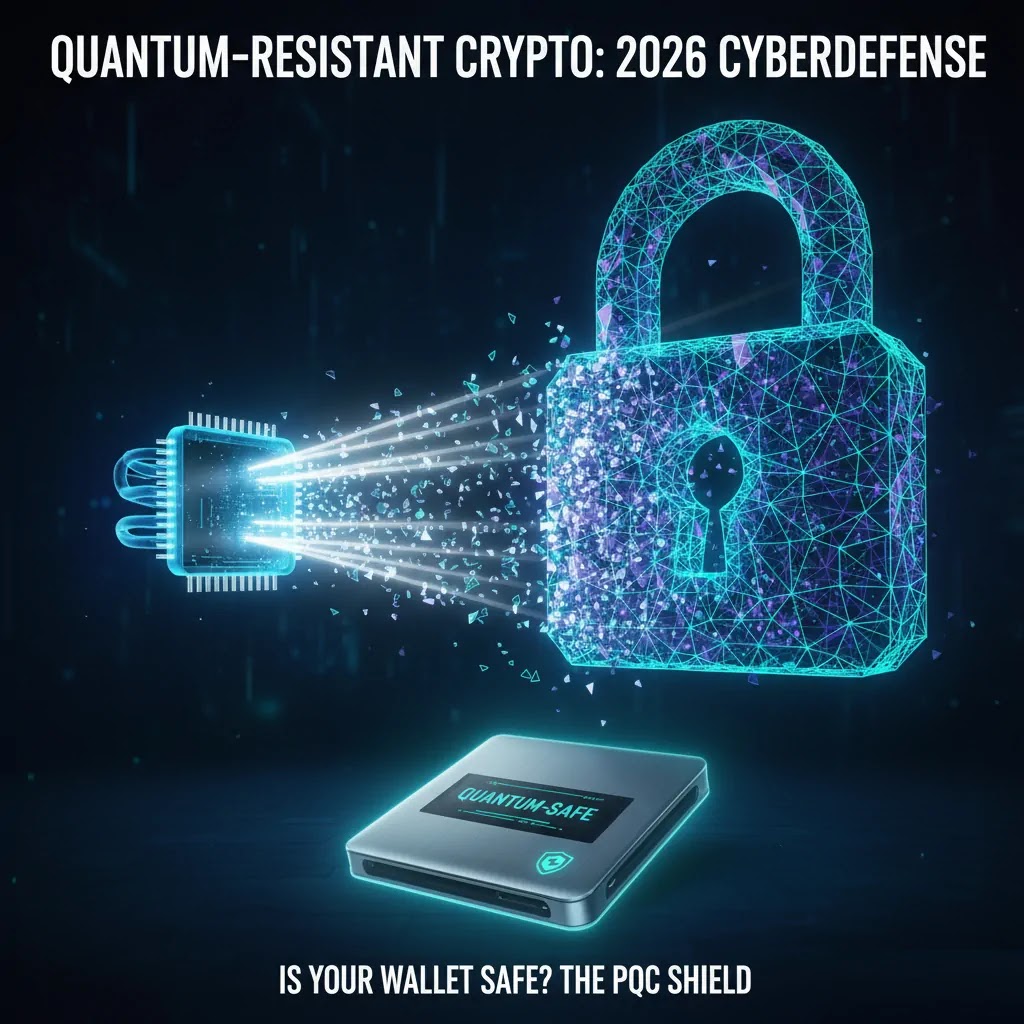
This growing pressure has accelerated interest in Post Quantum Cryptography, commonly called PQC. Governments, banks, cloud providers, and blockchain developers are now investing heavily in quantum resistant encryption systems designed to survive the next generation of computing power.
For crypto holders, this raises an important question. Is your wallet truly prepared for the future security environment of 2026 and beyond?
1. Understanding the Quantum Threat to Crypto Wallets
Most cryptocurrency wallets today rely on public key cryptography systems such as RSA or Elliptic Curve Cryptography. These systems are highly secure against traditional computers because factoring large mathematical problems would take enormous computing power.
Quantum computers operate differently. Using algorithms such as Shor’s Algorithm, future quantum systems could theoretically solve these cryptographic problems much faster than classical machines.
In simple terms, this means:
- Private keys may eventually become vulnerable
- Older wallet infrastructure could become outdated
- Blockchain signatures may require new security layers
- Long term stored crypto assets face higher exposure risk
It is important to stay realistic here. Most experts do not believe large scale quantum attacks are imminent in 2026. However, security migrations take years, especially across decentralized systems. Waiting until the threat becomes immediate would likely be too late.
Why Long Term Holders Should Care
Investors holding assets for ten years or longer face different security challenges compared to short term traders. If attackers collect encrypted wallet related information today, future quantum breakthroughs could potentially expose data that currently appears safe.
This is why many cybersecurity discussions now focus on future resilience instead of immediate panic.
2. The Harvest Now, Decrypt Later Problem
One of the biggest cybersecurity concerns in 2026 is the Harvest Now, Decrypt Later strategy, often shortened to HNDL. This approach involves collecting encrypted data today with the expectation that future quantum systems may eventually break the encryption.
Cloud infrastructure providers and cybersecurity firms have already warned about increasing large scale encrypted data collection activities. Attackers understand that even if quantum capabilities are limited now, stolen encrypted information could still become valuable later.
For crypto users, this creates several risks:
- Exposure of wallet metadata
- Compromised backup systems
- Weak password protected seed phrase storage
- Legacy wallets with outdated encryption standards
- Long term storage vulnerabilities
One common mistake among retail investors is assuming that hardware wallets alone solve every problem. Hardware wallets remain extremely important, but they still depend on secure cryptographic standards and proper user practices.
Practical Security Insight
Security experts increasingly recommend layered protection. Strong encryption, offline backups, biometric verification, secure password management, and updated firmware all matter together. No single device or app provides perfect protection on its own.
3. NIST Standards and the Rise of Quantum Resistant Encryption
The National Institute of Standards and Technology, commonly known as NIST, has become central to the global transition toward quantum resistant cryptography.
By 2026, three important standards are receiving widespread industry attention:
- FIPS 203, ML KEM
- FIPS 204, ML DSA
- FIPS 205, SLH DSA
These systems are based largely on lattice based cryptography, a security approach designed to resist attacks from quantum algorithms.
Major technology providers, cloud infrastructure companies, and banking systems have already begun phased migration strategies. Some blockchain developers are also exploring hybrid security architectures that combine existing encryption methods with quantum resistant systems.
Encryption Standards: Classical vs Quantum Resistant (2026)
| Feature | Classical Encryption | Quantum Resistant Systems |
|---|---|---|
| Quantum Risk | Potentially vulnerable to Shor’s Algorithm | Designed for quantum era resilience |
| Current Usage | Legacy wallets and older systems | NIST aligned implementations |
| Migration Difficulty | Lower short term complexity | Requires infrastructure upgrades |
| Automation Support | Manual monitoring | Agentic AI assisted security management |
4. How Crypto Wallets Are Evolving in 2026
Wallet developers are responding carefully to the quantum conversation. Instead of completely replacing existing blockchain systems overnight, most projects are focusing on gradual migration strategies.
Several trends are emerging:
- Hybrid encryption models combining traditional and PQC methods
- Multi signature wallet systems
- Biometric verification layers
- AI assisted anomaly detection
- Quantum resistant cold storage research
Some developers are also integrating biometric linked security systems to reduce risks associated with stolen credentials and weak authentication practices.
One important reality often ignored in online discussions is that user behavior still causes most crypto losses. Phishing attacks, fake wallet apps, exposed seed phrases, and poor password hygiene remain more dangerous today than quantum computing itself.
Experience Based Observation
Many security conscious investors now separate long term holdings from active trading wallets. Cold storage devices are increasingly isolated from daily internet activity, reducing exposure to both current and future attack vectors.
5. The $2.3 Billion Post Quantum Security Market
The global market for Post Quantum Cryptography solutions has grown rapidly as governments and enterprises prepare for future migration requirements. By 2026, the sector is estimated at approximately $2.31 billion.
This growth is being driven by:
- Government cybersecurity mandates
- Cloud infrastructure modernization
- Financial sector compliance requirements
- Edge Computing infrastructure upgrades
- Enterprise data protection initiatives
For smaller technology firms and cybersecurity vendors, this transition also creates a major business opportunity. Companies capable of supporting migration audits, encryption upgrades, and security consulting are seeing rising demand.
PQC Market Valuation Growth ($ Billions)
6. Best Practices for Protecting Crypto Assets in 2026
Even though quantum resistant systems are still evolving, crypto investors can already improve security significantly through better operational habits.
Recommended Security Practices
- Use reputable hardware wallets with active firmware support
- Keep seed phrases fully offline
- Avoid storing recovery phrases in cloud notes or email accounts
- Enable multi factor authentication wherever possible
- Regularly update wallet software
- Monitor projects adopting PQC compatible upgrades
- Separate trading funds from long term holdings
One practical lesson from cybersecurity history is that transitions happen gradually. Systems that prepare early usually experience fewer problems compared to organizations that wait until migration becomes urgent.
7. Pros and Cons of Quantum Resistant Crypto Security
Advantages
- Better long term resilience against future attacks
- Improved trust for institutional adoption
- Stronger protection for sensitive data storage
- Reduced future migration pressure
- Encourages stronger security architecture overall
Challenges
- Migration complexity for existing blockchain systems
- Larger cryptographic key sizes
- Higher infrastructure requirements
- Potential compatibility issues with older systems
- Limited public understanding of PQC technologies
Security upgrades always involve tradeoffs. The goal is not absolute perfection but sustainable long term protection.
8. Frequently Asked Questions
Can quantum computers break Bitcoin today?
Current quantum computers are not yet powerful enough to break Bitcoin encryption at large scale. However, researchers are preparing for future advancements.
What does PQC mean in crypto?
PQC stands for Post Quantum Cryptography. These are encryption systems designed to resist attacks from quantum computers.
Should crypto investors panic about Q Day?
Most experts recommend preparation rather than panic. Migration toward stronger encryption standards is already underway.
Are hardware wallets still safe in 2026?
Yes, reputable hardware wallets remain one of the safest options available, especially when combined with strong operational security habits.
What is the biggest crypto security risk today?
For most users, phishing attacks, weak passwords, fake wallet apps, and exposed recovery phrases remain far bigger risks than quantum computing.
KOLAACE™ Verdict
Quantum computing has transformed from a distant theoretical topic into a serious long term cybersecurity discussion. While a sudden collapse of cryptocurrency encryption is not expected in 2026, the transition toward quantum resistant systems has clearly begun.
The most important lesson for investors is adaptability. Wallet providers, blockchain developers, cloud infrastructure companies, and governments are all preparing for future cryptographic shifts. Users who stay informed, adopt better security habits, and follow emerging PQC standards will likely be better positioned for the next phase of digital finance evolution.
As technologies like Physical AI security systems and decentralized infrastructure continue evolving, crypto security in 2026 is becoming less about hype and more about long term resilience.