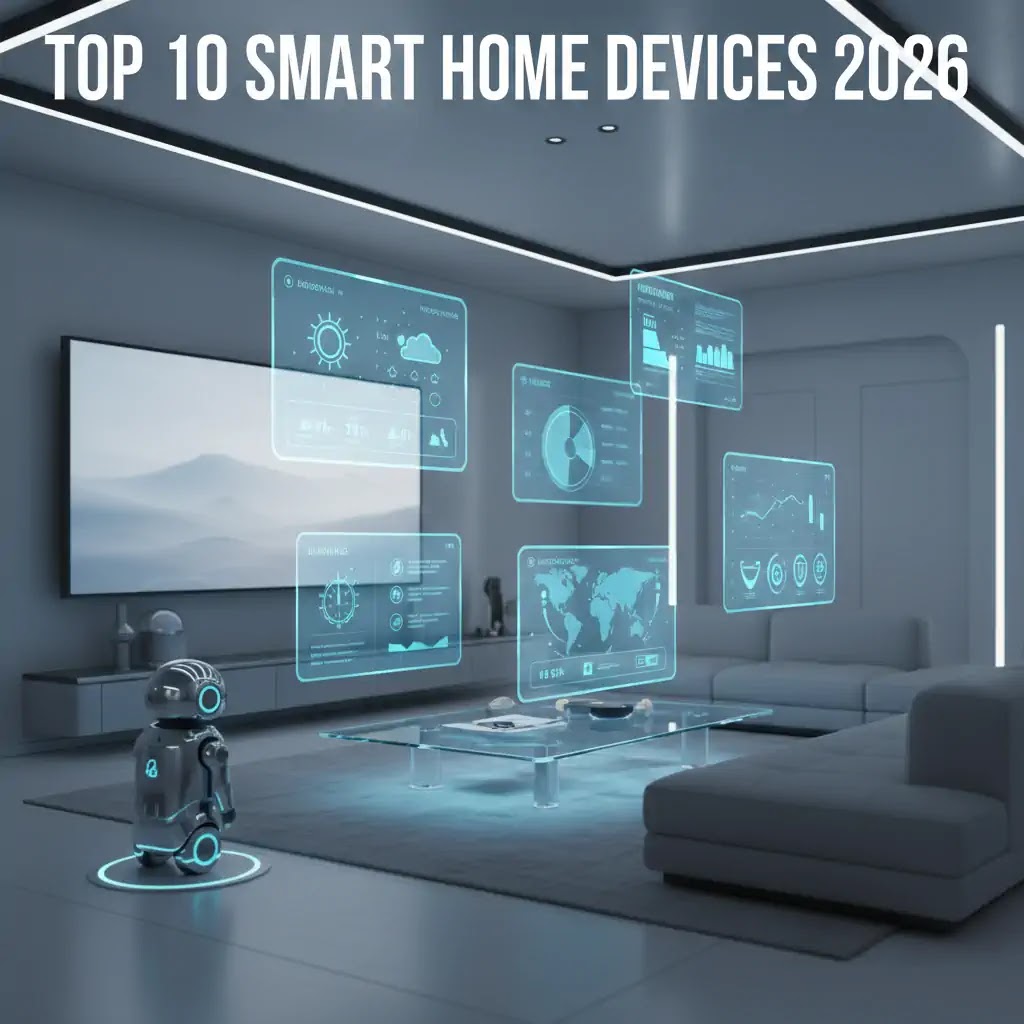
Most smart homes in the past focused only on convenience. A few smart bulbs, a voice assistant, and app-controlled switches were enough to impress people. In 2026, that definition has completely changed. Modern smart homes now use artificial intelligence to learn routines, reduce electricity waste, improve home security, and automate everyday tasks without constant manual control.
The biggest shift is that AI-powered devices now work proactively instead of reactively. Instead of waiting for commands, these systems analyze patterns and make decisions automatically. For busy professionals working in top-tier remote roles, families managing multiple schedules, or homeowners trying to reduce energy bills, this technology is becoming genuinely practical.
After analyzing the latest consumer trends, smart home adoption patterns, and real-world use cases, these are the AI-driven devices shaping the next generation of connected living.
Smart Home Evolution: 2024 vs. 2026
| Feature | 2024 Standard | 2026 AI Era |
|---|---|---|
| Primary Interface | Reactive Voice | Predictive Agentic AI |
| Security Protocol | Passwords/PINs | Multi-Modal Biometrics |
| Data Strategy | Cloud-Dependent | Privacy-First Edge AI |
One noticeable trend in 2026 is that homeowners are becoming more selective. Instead of filling homes with random gadgets, people are choosing devices that solve real problems like security, electricity costs, sleep quality, water management, and privacy protection.
Global Smart Home Market Value ($ Billions)
1. Autonomous Kitchen Hubs (Gen 4)
Modern AI kitchen hubs are no longer simple smart displays. In 2026, they function as intelligent kitchen management systems that combine computer vision, voice interaction, food inventory tracking, and predictive automation.
Using internal cameras and AI-based scanning, these systems can identify ingredients inside refrigerators, estimate expiry dates, and recommend recipes based on dietary preferences. Some systems even connect directly with grocery platforms and reorder missing items automatically using your CBDC digital wallet.
For Indian households, this can be surprisingly useful. Many families struggle with food waste caused by forgotten vegetables, duplicate grocery purchases, or unplanned cooking schedules. AI kitchen systems help reduce these daily inefficiencies.
Best Use Cases
- Busy working families
- Health-conscious users following meal plans
- People trying to reduce food waste
- Homes using connected grocery delivery systems
2. Holographic Biometric Security Systems
Traditional passwords and fingerprint scanners are slowly becoming outdated for premium smart homes. Modern biometric systems now analyze facial depth, movement patterns, body posture, and walking style for authentication.
Unlike older security devices, these systems continuously verify identity instead of relying on a single scan. This makes unauthorized access much more difficult.
Many of the technologies used here are inspired by advanced banking systems and modern biometric ATMs, where multiple layers of identity verification are now standard.
Pros
- Hands-free authentication
- Faster entry and exit
- Advanced intrusion detection
- Reduced dependence on passwords
Potential Limitations
- Higher installation costs
- Privacy concerns for some homeowners
- Requires reliable calibration and setup
3. Circadian AI Climate Control
Smart climate systems in 2026 are designed around human comfort instead of fixed temperature settings. These AI-driven systems analyze sleep schedules, sunlight exposure, humidity, air quality, and body activity to optimize indoor conditions throughout the day.
For example, lighting gradually becomes warmer during evening hours to support better sleep cycles. Air quality systems automatically increase filtration during high pollution periods, which is especially valuable in urban regions.
Many homeowners report better sleep quality and improved daily comfort after switching to circadian-based climate systems.
Why This Matters
- Improves indoor comfort automatically
- Can support healthier sleep routines
- Helps optimize electricity usage
- Works well with mental wellness habits
4. AI Bedding & Adaptive Sleep Systems
Sleep technology has become one of the fastest-growing categories in the smart home industry. AI bedding systems now adjust mattress firmness, temperature, and body support dynamically throughout the night.
These systems use embedded sensors to monitor breathing patterns, heart rate changes, movement frequency, and sleep interruptions. Instead of waking users with loud alarms, some systems now identify lighter sleep phases for more natural wake-up timing.
One practical advantage is that many people no longer need multiple wearable devices for sleep tracking because the monitoring is built directly into the bed itself.
Who Benefits Most
- Remote workers with irregular schedules
- People struggling with sleep quality
- Health-conscious homeowners
- Users seeking recovery-focused wellness technology
5. Ambient Health Sensors (Non-Wearable)
One major limitation of wearable devices is that many users stop using them consistently after a few months. Ambient health sensors solve this problem by monitoring wellness passively through radar, light reflection, and motion analysis.
These sensors can detect breathing irregularities, abnormal inactivity, sudden falls, and unusual heart rate changes without direct physical contact.
For elderly family members living alone, these systems provide an additional layer of safety while remaining less intrusive than traditional monitoring devices.
Real-World Applications
- Elderly care monitoring
- Passive wellness tracking
- Sleep quality observation
- Emergency health alerts
6. Autonomous Domestic Robots (Gen 3)
Home robots have evolved far beyond robotic vacuum cleaners. Third-generation domestic robots can now organize rooms, fold clothes, transport lightweight items, and assist with repetitive daily tasks.
While these robots are still not perfect replacements for human help, they are becoming genuinely useful in reducing household workload for busy families.
Many households using domestic robots report noticeable time savings during weekdays, especially when both adults work full-time.
Tasks Modern Home Robots Can Handle
- Floor cleaning and mapping
- Laundry sorting assistance
- Object delivery inside the home
- Basic room organization
7. Energy AI Arbitrage Systems
Electricity optimization is becoming one of the biggest smart home priorities in 2026. AI energy systems monitor utility pricing, battery storage, appliance usage, and solar generation to reduce energy costs automatically.
Instead of consuming electricity continuously from the grid, these systems intelligently decide when to store, use, or sell power depending on pricing conditions.
In regions with rising electricity costs and frequent peak-hour billing, this technology can create noticeable long-term savings.
Best Benefits
- Reduced monthly electricity bills
- Better solar energy utilization
- Automatic energy optimization
- Reduced dependence on manual monitoring
8. AR Interior Glass & Smart Windows
Smart glass technology is becoming more advanced and affordable. Modern smart windows can instantly switch between transparent and private modes while also functioning as augmented reality information displays.
Some systems now display weather updates, schedules, reminders, and productivity widgets directly on the glass surface.
Beyond convenience, these windows also improve insulation and reduce harmful UV exposure, which can help lower cooling costs in warmer climates.
Why Homeowners Like It
- Improved privacy control
- Modern interior appearance
- Energy efficiency benefits
- Integrated smart display functionality
9. Smart Water Recycling (Closed-Loop)
Water management technology is becoming increasingly important in smart cities and drought-prone regions. Closed-loop recycling systems collect and filter greywater from bathrooms and laundry systems for reuse in flushing, gardening, and cleaning.
AI monitoring systems track water quality, leakage risks, and usage efficiency automatically.
For regions experiencing water shortages or rising utility costs, these systems can provide meaningful long-term value instead of simply offering convenience.
Practical Advantages
- Lower water consumption
- Reduced utility costs
- Environmentally sustainable operation
- Leak detection and monitoring
10. Edge-AI Home Servers (Privacy First)
Privacy concerns are one of the biggest reasons some homeowners avoid smart devices. Traditional systems often send large amounts of personal data to external cloud servers.
Edge-AI home servers solve this issue by processing voice commands, video feeds, security data, and automation routines locally inside the home network.
This approach improves both privacy and response speed because data no longer depends heavily on external internet servers.
Why Edge AI Matters
- Better privacy protection
- Faster smart home responses
- Reduced cloud dependence
- More reliable offline functionality
Best Practices Before Building a Smart Home
Many homeowners make the mistake of purchasing disconnected gadgets without planning ecosystem compatibility. A better approach is starting with devices that solve your biggest daily problems first.
Recommended Smart Home Strategy
- Prioritize security and privacy first
- Choose devices with long-term software support
- Check ecosystem compatibility before buying
- Focus on automation that saves time or money
- Avoid unnecessary devices with limited practical use
In many cases, a smaller but well-integrated smart home setup performs better than a house filled with disconnected gadgets.
Who Should Invest in AI Smart Home Devices?
AI-driven smart home systems are especially useful for:
- Busy professionals and remote workers
- Families managing large households
- Homeowners focused on energy savings
- People interested in home security and automation
- Users wanting better privacy-focused technology
However, not every device is necessary for every home. Budget-conscious users should focus first on systems that provide clear long-term value instead of purely cosmetic technology upgrades.
Frequently Asked Questions
Are AI smart homes expensive to maintain?
Initial setup costs can be high for advanced systems, but many homeowners recover costs over time through energy savings, automation efficiency, and reduced maintenance waste.
Do smart homes require constant internet access?
Not always. Modern edge-AI systems can process many functions locally without depending heavily on cloud connectivity.
Which smart home device provides the most practical value?
For most households, energy management systems, AI security devices, and climate automation usually provide the biggest everyday benefits.
Are privacy concerns valid with AI devices?
Yes. Choosing devices with local processing and strong privacy controls is increasingly important in 2026.
Should renters invest in smart home systems?
Renters can still benefit from portable smart devices like AI speakers, smart lighting, indoor security systems, and energy monitoring tools without major installation work.
Final Verdict
The smartest homes in 2026 are not necessarily the most expensive ones. They are the homes where AI technology quietly improves comfort, efficiency, privacy, and time management without creating unnecessary complexity.
From intelligent energy systems and adaptive climate control to AI-based security and wellness monitoring, modern smart home technology is becoming more practical and less gimmicky.
For homeowners planning long-term upgrades, focusing on privacy-first automation and utility-driven devices is likely to provide the best value over the coming years. For more future-ready technology insights, visit the KOLAACE™ homepage.