For years, GPU performance improvements felt predictable. Each new generation delivered better FPS, slightly higher power draw, and manageable price increases. That pattern is now breaking. The move to TSMC 2nm (N2) is not just another upgrade. It is a structural shift that is redefining how chips are built and priced.
If you are planning to upgrade your GPU in the next 2 to 3 years, especially for gaming, AI workloads, or content creation, this transition will directly affect your budget. The upcoming RTX 60-series is expected to benefit from 2nm, but it may also push flagship GPU pricing into a completely new range.
1. What Makes 2nm Different from Previous Nodes
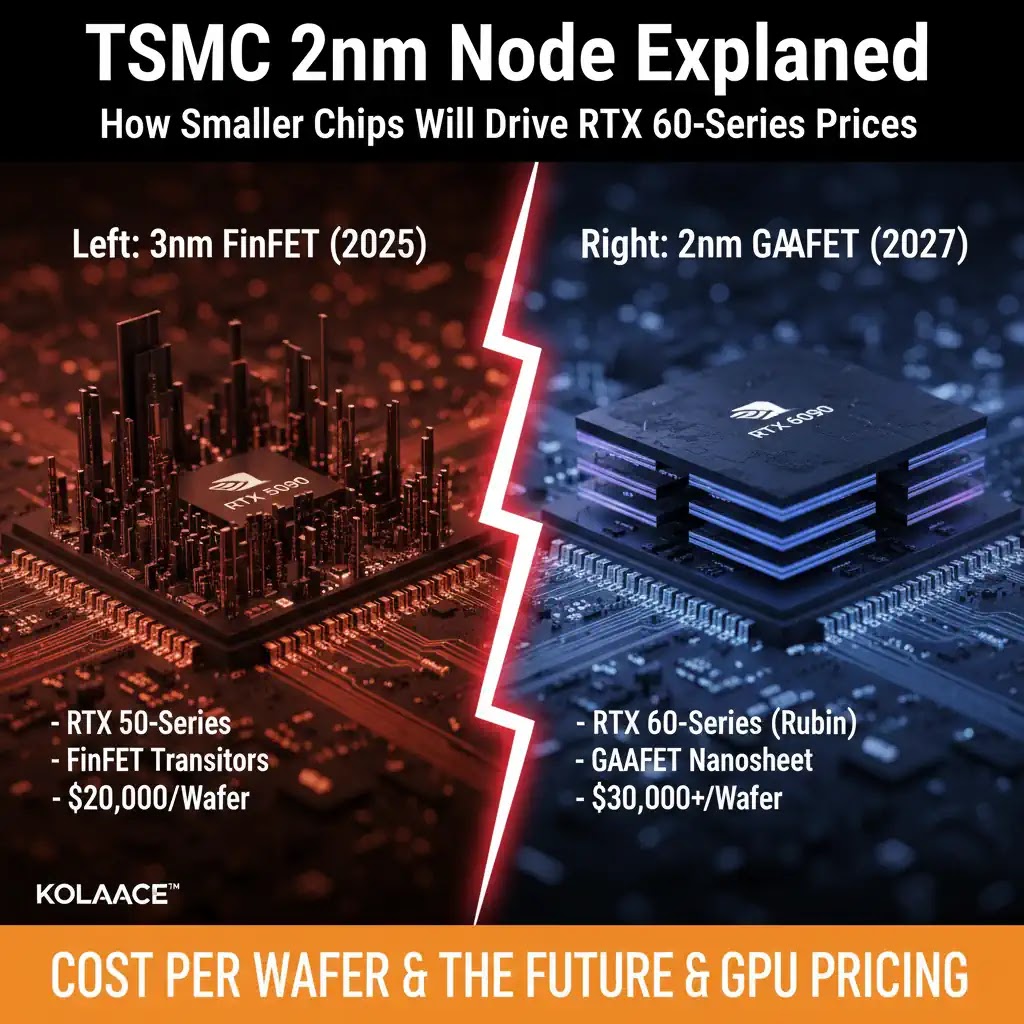
The biggest change in 2nm is the shift from FinFET to Gate-All-Around (GAAFET) nanosheet transistors. This is not a minor tweak. It changes how current flows inside a chip.
In simple terms, older FinFET designs control current from three sides. GAAFET surrounds the channel completely, allowing much tighter control. This reduces leakage and improves efficiency at smaller scales.
- Better performance: Around 10 to 15 percent improvement at similar power levels
- Lower power usage: Up to 30 percent efficiency gains in optimized workloads
- Higher density: More transistors in the same area, enabling more cores and cache
From a real world perspective, this means future GPUs can deliver higher frame rates or better AI processing without proportionally increasing heat output.
2. Why 2nm Chips Are So Expensive
The performance gains are impressive, but the cost side is where things become serious. Manufacturing at 2nm is extremely complex. It requires advanced EUV lithography, tighter tolerances, and more production steps.
As of 2026, a single 300mm wafer at 2nm costs over $30,000. This is nearly double compared to 5nm just a few years ago.
Market Growth: TSMC Wafer Pricing (2020-2027)
Wafer pricing is rising sharply due to manufacturing complexity and demand from AI and data center companies.
For companies like NVIDIA, this directly increases production cost per GPU. When yield rates are not perfect, meaning fewer usable chips per wafer, the effective cost increases even more.
This is why modern GPUs are not just expensive because of branding or demand. The silicon itself has become costly to produce.
3. How This Impacts RTX 60-Series Pricing
The upcoming RTX 60-series, based on the Rubin architecture, is expected to be one of the first consumer GPU lines to seriously explore 2nm. However, there are practical challenges.
Early 2nm yield rates are estimated around 50 to 60 percent. For large GPU dies, this is not ideal. Lower yield means higher cost per working chip.
| Generation | Node | Transistor Type | Est. Price (Flagship) |
|---|---|---|---|
| RTX 40-Series | TSMC 4N | FinFET | $1,599 |
| RTX 50-Series | TSMC 3N | FinFET (Enhanced) | $1,999+ |
| RTX 60-Series | TSMC 2N | GAAFET Nanosheet | $2,499 (Est.) |
In practical terms, flagship GPUs could cross price points that were once considered extreme. This trend is already visible with each new generation.
4. Real World Use Cases: Who Benefits Most
Gaming
High refresh rate gaming at 4K and beyond will benefit the most. However, the cost to access this performance will increase significantly.
AI and Machine Learning
Local AI inference, generative models, and productivity tools will see massive gains. Efficiency improvements matter more here than raw FPS.
Content Creation
Video editing, 3D rendering, and simulation workloads will run faster and consume less power, especially for long sessions.
5. Pros and Cons of 2nm GPUs
Advantages
- Higher performance per watt
- More cores and better parallel processing
- Improved thermal efficiency
Limitations
- Significantly higher cost
- Early production yield challenges
- Limited availability in initial years
6. Who Should Upgrade and Who Should Wait
Consider upgrading if:
- You need top tier performance for AI or professional workloads
- You are building a high budget system without strict cost limits
Consider waiting if:
- You mainly play games at 1080p or 1440p
- You want better price to performance value
In many cases, mid range GPUs from previous generations may offer better value than early 2nm products.
7. Practical Tips Before Buying Next Gen GPUs
- Do not upgrade based only on node size, check real benchmarks
- Wait for second wave releases when yields improve
- Compare total system cost, including PSU and cooling
- Watch how AI features impact real usage, not just marketing claims
Conclusion: Performance Gains Come at a Real Cost
The transition to 2nm is a major milestone in semiconductor technology. It enables better efficiency and higher performance, especially for AI driven workloads. However, it also introduces a new pricing reality.
For most users, the smartest approach is not to chase the latest node immediately. Instead, focus on real world performance gains and value for money. The gap between premium and mainstream hardware is likely to grow, and understanding this shift will help you make better upgrade decisions.
Frequently Asked Questions