
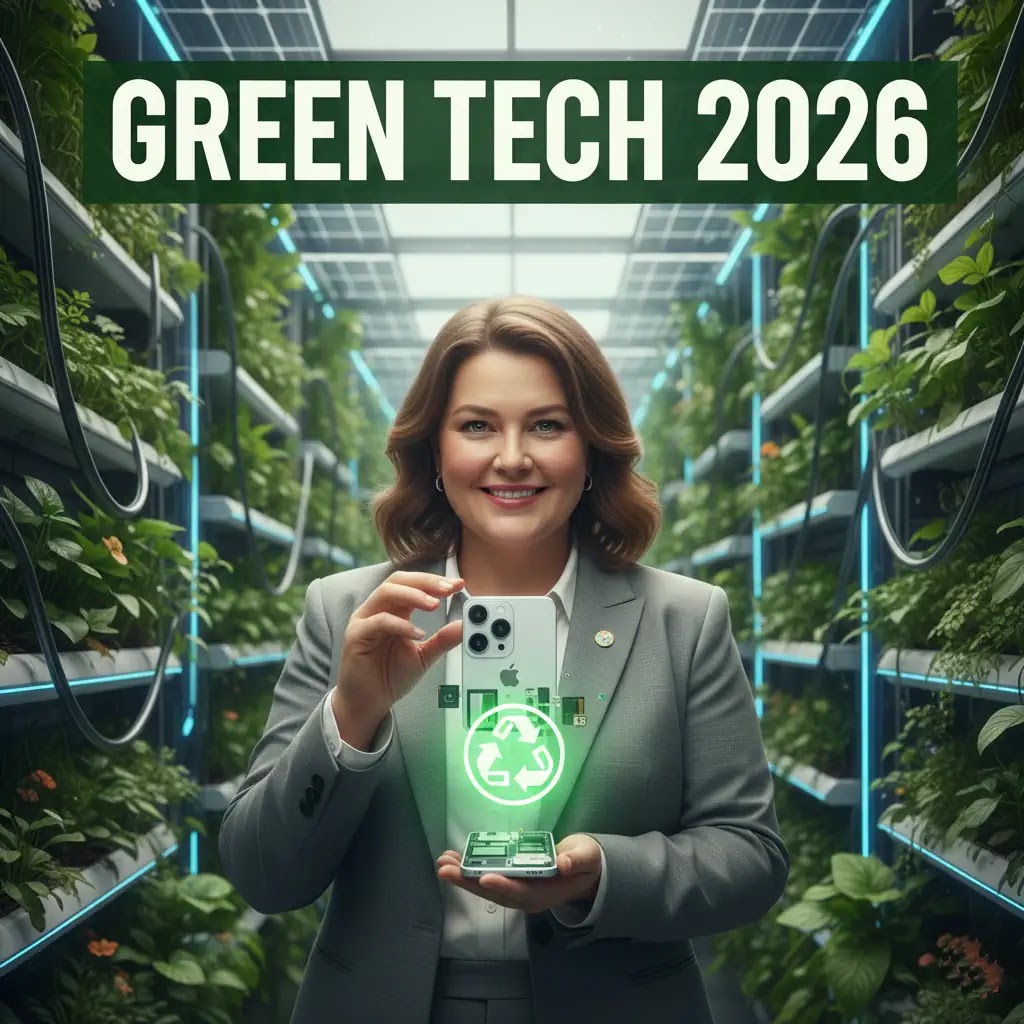
By February 2026, the tech industry has reached its “Environmental Reckoning.” With data center energy consumption projected to double by 2030, the focus has shifted from raw power to Algorithmic Efficiency. The Green Tech Revolution is not just about carbon offsets; it is about re-engineering the very fabric of how we produce, consume, and compute.
At KOLAACE™, we recognize that Sustainable SEO is the new standard. Search algorithms now favor platforms that demonstrate “Digital Sobriety”—optimizing code and assets to reduce the energy cost of every user interaction.
I. Sustainable AI: Computing Without the Carbon
In 2026, “Green AI” is a regulatory requirement. Training a single large model can emit as much CO₂ as five cars over their lifetimes. The industry response has been a shift toward Sparse Architectures and Liquid Cooling.
Market Growth: Green Tech & Sustainability (2025-2030)
*Global Green Tech market size growth at a CAGR of 20.7%.*
II. The Circular Economy: Waste as a Resource
The “Take-Make-Dispose” model is being replaced by Circular Consumption. In 2026, products are designed for disassembly, and Digital Product Passports (DPP) allow consumers to track the entire lifecycle of their devices.
| Circular Strategy | 2026 Implementation | Economic Impact |
|---|---|---|
| Product-as-a-Service | Leasing electronics with guaranteed upgrades. | Recurring revenue and 90% material recovery. |
| AI Waste Sorting | Hyper-sensitive material recovery bots. | Reduces raw material costs by up to 40%. |
| Modular Design | Devices built for easy repair and part swapping. | Extends product lifespan by 3-5 years. |
III. Regenerative Business: Giving Back More Than We Take
In 2026, “Net Zero” is the baseline. Leading organizations are moving toward Regenerative Design—creating systems that actively restore the environment, such as data centers that heat local communities or server farms powered by 100% on-site geothermal energy.
- Digital Product Passports: Mandatory scannable profiles for batteries and electronics in the EU starting 2026/2027.
- Edge AI for Sustainability: Processing data locally on devices to reduce the energy-heavy “cloud roundtrip” by up to 73%.
- Smart Grids: AI-driven energy management that balances renewable inputs in real-time to prevent fossil fuel spikes.
IV. How to Build a Sustainable Digital Brand in 2026
- Optimize Your Tech Stack: Switch to “Green Cloud” regions powered by 100% renewable energy and implement quantized AI models that require less compute.
- Transparency First: Use blockchain-backed material tracking to provide customers with verifiable proof of your circular claims.
- Audit Your Water Footprint: AI doesn’t just eat electricity; it drinks water. Monitor the water-cooling efficiency of your providers.
Want to optimize your own high-performance lifestyle? Check out our Biohacking Human Optimization Report or secure your digital world with Cybersecurity 2026.